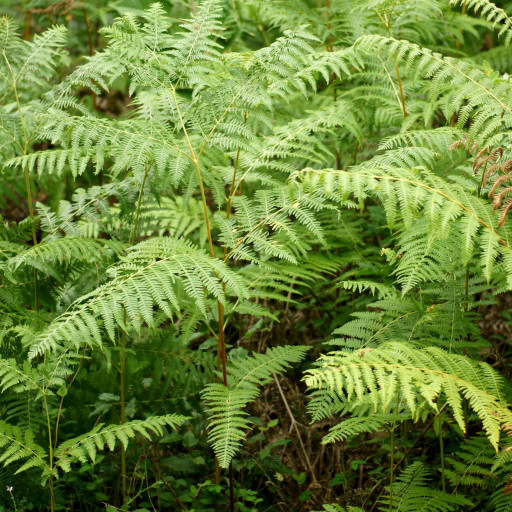
Plant Overview
Often called the "Eagle Fern," Pteridium aquilinum is an ancient survivor found on almost every continent. It is one of the most successful plants on Earth, colonizing woodlands and moorlands with its massive, lacy fronds. While it adds a classic, prehistoric aesthetic to a landscape, it is a fierce competitor that thrives where other plants fail.
🔍 How to Identify
- 🌿 Large Triangular Fronds: Unlike many ferns that grow in tidy clumps, Bracken produces large, individual fronds that branch out into a broad, three-part triangular shape.
- 🍂 Lacy Texture: The leaves are "tri-pinnate," meaning the leaflets are divided and subdivided multiple times, creating a highly detailed, feathery appearance.
- 🪵 Woody Stems: The base of the frond (the stipe) is thick, tough, and often dark at the bottom, emerging from a deep, creeping underground root system.
🏡 In Your Garden
- ⛰️ The Master Colonizer: This plant thrives in acidic, well-draining soil and is often the first to reappear after a forest fire. It is incredibly hardy and tolerates both sun and deep shade better than most ferns.
- 🚧 Space Management: Think twice before planting it in a small garden. Its underground stems (rhizomes) can travel for meters, sending up new fronds along the way. It is best suited for large, wild, or naturalized areas where it can roam freely without overtaking delicate neighbors.
⚠️ Safety & Toxicity
- 🚫 Toxic Assessment: Bracken is considered toxic and contains carcinogenic compounds, most notably ptaquiloside.
- 🐾 Livestock & Pets: It is particularly dangerous to horses, cattle, and sheep if grazed upon, leading to "Bracken poisoning."
- 🧍 Human Caution: While some cultures traditionally harvest the young "fiddleheads," modern science warns against consumption due to the high risk of toxins. Even inhaling large quantities of the spores during the late summer is thought to be a health risk in some regions.
✨ Fun Fact
If you cut the base of a Bracken stem horizontally, the internal vascular patterns are said to resemble a "double-headed eagle." This resemblance is exactly why its species name is aquilinum, derived from the Latin word aquila, meaning eagle.

Detailed Care Instructions
| Humidity | Dry |
| Lighting | Part Sun |
| Toxicity | Poisonous |
| Difficulty | Easy |
| Hibernation | Cold Period |
| Hardiness Zones | 4 - 7 |
To grow Pteridium Aquilinum, also known as bracken fern, follow these steps:
- Choose a suitable location: Bracken fern typically grows in partially shaded areas with acidic soil. Ensure the location has well-draining soil with plenty of organic matter.
- Prepare the soil: Enhance the soil quality by adding compost, leaf mold, or well-rotted manure. This will improve drainage and provide nutrients to the plants.
- Collect spores or rhizomes: Bracken fern can be propagated from either spores or rhizomes. Collect the spores by cutting mature fronds and placing them in a paper bag until they release the spores. Alternatively, you can acquire rhizomes from a licensed nursery or garden center.
- Start seeds or plant rhizomes: If you have collected spores, sprinkle them over a tray filled with a moist mix of peat moss and sand. Cover the tray with a plastic bag to maintain humidity. After a few weeks, the spores will germinate, and you can transplant them into pots or the ground. If you have acquired rhizomes, plant them directly into the prepared soil, burying them just below the surface.
- Watering: Bracken fern prefers consistent moisture but not waterlogged conditions. Water the plants regularly, keeping the soil evenly moist. Avoid overwatering, as it can lead to root rot.
- Mulch the area: Mulch around the ferns to retain moisture and suppress weed growth. Organic mulches like compost, straw, or wood chips are suitable options.
- Prune and divide: As the bracken ferns grow, they may become crowded. Prune any dead or damaged fronds to maintain plant health. When the ferns become too dense, divide the clumps and replant them elsewhere to promote healthy growth.
- Fertilize: Bracken ferns usually do not require heavy fertilization. However, you can occasionally apply a balanced, slow-release fertilizer to provide necessary nutrients. Follow the instructions on the fertilizer package for application rates.
- Watch for pests and diseases: Bracken fern is generally resistant to pests and diseases. However, keep an eye out for any signs of insect damage, such as aphids or mites. Treat infestations with appropriate organic or chemical insecticides if necessary.
- Ongoing care: Regularly monitor the plants for any issues and make changes accordingly. Water, weed, and prune as needed to ensure healthy growth.
Note: Bracken ferns can become invasive in some regions, so it's essential to check local regulations before planting them in certain areas.

Place in a window with dappled sun or a spot in the middle of a room. Or directly in a window facing west or east.

To water this plant, you should use a watering can or a hose with a gentle nozzle to avoid damaging the foliage. Allow the soil to dry out slightly between waterings, but do not let it completely dry out. Water thoroughly, until you see water coming out of the drainage holes in the bottom of the pot or container. Avoid getting water on the plant's leaves as this can increase the risk of fungal diseases, instead, aim to water at the soil level. During hot and dry weather, the plant may require more frequent watering.
To fertilize the Pteridium aquilinum plant, follow these instructions:
- Choose a well-balanced water-soluble fertilizer with equal or lower nitrogen (N), phosphorus (P), and potassium (K) amounts. For example, a ratio of 10-10-10 or 20-20-20.
- Dilute the fertilizer according to the instructions on the package. Generally, a concentration of 1 teaspoon per gallon of water is suitable.
- Water the plant thoroughly prior to fertilizing to ensure soil moisture.
- Apply the diluted fertilizer around the base of the plant, avoiding direct contact with the foliage.
- Avoid overfertilizing, as it may cause harm to the plant. Follow the recommended dosage and frequency mentioned on the fertilizer package.
- Provide adequate water after fertilizing to help dissolve the nutrients into the soil and prevent potential damage to the plant's roots.
- Repeat the fertilization process every 4-6 weeks during the growing season, typically from spring to early fall.
Remember, observation is key when fertilizing any plant. Monitor the plant's response to the fertilizer and adjust the frequency or concentration as needed.
The ideal soil for the Pteridium Aquilinum plant should be well-draining and rich in nutrients. It should be slightly acidic with a pH between 5.5 and 6.5, and have a high organic matter content to promote healthy growth. To ensure proper drainage, the soil should be loamy and not compacted. It should also be able to retain moisture without becoming waterlogged, as this can lead to root rot and other issues. Adding compost or other organic matter to the soil can improve its quality and fertility. Additionally, the plant prefers a shaded environment and should not be exposed to direct sunlight for extended periods.
To propagate this plant, first locate a mature and healthy plant with fronds that have not yet produced spores. Prepare a container with a well-draining soil mixture. Cutting fronds should be disinfected with a fungicide agent, then cut into small sections, each with at least one healthy growth bud. Put the cuttings flat into the soil to a depth of about 2.5 cm. Keep the soil consistently moist by spraying it with water or covering it with plastic to create a greenhouse environment. The new plantlets will emerge from the buds within several weeks. After several months, the young plants can be transplanted into larger pots or directly into the ground, if desired.
Common pests of the northern bracken fern include Mealybugs, spider mites, aphids. Make a habit of checking your northern bracken fern frequently for pests so that any infestations can be caught and managed early.








