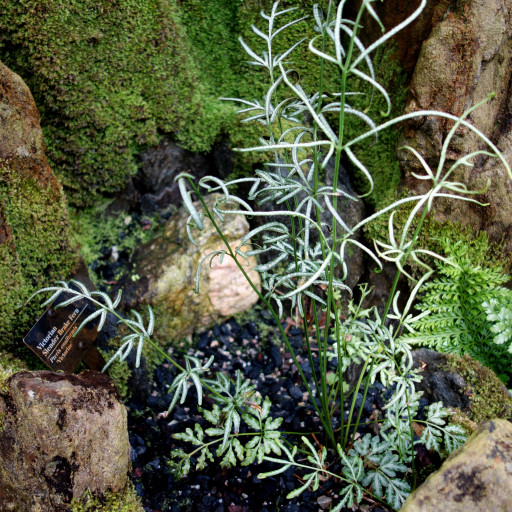
Plant Overview
Often called the Silver Lace Fern or Slender Brake Fern, this elegant plant is a favorite for terrariums and shady windowsills. Native to the tropical forests of Southeast Asia and Australia, it looks as though its leaves have been delicately painted with frosty white stripes. Its airy, lace-like appearance makes it a sophisticated choice for anyone looking to add a touch of woodland magic to their indoor collection.
🔍 How to Identify
- 🌿 Variegated Foliage: The most striking feature is the silvery-white center that runs down the middle of each leaflet, bordered by a crisp, deep green edge.
- 👐 Two-Tone Fronds: This fern displays "dimorphism," meaning it has two types of leaves; shorter, wavy "sterile" fronds that hug the base, and taller, narrower "fertile" fronds that stand upright.
- 📐 Growth Habit: It forms a compact, fountain-like clump, typically staying under 12–16 inches, making it perfect for small spaces or glass containers.
🏡 In Your Garden
- 💧 Humidity Queen: This plant thrives in high-moisture environments. It is a perfect candidate for a bathroom or a kitchen windowsill, as dry air from heaters will quickly turn its delicate tips crispy and brown.
- 🪴 Thirsty but Picky: While it loves consistently moist soil, it hates "wet feet." Use a well-draining peat-based mix to ensure the roots stay hydrated without suffocating in stagnant water.
⚠️ Safety & Toxicity
- 🐾 Pet Friendly: Great news for animal lovers! Pteris ensiformis is considered non-toxic to cats and dogs, making it a "worry-free" addition to your home.
- 👶 Safe for Humans: It is non-poisonous to children. However, it’s always a good idea to keep it out of reach, as the delicate fronds can be easily damaged by curious little hands.
✨ Fun Fact
The name "Brake" fern comes from an old English word for "thicket" or "brush." In ancient folklore, ferns were believed to produce "invisible seeds" that could grant a person the power of invisibility if gathered at exactly midnight on Midsummer's Eve!

Detailed Care Instructions
| Soil Ph | Neutral |
| Humidity | High |
| Lighting | Shade |
| Soil Type | Moist But Well-Drained |
| Difficulty | Hard |
| Plant Type | Fern |
| Hibernation | Cold Period |
| Mature Size | 16" Tall And Wide |
| Native Area | Europe, Asia, Africa |
| Temperature | 15°C - 23°C |
| Sun Exposure | Full Sun, Partial Shade |
| Hardiness Zones | 9-12 |
To grow Pteris ensiformis, also known as the silver lace fern, you can follow these steps:
- Choose the right location: Pteris ensiformis prefers bright, indirect light. Place it near a north or east-facing window where it can receive filtered sunlight. Avoid direct sunlight, as it can scorch the leaves.
- Provide the right temperature: Pteris ensiformis prefers average room temperatures between 60-75°F (15-24°C). Keep it away from drafts or extreme temperature changes.
- Select well-draining soil: Use a well-draining potting mix that retains moisture but also allows excess water to drain off. A mix of peat moss, perlite, and vermiculite or a commercial soil mix for ferns can work well.
- Water properly: Pteris ensiformis prefers consistently moist soil. Water the plant when the top inch of soil feels dry, but do not allow it to sit in standing water. Water deeply and thoroughly, ensuring that water drains out from the bottom of the pot.
- Humidity requirements: Pteris ensiformis thrives in high humidity. You can increase humidity around the plant by placing a tray filled with water and pebbles beneath the pot or using a room humidifier. Mist the plant regularly to simulate a humid environment.
- Fertilize appropriately: Apply a balanced, water-soluble houseplant fertilizer once a month during the growing season (spring to fall). Follow the instructions on the fertilizer package for proper dilution and application.
- Prune and groom: Remove any yellow or brown fronds as they appear. Groom the plant by removing dead or damaged leaves regularly to keep it looking attractive.
- Repotting: If the plant outgrows its container, repot it into a slightly larger pot with fresh potting soil. This is typically done every 1-2 years.
Overall, Pteris ensiformis is a relatively easy-to-care-for plant as long as its basic needs for light, water, humidity, and temperature are met. With proper care, it can grow into a lush and beautiful fern.

Place in a dark room with little light, like a dark bedroom or a spot far away from a window or directly in a north-facing window.

1. Observe the soil: Before watering the plant, check the soil moisture by inserting your finger about an inch deep into the soil. If it feels dry, it's time to water.
2. Watering frequency: As a general rule, Pteris Ensiformis plants prefer consistently moist soil, but not soaking wet. To avoid overwatering, water the plant moderately once a week or when the topsoil feels dry to the touch.
3. Watering method: Water the plant at the base, avoiding watering the leaves. You can use a watering can or a hose with a gentle spray to water the plant evenly.
4. Drainage: Ensure that your plant pot has a drainage hole to prevent water logging which could lead to root rot.
5. Humidity levels: Pteris Ensiformis thrives in high humidity levels. You can increase humidity levels by placing a tray with pebbles and water underneath the plant, or by using a humidifier.
6. Avoid water stagnation: If water accumulates in the saucer or tray after watering, discard the excess water to prevent soil saturation.
7. Time of day: Water your Pteris Ensiformis plant in the early morning or late afternoon as watering in the afternoon could lead to the creation of humid environments which may encourage the growth of pathogens.
To fertilize this type of plant, you should use a balanced fertilizer with equal parts nitrogen, phosphorus, and potassium. Apply the fertilizer to the soil around the base of the plant, being careful not to get any on the leaves. Water the plant thoroughly after fertilizing. Repeat this process every two to four weeks during the growing season, which is typically from spring to fall. During the dormant season, which is usually in the winter, reduce fertilization to once a month.
When planting Pteris Ensiformis, it is important to choose the right type of soil. The ideal soil for Pteris Ensiformis should be well-draining, humus-rich, and slightly acidic. The soil should also be able to hold moisture without becoming waterlogged. It is recommended to use a potting mix that has a good drainage capacity, such as a mix of perlite, peat moss, and sand. Adding organic matter like compost to the soil can improve soil fertility and provide essential nutrients to the plant. Additionally, top-dressing the soil with a slow-release fertilizer can ensure the plant has a steady supply of nutrients throughout the growing season. It is important to avoid using heavy soils that retain water for a prolonged period as they can cause the roots to rot. Overall, the soil used for planting Pteris Ensiformis should provide good drainage, ample moisture retention, and adequate fertility to promote healthy growth and development.
To propagate this plant, you will need to first identify a mature and healthy frond that you can use for the process. Cut a section of the frond from the base of the leaves, ensuring that you have a portion of the stem attached.
Dip the cut end of the stem into rooting hormone and plant it in a mixture of soil and sand. Keep the mixture moist but not too wet, as this can lead to fungal growth.
Place the planted stem in a warm, humid location with bright, indirect light. It may take several weeks for the stem to take root and begin to grow new leaves, but once it does, you can transplant it into its own pot.
Continue to provide the plant with ample moisture and light, and fertilize it with a balanced fertilizer every few months to promote healthy growth. Over time, your propagated plant will grow into a beautiful, mature fern.
Common pests of the slender brake include Mealybugs, spider mites, aphids. Make a habit of checking your slender brake frequently for pests so that any infestations can be caught and managed early.








