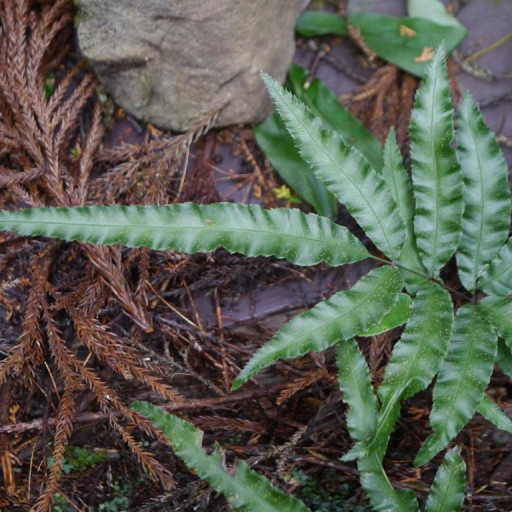
Plant Overview
Known affectionately as the "Parker’s Brake Fern," this elegant evergreen is a favorite for those seeking a touch of Victorian sophistication in their homes. Unlike many finicky ferns, it is praised for its resilience and glossy, ribbon-like foliage that stays vibrant year-round. It’s the perfect choice for a leafy corner that needs a burst of deep, lustrous emerald green.
🔍 How to Identify
- 🌿 The Fronds: This fern boasts arching, pinnate fronds that can reach up to 18 inches in length, creating a full, fountain-like appearance as it matures.
- ✨ Glossy Texture: The leaflets (pinnae) are notably smooth and shiny, with a rich dark-green hue that reflects light much more effectively than its matte-leafed relatives.
- 📏 Strap-like Shape: Each leaflet is long, narrow, and slightly leathery to the touch, often featuring a distinctively pointed tip and slightly wavy edges.
🏡 In Your Garden
- 🌥️ Shadow Play: While most plants crave the sun, Pteris parkeri thrives in the "dappled light" of a forest floor. In a home setting, it prefers a north-facing window or a shaded spot where direct afternoon sun won't scorch its delicate fronds.
- 💧 Humidity over Hydration: This fern hates "wet feet" but loves a humid atmosphere. It is a star performer in bathrooms or kitchens where steam is frequent; if the air is too dry, you may notice the tips of the leaves turning brown and crispy.
⚠️ Safety & Toxicity
- 🟢 Non-Toxic: Great news for pet parents! The Parker’s Brake Fern is generally considered non-toxic to cats, dogs, and horses.
- 🧼 Sensitive Skin: While it isn't poisonous, some individuals with very sensitive skin might experience mild irritation if they handle the spores or sap frequently. It’s always a good idea to wash your hands after a pruning session.
✨ Fun Fact
The term "Brake" in its common name comes from the Middle English word brake, which simply meant "fern" or "thicket." In ancient folklore, ferns were thought to bloom with a "secret flower" at exactly midnight on Midsummer's Eve; anyone who found the flower was said to gain the power of invisibility!

Detailed Care Instructions
Growing Pteris Parkeri, a type of fern commonly known as 'Parker's Maidenhair Fern', requires attention to several key aspects of care to ensure the plant thrives. Below are the steps and considerations for successfully growing this plant:
1. Light Requirements:
- Pteris Parkeri thrives in bright, indirect light. Direct sunlight can scorch the leaves, so it’s best to place it near a window with filtered light or in a shaded spot outdoors if you're growing it outside.
2. Temperature and Humidity:
- This fern prefers moderate temperatures, ideally between 60-75°F (15-24°C).
- It thrives in high humidity conditions. Consider using a humidity tray or a humidifier, especially in dry climates or during winter when indoor air tends to be drier.
3. Watering:
- Keep the soil consistently moist but not waterlogged. Water the plant thoroughly when the top inch of soil feels dry.
- Ensure good drainage to prevent standing water which can lead to root rot.
4. Soil:
- Use a well-draining potting mix. A mix designed for ferns or a combination of peat moss, perlite, and potting soil works well.
5. Potting and Repotting:
- Pteris Parkeri can be grown in pots or hanging baskets. Ensure the container has drainage holes.
- Repot the fern every 1-2 years or when it becomes root-bound.
6. Fertilizing:
- Feed the plant with a balanced, water-soluble fertilizer diluted to half strength every 4-6 weeks during the growing season (spring to early autumn).
- Reduce feeding during fall and winter when the plant’s growth slows down.
7. Pruning:
- Remove any dead or yellowing fronds to keep the plant healthy and encourage new growth.
8. Pests and Diseases:
- Check the plant regularly for pests such as aphids, scale, and spider mites. Use appropriate insecticidal soap or neem oil if you notice an infestation.
- Good air circulation helps prevent fungal diseases, which ferns can be susceptible to.
9. Propagation:
- Pteris Parkeri can be propagated via spores or division.
- Division is the most common method: carefully separate a part of the root ball with fronds attached and plant it in a new pot with fresh soil.
10. General Tips:
- Keep the plant away from drafts, heaters, and air conditioners which can cause fluctuations in temperature and humidity.
- Regularly misting the plant can help maintain adequate humidity levels.
By following these guidelines, you can create an optimal environment for your Pteris Parkeri fern to grow and thrive. Remember, consistency is key when it comes to watering and humidity for ferns. Happy gardening!

Place in a window with dappled sun or a spot in the middle of a room. Or directly in a window facing west or east.

The Pteris Parkeri plant appreciates evenly moist soil conditions but not waterlogged substrate. Here are detailed guidelines to ensure optimal watering:
1. Soil Check: Before watering, check the soil moisture approximately 1 to 2 inches below the surface. The top layer should feel somewhat dry, but there should still be some moisture deeper down.
2. Watering Amount: Water the plant thoroughly until the water begins to drain out of the bottom of the pot. This ensures that the roots receive adequate moisture without causing root rot. Ensure that you discard any excess water from the saucer beneath the pot to prevent stagnation.
3. Frequency: Water the plant approximately once a week. However, adjust this frequency based on the environmental conditions—during hotter, dryer periods, you may need to water more frequently. In cooler or more humid conditions, less frequent watering is required.
4. Watering Method: Use lukewarm water instead of cold, as this is less shocking to the roots. It's often beneficial to water the plant in the morning, as this allows it to absorb moisture throughout the day.
5. Humidity: These plants thrive in high humidity environments. Misting the plant occasionally, especially in dry indoor conditions, can help maintain the required humidity levels.
6. Drainage: Ensure that the pot has good drainage to prevent water from sitting at the bottom and leading to root rot. A well-draining soil mix, such as a combination of peat, perlite, and pine bark, is ideal for this plant.
By observing these detailed practices, you will help maintain the health and vitality of your Pteris Parkeri plant.
To properly fertilize your Pteris Parkeri, follow these steps:
- Type of Fertilizer: Use a balanced, water-soluble houseplant fertilizer with an equal ratio of nitrogen, phosphorus, and potassium (e.g., 10-10-10 or 20-20-20).
- Frequency: Fertilize every 4-6 weeks during the growing season, typically spring and summer. Reduce the frequency to once every 2-3 months during the fall and winter months when the plant's growth slows down.
- Dilution: Always dilute the fertilizer to half the recommended strength to avoid over-fertilizing, which can harm the plant. For example, if the instructions on the fertilizer package suggest mixing 1 teaspoon per gallon of water, use only 1/2 teaspoon per gallon of water.
- Application: Water the plant with the diluted fertilizer solution, ensuring the soil is evenly moist. Avoid letting the solution contact the foliage directly as this could cause leaf burn.
- Observation: Monitor the plant's response to fertilization. Yellowing leaves can indicate a nutrient deficiency, while browning leaf tips or edges can signal over-fertilization. Adjust the frequency or concentration accordingly.
By following these guidelines, you can ensure your plant receives the necessary nutrients for healthy growth.
The recommended soil type for growing this plant is a well-draining potting mix that is rich in organic matter. It should be a mix of vermiculite, perlite, and peat moss, which will ensure proper drainage and moisture retention. The soil pH should be between 5.0 and 5.5, which is slightly acidic. Additionally, this plant prefers nutrient-rich soil, so regular fertilization with a balanced fertilizer is recommended. Soil should be kept moist but not overly wet, and the plant should be kept in a bright but indirect light environment.
Propagating Pteris Parkeri, a species in the Pteridaceae family, can be relatively straightforward. There are a few methods you can use, primarily through spores or division.
Propagation by Spores
Collecting Spores:
- Check the underside of the fronds, looking for brownish spore clusters known as sori.
- When the sori have matured and appear slightly fuzzy, cut off a frond section containing the sori.
- Place the frond on a piece of white paper and let it dry for a day or two until the spores fall onto the paper.
Sowing Spores:
- Prepare a shallow planting container with a mix of equal parts peat moss and fine sand or perlite.
- Sterilize the growing medium by microwaving it for a few minutes or using boiling water to kill any unwanted organisms.
- After cooling, evenly sprinkle the spores over the surface of the dampened medium.
- Cover the container with a clear plastic lid or plastic wrap to maintain high humidity.
- Place the container in a well-lit area with indirect sunlight, maintaining a temperature between 65-75°F (18-24°C).
- Keep the medium consistently moist but not waterlogged by misting it regularly.
Growing On:
- In a few weeks, tiny green gametophytes will begin to form.
- Eventually, these will develop into small fern plants (sporophytes).
- When the young plants have developed several fronds and are large enough to handle, transplant them carefully into individual pots filled with a standard potting mix.
Propagation by Division
Timing and Preparations:
- Early spring is often the best time to divide ferns, just as new growth is beginning.
- Water the plant thoroughly the day before you plan to divide it.
Division Process:
- Remove the plant from its pot and gently shake off or wash away excess soil to reveal the root structure.
- Using a sharp, sterilized knife or pruners, divide the rhizome into sections. Each section should have at least one growing point (crown) and a few healthy fronds.
- Dust the cut surfaces with fungicide to prevent infections.
Replanting:
- Prepare new pots with a peat-based potting mix that is well-draining.
- Plant each division so that the crown is at the same level it was in its previous pot.
- Water thoroughly and place the pots in a shaded area until the plants establish, then move to a brighter location with indirect light.
- Maintain high humidity around the new divisions to reduce transplant stress.
By following these methods, you can successfully propagate Pteris Parkeri and grow new, healthy plants.
Common pests of the cretan brake include Mealybugs, spider mites, aphids. Make a habit of checking your cretan brake frequently for pests so that any infestations can be caught and managed early.








