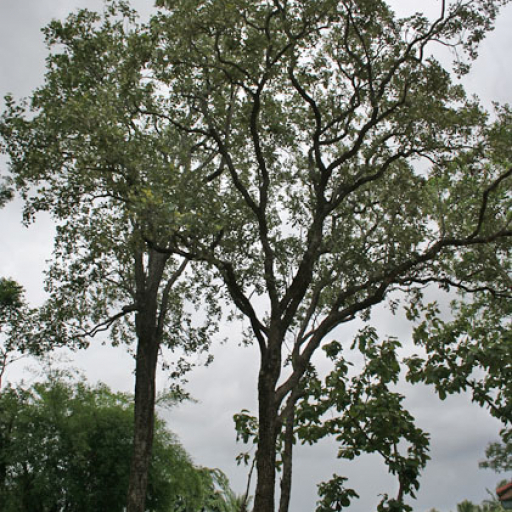
Plant Overview
Known as the "Ruby of the Forest," Red Sandalwood is one of the most precious and legendary trees in the world. Endemic to a small region in the Seshachalam Hills of India, this slow-growing beauty is famous for its dense, blood-red heartwood that was once reserved exclusively for royalty. It isn’t just a plant; it’s a piece of botanical history that has sparked trade wars and inspired ancient medicinal texts.
🔍 How to Identify
- 🍃 The Foliage: Look for "trifoliate" leaves, meaning they grow in groups of three. The leaflets are broad, leathery, and rounded, giving the tree a lush, cooling appearance.
- 🐊 The Bark: The trunk features a distinctive "crocodile bark" pattern. It is dark grayish-black and deeply fissured into rectangular scales that resemble a reptile's skin.
- 🌼 The Flowers: During late spring, the tree produces clusters of bright yellow, pea-shaped flowers that contrast beautifully against the dark bark.
- 🛸 The Seeds: Its fruit is a "samara"—a circular, winged pod that looks like a small flying saucer. This wing helps the seed glide away from the mother tree in the wind.
🏡 In Your Garden
- 🌱 A Test of Patience: If you are planting Red Sandalwood, you are planting for the next generation. It is exceptionally slow-growing, often taking 25 to 30 years just to begin developing its signature red heartwood.
- ☀️ Sun & Soil: This tree is a survivor of the heat. It thrives in hot, dry climates and actually prefers poor, rocky, or "lateritic" soil where other plants might struggle. It hates "wet feet," so well-draining soil is a must to prevent root rot.
- 🌳 The Taproot Factor: Like many hardy trees, it develops a deep taproot early on. This makes it very difficult to transplant once established, so choose its "forever home" in your garden carefully.
⚠️ Safety & Toxicity
- ✅ Safe for Touch: Red Sandalwood is generally non-toxic to humans and pets. In fact, the wood paste has been used topically in traditional skincare for centuries.
- 🌬️ Respiratory Caution: While the plant is safe, the fine dust produced if the wood is sanded or carved can be a mild respiratory irritant. Always wear a mask if working with the timber.
- 🛑 Legal Status: Be aware that because it is an endangered species, many countries have strict laws regarding the possession and trade of its wood. Always ensure your plant or wood products are ethically and legally sourced.
✨ Fun Fact
Unlike "True Sandalwood" (Santalum album), Red Sandalwood is almost entirely odorless! While people often confuse the two, Pterocarpus santalinus is prized for its incredible weight (it is so dense it sinks in water) and its vibrant natural dye rather than its scent.

Detailed Care Instructions
Pterocarpus santalinus, also known as red sandalwood, is a slow-growing tree native to India and Sri Lanka. Here are some tips on how to grow this plant:
- Climate: Pterocarpus santalinus thrives in tropical and subtropical climates, with temperatures ranging from 20-30°C (68-86°F).
- Soil: The plant prefers well-draining, slightly acidic soil. Mix in some compost or organic matter to improve soil fertility.
- Watering: Water the plant regularly, keeping the soil consistently moist but not waterlogged. Reduce watering during the winter months.
- Sunlight: Pterocarpus santalinus prefers full sun to partial shade. Ensure that the plant receives at least 6-8 hours of sunlight per day.
- Fertilization: Feed the plant with a balanced fertilizer once a month during the growing season (spring and summer).
- Pruning: Prune the plant occasionally to remove dead or damaged branches, and to maintain its shape. Avoid heavy pruning, as it may stunt growth.
- Propagation: Pterocarpus santalinus can be propagated from seeds or cuttings. Seeds should be scarified or soaked in water for 24 hours before planting. Cuttings should be taken from mature wood and placed in a rooting hormone before planting.
- Pests and diseases: Keep an eye out for common pests such as aphids, mealybugs, and spider mites. Treat infestations promptly with insecticidal soap or neem oil. Watch for signs of fungal diseases such as root rot and powdery mildew, and treat as needed.
By following these tips, you can successfully grow Pterocarpus santalinus in your garden or as a houseplant. Remember to be patient, as this species is known for its slow growth rate.

Place in a bright room that is sun drenched almost all day. Or directly in a south-facing window.

Pterocarpus santalinus plants should be watered regularly, ensuring that the soil remains consistently moist but not waterlogged. It is important to water the plant at the base, near the roots, rather than overhead to avoid wetting the leaves excessively. Watering in the morning is ideal to allow the plant to dry out during the day and prevent issues such as root rot. During hotter months or periods of drought, the plant may require more frequent watering. It is important to monitor the soil moisture levels and adjust the watering schedule as needed to ensure the plant remains healthy and hydrated. Additionally, using a well-draining soil mix can help prevent waterlogging and other issues related to overwatering.
To fertilize the Pterocarpus Santalinus plant, you can use a balanced fertilizer with equal parts nitrogen, phosphorus, and potassium. Feed the plant once every 4-6 weeks during the growing season, which is typically spring and summer. Be sure to dilute the fertilizer to half strength to avoid burning the plant's roots. Water the plant thoroughly after fertilizing to help distribute the nutrients evenly. Avoid fertilizing the plant during the winter months when it is dormant.
Pterocarpus santalinus thrives best in well-draining soil that is slightly acidic to neutral with a pH level between 5.5 and 7.5. A sandy loam or loamy soil mixture with good organic content is ideal for this plant. A soil mix that contains peat moss, perlite, and sand will provide good drainage and aeration for the roots of the plant.
It is important to avoid using heavy clay soils or soils that retain too much water, as this can lead to root rot and other fungal diseases. Additionally, adding organic matter such as compost or well-rotted manure to the soil mix can improve its structure and fertility, providing essential nutrients for the growth of the Pterocarpus santalinus plant.
Regularly checking the moisture level of the soil and ensuring it is not waterlogged is essential for the health of the plant. It is also recommended to fertilize the plant with a balanced fertilizer during the growing season to promote healthy growth and flowering.
Overall, a well-draining soil mix with good organic content and proper pH levels is essential for the successful cultivation of Pterocarpus santalinus.
Pterocarpus Santalinus can be propagated through seeds or stem cuttings. To propagate through seeds, collect ripe seeds from the plant and sow them in well-draining soil. Keep the soil moist and warm, and the seeds should germinate within a few weeks.
To propagate through stem cuttings, select a healthy stem from the plant and cut a section of about 4-6 inches long. Remove the lower leaves and dip the cut end in rooting hormone to encourage root growth. Plant the cutting in a pot filled with well-draining soil and place it in a warm, bright location. Keep the soil moist and the cutting should develop roots within a few weeks.
Once the new plants have established roots, they can be transplanted into larger pots or directly into the garden. Water the plants regularly and provide them with ample sunlight to ensure healthy growth.








