Plant Overview
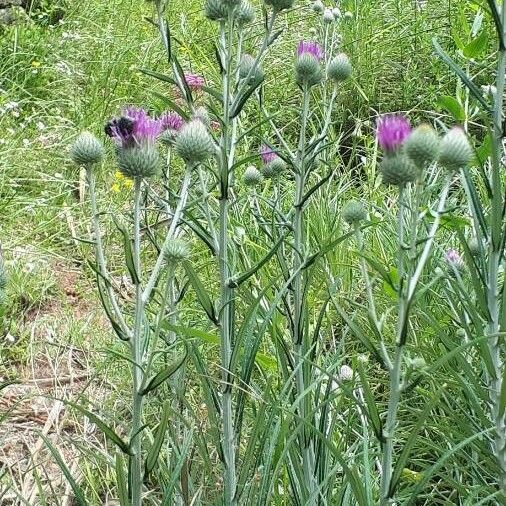
Often called the Shrubby Ptilostemon or the Rock Thistle, this Mediterranean beauty is a master of disguise. At first glance, you might mistake its dense, needle-like foliage for a young pine tree or a rosemary bush, but once it blooms with vibrant purple crowns, its true thistle identity is revealed. It is a resilient survivor that naturally clings to limestone cliffs and coastal rocks, bringing a touch of rugged elegance to sun-scorched landscapes.
🔍 How to Identify
- 🌿 Pine-Like Foliage: The leaves are narrow, stiff, and needle-like, closely resembling the needles of a conifer.
- ⚪ Silver Lining: While the top of the leaf is a deep, waxy green, the underside is covered in a dense, silvery-white felt that helps the plant retain moisture.
- 🌸 Thistle Blooms: In late spring and summer, it produces clusters of purple to pinkish-mauve flower heads (capitula) that sit proudly at the tips of the branches.
- 🌳 Mounded Habit: It grows as a woody, evergreen sub-shrub, forming a neat, rounded dome shape that can reach about 2-3 feet in height.
🏡 In Your Garden
- 🪨 Rock Star Performance: This plant thrives in poor, rocky, or gravelly soils. It is an ideal candidate for Mediterranean-style rock gardens or "dry" landscapes where water is scarce.
- ☀️ Sun Worshipper: It demands maximum sunlight. If planted in even partial shade, it tends to become leggy and loses its signature compact, mounded shape.
- 💧 Drainage is Vital: While it is incredibly drought-tolerant once established, it cannot tolerate "wet feet." It requires sharply draining soil to survive through wet winters.
⚠️ Safety & Toxicity
- ✅ Safe for Households: Ptilostemon chamaepeuce is generally considered non-toxic to humans, cats, and dogs.
- 🌵 Prickly Texture: Though it lacks the aggressive spines of common field thistles, the leaves are stiff and the flower bracts can be sharp. Wear gardening gloves when pruning to avoid minor skin irritation or scratches.
✨ Fun Fact
The name Chamaepeuce literally translates from Greek as "Ground Pine." This refers to its uncanny resemblance to a pine tree, a clever evolutionary trait that helps it withstand the intense heat and salt spray of the Mediterranean coastline.

Detailed Care Instructions
To grow Ptilostemon Chamaepeuce, you can follow these steps:
- Select a suitable location: Choose a sunny spot in your garden that receives at least 6-8 hours of direct sunlight each day. The plant prefers well-draining soil.
- Prepare the soil: Dig the soil to a depth of around 12 inches and remove any weeds or rocks. Mix in organic matter such as compost or well-rotted manure to improve soil fertility and drainage.
- Sow the seeds: Ptilostemon Chamaepeuce can be grown from seeds. Sow the seeds directly into the prepared soil during the recommended planting time, which is usually in early spring or autumn. Lightly cover the seeds with a thin layer of soil, about ⅛ inch deep.
- Water regularly: Keep the soil moist after planting until the seeds germinate, which usually takes around 2-3 weeks. Water gently to avoid washing away the seeds. Once the plants are established, water them deeply but infrequently, allowing the soil to dry out slightly between waterings.
- Mulch the plants: Apply a layer of organic mulch around the base of the plants to help retain moisture, suppress weed growth, and insulate the roots during extreme temperatures.
- Fertilize sparingly: Ptilostemon Chamaepeuce does not require heavy fertilization. Use a balanced, slow-release fertilizer sparingly according to the manufacturer's instructions.
- Prune as needed: Trim back any dead or damaged branches to encourage healthy growth and maintain a more compact shape. Pruning can be done in early spring or after the plant has finished blooming.
- Protect from extreme weather: If your area experiences extreme heat or cold, you may need to provide some protection to the plants. Mulching and covering with frost cloth during winter can help protect the roots from freezing, while shading the plants during hot summer afternoons can prevent heat stress.
By following these care instructions, you should be able to successfully grow Ptilostemon Chamaepeuce in your garden. Remember to observe your plant closely and adjust care practices accordingly.

Place in a bright room that is sun drenched almost all day. Or directly in a south-facing window.

To properly water this specific plant, it is important to take into consideration its unique watering needs. The best approach is to water deeply and infrequently, ensuring that the soil is thoroughly saturated each time. It is important not to overwater the plant, as it is susceptible to root rot. The soil should be allowed to dry out slightly in between watering sessions to avoid waterlogging. When watering, it is recommended to water at the base of the plant, avoiding getting water on the leaves. Lastly, it is important to note that this plant prefers well-draining soil, so be sure to use a potting mixture that allows water to flow through easily.
To promote healthy growth and flowering of this plant, it is recommended to fertilize it once every two weeks during the growing season using a balanced fertilizer with equal amounts of nitrogen, phosphorus, and potassium. Additionally, it is important to water the plant before and after fertilizing to prevent salt buildup in the soil. Avoid over-fertilizing as this can cause damage to the plant and use a small amount of fertilizer per application according to the package instructions.
The most suitable type of soil for the plant in question is well-draining and should be composed of sand, clay, and organic matter. The soil pH should be slightly acidic to neutral (6.0-7.0), and it should be free from heavy metals and toxins. The plant can tolerate a wide range of soil textures, from sandy to loamy, but it prefers soil that is not too heavy. It is important to prevent waterlogging, as the root system is susceptible to rot. Adding compost to the soil can improve soil fertility, and adding mulch around the plant can help retain moisture and suppress weeds. Overall, the plant requires soil that is nutrient-rich, aerated, and well-draining to thrive.
To propagate this plant, you will need to collect seeds from a mature plant or take cuttings from a healthy stem. For seed collection, wait until the plant has finished blooming and the flowers have turned into seed heads. Harvest the seed heads and allow them to dry out completely before collecting the seeds.
To propagate from cuttings, select a healthy stem and cut a 4-6 inch section just below a leaf node. Remove the leaves from the bottom half of the cutting and dip the cut end into rooting hormone. Plant the cutting in a well-draining potting mix and water thoroughly. Place the pot in a location with bright, indirect light and keep the soil moist but not waterlogged.
Both methods of propagation should be done in the spring or early summer when the plant is actively growing. With proper care, new plants should begin to grow within a few weeks.








