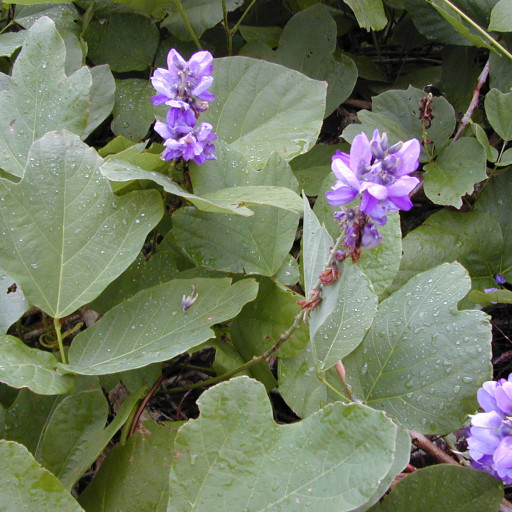
Plant Overview
Known famously (or infamously) as "The Vine that Ate the South," Kudzu is a legendary climber with an almost supernatural growth rate. Originally introduced to North America from East Asia as an ornamental plant and for erosion control, it quickly transformed into one of the most aggressive invasive species on the planet. Its ability to blanket entire forests, abandoned houses, and telephone poles has earned it a place in folklore as a "green monster" that never sleeps.
🔍 How to Identify
- 🍃 The Triple Threat: It features large, alternate leaves divided into three broad leaflets. Each leaflet can be smooth-edged or have shallow lobes, often resembling a giant, fuzzy ivy leaf.
- 🧶 Hairy Vines: The young stems are covered in fine, stiff, bronze-colored hairs that give the plant a slightly "furry" appearance. As the vine ages, it becomes thick, woody, and bark-like.
- 🍇 Grape-Scented Flowers: In late summer, it produces hanging clusters of reddish-purple flowers. Many people find their scent surprisingly pleasant—it smells remarkably like artificial grape soda.
🏡 In Your Garden
- 🏃 Unstoppable Momentum: This is not a plant you want to "invite" into a backyard garden. It can grow up to 12 inches (30 cm) a day in ideal conditions, easily out-competing and smothering native plants by blocking their sunlight.
- 🧱 The Deep Root Problem: Kudzu survives even the harshest control efforts because of its massive, starchy taproots. These roots can grow several feet deep and weigh hundreds of pounds, acting as an underground energy reservoir that fuels rapid regrowth after being cut.
⚠️ Safety & Toxicity
- ✅ Low Toxicity: Kudzu is generally considered non-toxic to humans, dogs, cats, and horses. In fact, in many cultures, parts of the plant are eaten or used in herbal teas.
- 🦟 Hidden Dangers: While the plant itself won't hurt you, its dense "mats" are prime real estate for pests. Ticks, snakes, and stinging insects love the cool, humid shade provided by the thick layers of leaves, so use caution when walking through a Kudzu patch.
✨ Fun Fact
During the Great Depression, the U.S. government actually paid farmers to plant Kudzu to stop soil erosion! Millions of acres were planted before scientists realized the "miracle vine" was actually an ecological nightmare that could grow fast enough to cover a parked car in just a few weeks.

Detailed Care Instructions
There are three subspecies of Pueraria montana. The subspecies with lobed leaves (var. lobata) is the most common.
How fast does kudzu grow?
An established kudzu plant can add up to 1 foot in length per day.
Is kudzu toxic to humans?
The plant is edible and not toxic to humans.
To grow Pueraria montana, also known as kudzu, follow these steps:
- Climate and location: Ensure that you live in a suitable climate for Pueraria montana. It prefers warm temperatures and thrives in USDA hardiness zones 6 through 10. It grows best in well-drained soil with a pH between 5.0 and 6.5.
- Obtaining seeds or plants: You can start growing Pueraria montana from seeds or purchase young plants from a nursery. Seeds can be sown directly into the soil or started indoors about 4-6 weeks before the last expected frost in your area.
- Soil preparation: Prepare the planting area by removing any weeds, rocks, or debris. Add organic matter, such as compost, to enrich the soil and improve drainage.
- Planting seeds or young plants: If using seeds, lightly scarify them with sandpaper or soak them in hot water overnight to enhance germination. Sow the scarified seeds about 1/4 inch deep in the soil, spaced 6-12 inches apart. Alternatively, dig a hole large enough for the young plants and place them carefully, ensuring the roots are covered with soil.
- Watering and mulching: Water the plants regularly, especially during dry periods, to keep the soil consistently moist but not waterlogged. Apply mulch around the plants to retain moisture, suppress weed growth, and insulate the roots.
- Pruning and training: Once the plant starts growing, consider providing a trellis or support structure for it to climb. Pueraria montana is a vigorous vine, so regular pruning will help control its growth and prevent it from spreading uncontrollably. Prune back the vines in early spring before new growth begins.
- Fertilization: Pueraria montana generally doesn't require much fertilization. However, you can apply a balanced, slow-release fertilizer during the growing season to promote healthy growth.
- Pest and disease control: Monitor the plants regularly for any signs of pests, such as aphids or Japanese beetles, and treat them accordingly using organic or chemical insecticides. Pueraria montana is generally resistant to most diseases, but occasional issues like root rot or leaf spots may occur. Proper watering and good airflow around the plants can help prevent these problems.
- Harvesting: Pueraria montana can be harvested for its edible leaves, flowers, and roots. Leaves can be harvested once the plant is well-established and used in salads, stir-fries, or as tea. Flowers are also edible and can be added to various dishes, while the roots are traditionally used for medicinal purposes.
Remember that Pueraria montana is considered an invasive species in many regions, so ensure it doesn't spread uncontrollably and follow any regulations or guidelines set by your local authorities.

Place in a bright room that is sun drenched almost all day. Or directly in a south-facing window.

To ensure proper watering of the plant, you should first check the soil moisture levels by inserting your finger about an inch into the soil. If the soil feels dry to the touch, it is time to water the plant.
Use a watering can or hose with a gentle flow to avoid damaging the plant's roots. Avoid overwatering the plant and ensure that the water reaches the roots.
Water the plant early in the morning or late in the evening to prevent evaporation from the soil. Also, ensure that the surrounding soil is well-draining to prevent waterlogging, which can damage the plant's roots.
In the hot summer months, you may need to water the plant more frequently, but be sure to check the soil moisture levels regularly to avoid underwatering or overwatering the plant.
To fertilize this plant, use a balanced fertilizer with equal parts nitrogen, phosphorus, and potassium, applying it every four to six weeks during the growing season. Avoid over-fertilization or fertilizing during periods of drought or extreme heat. Water the plant well before and after fertilization to prevent any potential root burn.
The ideal soil for the Pueraria Montana plant should be well-draining, fertile, and rich in organic matter. It should have a slightly acidic to neutral pH level and a good moisture retention capacity. The soil should not be compacted and hard.
It is recommended to mix the soil with some compost or aged manure to enhance its nutrient content. It is also advisable to add some vermiculite or perlite to improve the soil structure and drainage.
Before planting, the soil should be loosened to a depth of 12 inches and any weeds or debris should be cleared. The plant should be placed in a hole that is slightly larger than the root ball and the soil should be gently packed around it. Mulching with organic material can also be beneficial to retain moisture and suppress weeds.
Regular watering and fertilization with a balanced fertilizer can help promote healthy growth and flowering. It is also important to monitor the soil moisture level and avoid overwatering or allowing the soil to dry out completely.
Propagation of this plant can be done through several methods, including seed propagation, stem cuttings, and division of the root system. For seed propagation, the plant’s seed pods can be harvested in the fall when they have matured. The seeds should be soaked in water overnight before being planted in well-draining soil in a sunny location. Alternatively, stem cuttings can be taken from healthy and mature plants in the spring. A stem with at least two nodes should be cut and placed in moist soil in a shaded area; it will develop roots and can then be transplanted. Lastly, division of the root system can be done in the fall or spring by digging up and separating the root ball into smaller sections, each with a shoot or stem. These sections can be replanted in well-draining soil in a sunny location.








