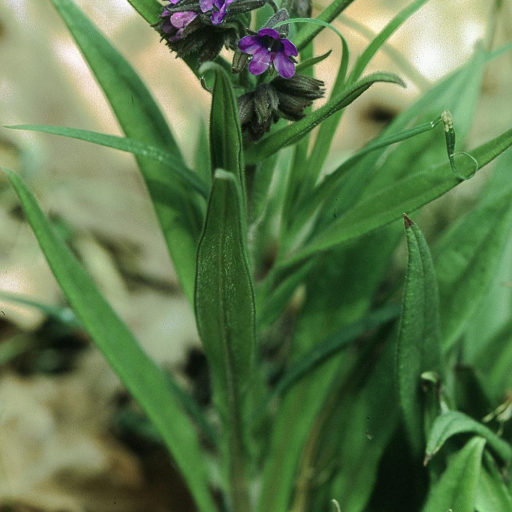
Plant Overview
Commonly known as the Narrow-leaved Lungwort or "Blue Cowslip," this woodland beauty is a harbinger of spring. While its cousins are often grown for their silver-spotted foliage, Pulmonaria angustifolia is prized for its intensely vivid, cobalt-blue flowers that seem to glow in the dappled shade. Its name comes from the ancient "Doctrine of Signatures," where the plant's lung-shaped leaves led herbalists to believe it could cure respiratory ailments.
🔍 How to Identify
- 🌿 The Foliage: Unlike many other Lungworts, this species has long, lance-shaped (narrow) leaves that are typically a solid, deep green, though some varieties may have very faint, subtle spotting.
- 🌸 The Bloom: Funnel-shaped flowers emerge in clusters. While they may start with a hint of violet or pink in the bud, they quickly open into a pure, brilliant sky-blue.
- ☁️ The Texture: Both the stems and the leaves are covered in fine, stiff hairs, giving the plant a slightly rough or "bristly" feel when touched.
🏡 In Your Garden
- 💧 Thirst for Moisture: This plant is a "canary in the coal mine" for garden hydration. If the soil dries out too much, the leaves will dramatically wilt. It thrives in cool, moist, organic-rich soil and absolutely hates the baking afternoon sun.
- 🍄 Airflow is Key: Because it loves damp, shady spots, it can be prone to powdery mildew if the air becomes stagnant. To keep the foliage looking crisp after the flowers fade, give it a "haircut" by removing the old flowering stalks to encourage fresh, healthy leaf growth.
⚠️ Safety & Toxicity
- 🟢 Non-Toxic Status: Pulmonaria angustifolia is generally considered non-toxic to humans, dogs, and cats. It is a safe choice for family-friendly woodland gardens.
- 🖐️ Skin Irritation: While not poisonous, the stiff hairs on the leaves can be a mild mechanical irritant to those with sensitive skin. It is often a good idea to wear gloves when dividing or pruning the plant to avoid a "scratchy" sensation.
✨ Fun Fact
The flowers of the Lungwort act like a natural litmus test! As the flower ages, the pH levels within the petals change, causing the pigments (anthocyanins) to shift from pink to blue. This tells bees which flowers are full of nectar and which have already been "tapped out."

Detailed Care Instructions
To grow Pulmonaria angustifolia, also known as narrow-leaved lungwort, you can follow these steps:
- Choose the right location: Pulmonaria angustifolia prefers partial shade to full shade conditions. Choose a location in your garden that receives filtered sunlight or dappled shade throughout the day.
- Prepare the soil: Pulmonaria angustifolia prefers moist, well-drained soil. Amend the soil with organic matter like compost or well-rotted manure to improve its fertility and drainage.
- Planting: Dig a hole that is slightly larger than the rootball of the plant. Place the plant in the hole and backfill with soil, gently firming it around the roots. Make sure to leave enough space between plants as they can spread to form clumps.
- Watering: Pulmonaria angustifolia requires regular watering, especially during hot and dry periods. Keep the soil consistently moist but avoid overwatering, as it can lead to root rot.
- Mulching: Apply a layer of organic mulch around the plants to help conserve moisture and suppress weeds. This also helps to maintain a cool root environment.
- Fertilizing: Pulmonaria angustifolia generally does not require much fertilization. However, you can apply a balanced, slow-release fertilizer in spring to promote healthy growth.
- Pruning: Pulmonaria angustifolia does not require excessive pruning, but you can remove dead leaves and spent flowers to maintain a tidy appearance. Cut back the foliage to the ground in late winter or early spring to encourage new growth.
- Division: Every few years, you can divide the clumps of Pulmonaria angustifolia to maintain their vigor. Dig up the plant clump and carefully separate it into smaller sections, each with several shoots and roots. Replant the divisions in their new locations.
By following these steps and providing optimal growing conditions, you can successfully grow Pulmonaria angustifolia in your garden.

Place in a bright room that is sun drenched almost all day. Or directly in a south-facing window.

To water this plant, ensure the soil feels dry to the touch before watering. When watering, pour water onto the soil slowly, avoiding getting any water on the leaves or stems. Water until the soil is moist, but not waterlogged. Allow any excess water to drain from the pot or soil. The plant prefers to be watered consistently, but not excessively, throughout the growing season. In the winter, the plant needs less water and can tolerate drier soil.
To fertilize this plant, use a balanced fertilizer with equal proportions of nitrogen, phosphorus, and potassium. Apply the fertilizer in early spring, before the first flush of growth appears. Use a light application of the fertilizer, or follow the manufacturer's instructions, to avoid over-fertilization. Water the plant well after fertilizing. Repeat the application every four to six weeks during the growing season. Avoid fertilizing during the dormant period.
When planting the Pulmonaria Angustifolia plant, it is important to use a well-draining soil that is rich in nutrients. The ideal pH range for this plant is between 6.0 and 7.0. A soil that is too alkaline may lead to nutrient deficiencies, while a soil that is too acidic may cause stunted growth and yellowing of leaves. The best soil composition for this plant should include a mix of organic matter, such as compost or peat moss, with sand and loam to promote good drainage. The soil should be kept consistently moist but not waterlogged, as the plant may be susceptible to root diseases if overwatered. Adding a layer of mulch around the plant can help retain moisture and suppress weed growth. Overall, the key is to provide the Pulmonaria Angustifolia plant with a nutrient-rich, well-draining soil that will support its growth and health.
To propagate this plant, you will need to do so in the spring or fall. Start by taking a cutting of the plant about 4-6 inches long, making sure to select a stem that has at least two nodes. Trim off any lower leaves, then dip the cut end into rooting hormone. Plant the cutting in a pot filled with soilless planting mix, then place the pot in a location with bright, indirect light.
Keep the soil moist but not soggy, and place a clear plastic bag over the pot to create a mini greenhouse. This will help to maintain humidity and create a conducive environment for rooting. After a few weeks, check the cutting for roots by gently tugging on it. Once you feel resistance, the cutting has taken root.
At this point, gradually remove the plastic bag and begin to acclimate the plant to direct sunlight. Once the plant has established itself, you can transplant it into a larger pot or in the garden.








