Plant Overview
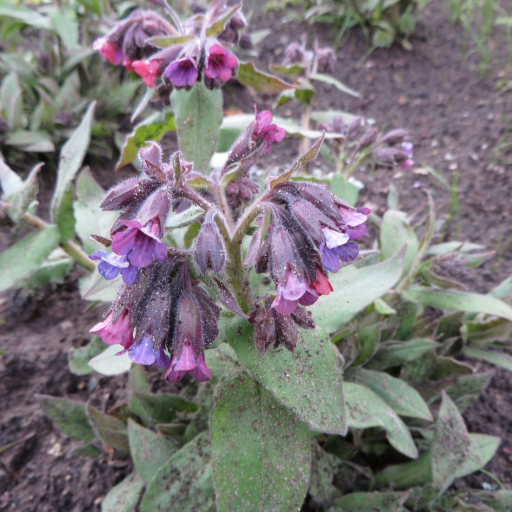
Known as the Soft Lungwort, this woodland treasure acts like a velvet carpet for the shaded corners of your garden. Its species name, mollis, is Latin for "soft," a tribute to the downy, touchable texture of its large, forest-green leaves. In historical folklore, it was often tucked into gardens as a symbol of hospitality and early spring renewal.
🔍 How to Identify
- 🍃 Velvety Foliage: The leaves are notably large, broad, and covered in a dense layer of fine, soft hairs that give the plant a silvery-green shimmer.
- 🌸 Color-Shifting Blooms: Watch the flowers transform; they typically open as a soft rose-pink before maturing into a deep, moody violet or sky blue.
- 🌱 Low Groundcover: It grows in tidy, mounded clumps that spread slowly via rhizomes, rarely reaching more than 12–18 inches in height.
🏡 In Your Garden
- ☁️ The Shade Specialist: Unlike many flowering plants that crave the sun, the Soft Lungwort thrives in dappled light or full shade, making it perfect for planting under the canopy of large deciduous trees.
- 🐝 A Bee's First Feast: Because it blooms so early in the spring, it provides a vital nectar source for long-tongued bees and early butterflies when other food sources are scarce.
- 💧 Thirsty but Tidy: It prefers consistently moist, humus-rich soil. If the leaves start to wilt or "flop," it is usually a dramatic plea for a quick drink of water.
⚠️ Safety & Toxicity
- 🟢 Generally Safe: Pulmonaria mollis is not considered high-risk, but it is not meant for consumption.
- 🐕 Irritant Potential: The tiny hairs on the leaves can occasionally cause mild skin irritation for humans or scratchy sensations in the mouths of curious pets. It contains small amounts of pyrrolizidine alkaloids, so it's best to keep it as a "look-but-don't-eat" garden guest.
✨ Fun Fact
The flower's color change is actually a biological "signal" to pollinators. As the flower is pollinated and ages, its internal pH level changes, shifting the pigment from pink to blue to tell bees that the nectar supply has run dry!

Detailed Care Instructions
To grow Pulmonaria Mollis, also known as lungwort, follow these steps:
- Choose a suitable location: Pulmonaria Mollis prefers partially shaded areas with well-draining soil. It can tolerate full shade but will flower less.
- Prepare the soil: Ensure the soil is loose, fertile, and rich in organic matter. If the soil is heavy clay, consider adding compost or organic matter to improve drainage.
- Planting: Pulmonaria Mollis can be grown from seeds, but it is easier to start with plant divisions or container-grown plants. Dig a hole slightly larger than the root ball and place the plant in it. Cover the roots with soil, slightly firming it around the plant.
- Watering: Keep the soil moderately moist but not waterlogged. Water the plant regularly, especially during dry spells. Avoid overwatering, as excessive moisture can lead to root rot.
- Mulching: Apply a layer of organic mulch around the plant to help retain moisture, suppress weeds, and maintain soil temperature.
- Fertilization: Pulmonaria plants generally do not require much fertilization. However, a light application of balanced, slow-release fertilizer in spring can be beneficial.
- Pruning: Trim back the faded flowers after blooming to encourage new growth and prevent self-seeding. Cut back any damaged or overcrowded foliage to promote air circulation.
- Division: Every few years, in early spring or fall, divide congested clumps of Pulmonaria Mollis plants. Dig up the clump, divide it into smaller sections, and replant them at the same depth as before.
By following these steps, you can successfully grow Pulmonaria Mollis and enjoy its beautiful flowers and foliage.

Place in a window with dappled sun or a spot in the middle of a room. Or directly in a window facing west or east.

To water this plant, make sure the soil around it is dry before watering it. When watering, aim for the soil around the plant's base and limit how much water you pour into the foliage. Provide this plant with ample drainage, as too much water can cause root rot. Water the plant frequently, but avoid leaving it standing with saturated soil.
To fertilize this plant, use a balanced, slow-release fertilizer in the early spring, just as new growth begins to emerge. Avoid fertilizing during the dormant season or in the heat of midsummer. Apply the fertilizer according to the packaging instructions, being careful not to overuse it. Water thoroughly after fertilizing to help distribute the nutrients evenly throughout the soil.
Pulmonaria Mollis is a low-growing perennial plant that requires well-draining soil. The ideal soil should be moist and fertile, with a pH between 5.5-7.5. The plant can grow in a range of soil types, including sandy, loamy, and clay soils, but it cannot tolerate waterlogged soil. It is recommended to mix in organic matter when planting, such as compost or leaf mold, to improve soil structure and nutrients. It is also important to maintain consistent moisture levels without overwatering.
To propagate this plant, you will need to take stem cuttings. Firstly, choose a healthy stem from the parent plant that is at least 4 inches long. Then, using sterilized pruning shears, cut the stem just below a leaf node.
Next, remove the lower leaves from the stem, leaving only a few leaves at the top. This will help to reduce moisture loss and direct more energy to the growth of new roots.
Finally, dip the cut end of the stem into rooting hormone powder and plant it into a pot filled with moist potting soil. Cover the pot with a plastic bag or dome to create a humid environment and place it in a warm, bright location.
Check the soil moisture regularly and mist the cutting if necessary to keep it moist, but not waterlogged. After a few weeks, new roots should start to form and the cutting will begin to grow new leaves. Once the new growth is visible, the plant can be transplanted into a larger container or planted in the garden.








