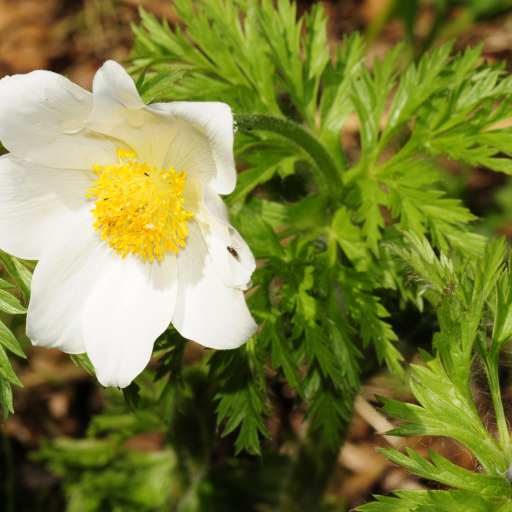
Plant Overview
Often called the "Alpine Pasqueflower," this hardy mountaineer is one of the first signs of life to emerge after the heavy snow melts in the European highlands. With its silky, silver-haired stems and elegant white or yellow blooms, it looks like a creature from a chilly fairy tale. In some regions, it is nicknamed "The Wild Man of the Mountain" because of the shaggy, feathery seed heads it develops once the petals fall.
🔍 How to Identify
- 🌸 The Bloom: Large, cup-shaped flowers that are typically creamy white or soft yellow, often blushing violet on the underside of the petals.
- 🧥 Silky Fur: The stems and leaf buds are covered in a dense coat of long, silver-white hairs that act as a "fur coat" against mountain frosts.
- 🌿 Fern-like Foliage: Deeply divided, lace-like green leaves that form a low rosette, appearing almost like delicate parsley or fern fronds.
- 🌬️ Seed Heads: After flowering, it produces dramatic, fluffy plumes of seeds that catch the wind, resembling a head of messy, grey hair.
🏡 In Your Garden
- 🏔️ Mountain Mimicry: This plant is an "alpine specialist," meaning it craves sharp drainage and cool roots. It is happiest in a rock garden or a scree bed where water can never sit and stagnate.
- 🚫 The Taproot Trap: It grows a long, deep taproot to find water in rocky crevices. Because of this, it absolutely hates being moved once established—transplanting an adult Pulsatilla is often a death sentence for the plant.
- ❄️ Winter Chill: It requires a proper cold period to bloom well. If you live in a tropical climate, this mountaineer will likely struggle without a snowy "sleep" period.
⚠️ Safety & Toxicity
- 🧪 Toxic Status: Highly toxic if ingested. Like many members of the Ranunculaceae (Buttercup) family, it contains protoanemonin.
- 🐾 Skin & Stomach: The sap can cause blistering or "contact dermatitis" on sensitive skin. Keep it away from curious pets and children, as eating any part of the plant can lead to severe digestive upset and mouth irritation.
✨ Fun Fact
- ☀️ Solar Tracking: The flowers of the Alpine Pasqueflower are heliotropic—they actually move throughout the day to follow the sun, acting like tiny satellite dishes to maximize the warmth for their developing seeds!

Detailed Care Instructions
Pulsatilla alpina, also known as alpine pasqueflower, is a beautiful perennial plant that is native to mountain regions of Europe. Here are some tips on how to grow Pulsatilla alpina:
- Location: Pulsatilla alpina thrives in full sun to partial shade, and well-draining soil with a slightly acidic pH level. Choose a planting location that receives plenty of sunlight but also has some protection from harsh afternoon sun.
- Soil: Make sure the soil is well-draining to prevent waterlogging, as Pulsatilla alpina does not like to sit in overly wet soil. You can improve drainage by adding organic matter such as compost or peat moss to the soil.
- Planting: Plant Pulsatilla alpina in early spring or fall, either from seeds or nursery-bought plants. Dig a hole slightly larger than the plant's root ball and place the plant in the hole, ensuring that the crown is just at soil level.
- Watering: Water the plant regularly, especially during dry spells, but be careful not to overwater. Allow the top few inches of soil to dry out between waterings.
- Maintenance: Pulsatilla alpina does not require much maintenance once established. Remove old foliage in the fall to prevent disease and improve air circulation. Mulch around the plant to help retain moisture and suppress weeds.
- Propagation: Pulsatilla alpina can be propagated by division in the fall or by collecting and sowing seeds in the spring.
- Pests and diseases: Pulsatilla alpina is generally resistant to pests and diseases, but keep an eye out for slugs and snails, which may feed on the foliage. Use organic pest control methods if necessary.
By following these tips, you can successfully grow Pulsatilla alpina in your garden and enjoy its beautiful flowers year after year.

Place in a bright room that is sun drenched almost all day. Or directly in a south-facing window.

Pulsatilla alpina plants require consistently moist soil to thrive. Water the plant at the base, being careful not to wet the foliage as this can lead to disease. Allow the soil to dry slightly between waterings, but do not let it dry out completely. Aim to keep the soil evenly moist, but not waterlogged. In hot weather, the plant may require more frequent watering to prevent drying out. Mulch around the base of the plant to help retain moisture in the soil and reduce the need for frequent watering. Additionally, watering in the morning allows the plant to absorb moisture throughout the day and reduces the risk of fungal diseases that can occur from damp foliage overnight.
To fertilize the Pulsatilla Alpina plant, apply a balanced, slow-release fertilizer in the spring before new growth appears. Make sure to follow the recommended dosage on the fertilizer package and evenly distribute it around the base of the plant. Water the plant thoroughly after fertilizing to help the nutrients penetrate the soil and reach the plant's roots. Repeat the fertilization process once or twice throughout the growing season to support healthy growth and flowering. Avoid over-fertilizing, as this can cause nutrient imbalances and damage to the plant.
Pulsatilla Alpina plants thrive in well-draining, slightly acidic soil. The ideal soil for these plants is a loose, sandy loam that is rich in organic matter. It is important to avoid heavy clay soils and compacted, waterlogged soil, as these can lead to root rot and other issues. Adding a layer of compost or peat moss to the soil before planting can help improve drainage and fertility. Additionally, it is recommended to avoid using fertilizers high in nitrogen, as these can cause excessive leafy growth at the expense of flowers. Overall, providing a nutrient-rich, well-draining soil will help ensure the health and vitality of your Pulsatilla Alpina plant.
Pulsatilla Alpina plants can be propagated through division. Here is a step-by-step guide on how to do so:
- Choose a healthy, well-established Pulsatilla Alpina plant to divide. Spring is the best time to divide the plant, as this is when it is actively growing.
- Carefully dig up the plant, making sure to dig around the roots to avoid damaging them.
- Gently shake off any excess soil from the roots to expose the individual plants or divisions.
- Using a sharp, clean knife or garden shears, carefully divide the plant into smaller sections, making sure each division has a good amount of roots attached.
- Plant each division in a well-draining soil mix, ensuring the roots are covered and the plant is planted at the same depth as it was before.
- Water the newly planted divisions thoroughly and keep the soil moist but not waterlogged.
- Place the newly planted divisions in a location with bright, indirect light and protect them from strong sunlight or extreme temperatures.
- Monitor the newly planted divisions regularly and continue to water as needed to help them establish and grow.
By following these steps, you can successfully propagate Pulsatilla Alpina plants and expand your garden with new plants.








