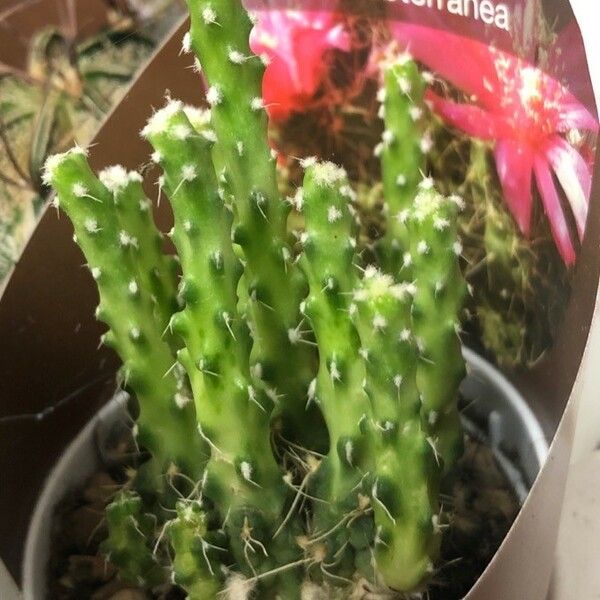
Plant Overview
Hiding in the high-altitude deserts of the Andes, Puna subterranea is a master of disguise. Often called the "Subterranean Opuntia," this cactus has evolved a unique survival strategy: it keeps most of its body tucked safely beneath the soil to escape the harsh mountain elements. In the wild, it blends in so perfectly with the surrounding stones that you might step right over it without ever realizing a rare succulent is at your feet.
🔍 How to Identify
- 🌵 The "Heads": It produces small, brownish-grey to olive-green segments (cladodes) that are roughly spherical or slightly flattened, usually measuring only 1-2 cm in diameter.
- 🥕 The Taproot: Below the surface lies a massive, carrot-like tuberous root that is significantly larger than the visible part of the plant; this is its primary water storage tank.
- 🦴 The Spines: It features tiny, pectinate (comb-like) spines that are flattened against the plant body, giving it a slightly textured, armored appearance rather than a "fuzzy" one.
- 🌸 The Bloom: When it decides to show off, it produces surprisingly large, showy flowers in shades of coppery-rose, brick red, or occasionally yellow.
🏡 In Your Garden
- 🏺 Depth Matters: Because of its enormous taproot, this cactus cannot survive in shallow "cactus pans." It requires a very deep pot to allow the root to expand without hitting the bottom and rotting.
- ☀️ Light & Lithops-Style Care: It craves intense light but very little water. In cultivation, it is often grown "high" in the pot (exposed) for aesthetics, but in nature, it prefers to be buried up to its neck in a gritty, mineral-heavy substrate.
- 💧 Winter Rest: This species is extremely prone to rot if kept damp during cold months. It needs a completely dry winter dormancy to mimic its native high-desert environment.
⚠️ Safety & Toxicity
- ✅ Non-Toxic: Puna subterranea is not known to be poisonous to humans, cats, or dogs.
- 🌵 Mechanical Irritation: While it lacks the long, terrifying needles of its cousins, it still possesses small spines that can prick sensitive skin. Always handle with tweezers or thick gloves during repotting.
✨ Fun Fact
- 📉 The Shrinking Act: During periods of extreme drought, the plant actually loses volume and retracts further into the ground, pulling itself downward using its contractile roots to stay insulated from the sun and wind!

Detailed Care Instructions
Puna Subterranea, also known as Puya raimondii or Queen of the Andes, is a giant terrestrial bromeliad that is native to the high elevations of the Andes mountains in Peru and Bolivia. It is a slow-growing and rare plant that requires specific conditions to thrive. Here are some guidelines on how to grow Puna Subterranea:
- Climate: Puna Subterranea is adapted to high-altitude regions with a cold and dry climate. It requires cool temperatures, ideally ranging between 50 to 70°F (10-20°C) during the day and cooler nights.
- Light: Puna Subterranea prefers bright but indirect sunlight. It is best suited for outdoor cultivation where it can receive full or partial sun. If grown indoors, place it near a south-facing window to ensure it receives adequate light.
- Soil: This plant prefers a well-draining soil mix that replicates the rocky and sandy conditions in its native habitat. You can create a suitable mix by combining regular potting soil with perlite or coarse sand to improve drainage.
- Watering: Puna Subterranea requires a moderate amount of water. Water the plant thoroughly but allow the soil to dry out between waterings to prevent root rot. During the winter months, reduce watering to mimic its natural dormant period.
- Fertilizer: You can fertilize Puna Subterranea once or twice a year using a slow-release or balanced fertilizer formulated for bromeliads. Dilute the fertilizer to half-strength when applying and follow the package instructions.
- Potting and Repotting: Start with a large pot or container with drainage holes to accommodate the plant's eventual size. When repotting, use a larger pot as needed to provide sufficient space for its roots to grow.
- Pollination and Propagation: Puna Subterranea produces large spikes of flowers that can grow up to 25 feet tall. It relies on hummingbirds and bees for pollination. Propagation can be challenging, as it primarily reproduces through seeds. However, you can collect the seeds from mature plants and sow them in a well-draining mix. Keep the soil moist and maintain high humidity for germination, which may take several weeks or even months.
- Patience: Growing Puna Subterranea requires patience, as it is a slow-growing plant. It can take several years for the plant to mature and produce its impressive flower spike.
Remember, Puna Subterranea is a rare and endangered species, so it is crucial to obtain the plant from legitimate sources and not harvest it from the wild.
The plant in question requires regular watering, but it is essential not to overwater it. It is best to allow the soil to dry out partially in between watering sessions. Before watering, note the soil's moisture level by sticking your finger into the soil and feeling for dampness. If the soil is still moist, you may skip the watering. When it is time to water, fill a watering can with lukewarm water until it drips out of the drainage holes. Ensure that you water the soil, not the foliage, to avoid fungal diseases. After watering, allow the plant to drain before placing it back to its growing location. It is often recommended to increase the frequency of watering during the growing season and reduce it in the cooler months.
To properly fertilize the Puna Subterranea plant, follow these instructions:
- Choose a balanced, water-soluble fertilizer specifically formulated for indoor plants or foliage plants.
- Dilute the fertilizer according to the instructions provided by the manufacturer. Usually, a ratio of 1 teaspoon per gallon of water is recommended.
- Ensure the plant's soil is moist before applying the fertilizer.
- Pour the diluted fertilizer solution evenly around the base of the plant, avoiding the leaves to prevent fertilizer burn.
- Do not over-fertilize. It is better to apply a weak solution every two weeks rather than a strong solution all at once.
- Monitor the plant's response to the fertilizer. If the leaves start turning yellow or showing signs of burning, reduce the frequency or concentration of the fertilizer solution.
- During the plant's dormant period (usually during winter), reduce or halt fertilization to allow the plant to rest.
- Regularly flush the soil with plain water to prevent a buildup of salts from the fertilizer, which can be harmful to the plant.
- Consider using organic fertilizers or slow-release fertilizers, following the recommended application rate, if you prefer a more natural or extended-release option.
- Monitor the plant's growth and adjust the fertilization routine accordingly to ensure optimal health and vitality.
For Puna Subterranea plant, it is recommended to use a well-draining soil mix that contains a combination of organic matter, such as compost, and inorganic material, such as perlite or sand. The soil should have a slightly acidic to neutral pH between 6.0 to 7.5. It is important to avoid using soil that retains too much moisture as this can lead to root rot. Adding additional drainage holes in the pot or mixing in more inorganic material can improve drainage. Fertilization should be done sparingly, as the plant prefers nutrient-poor soil. Overall, the soil mix should mimic the plant's natural growing environment, which is typically a rocky terrain with poor soil quality.
To propagate Puna Subterranea plant, you can follow these steps:
- Start by selecting a healthy and mature Puna Subterranea plant as the parent plant from which you will gather the plant material for propagation.
- Prepare a clean and sharp pair of pruning shears or scissors to prevent any damage or infection during the cutting process.
- Identify suitable stems or shoots on the parent plant that can be used for propagation. Look for young and non-flowering shoots that are around 4-6 inches long.
- Carefully cut a stem or shoot from the parent plant just below a node. A node is a point on the stem where leaves or branches emerge.
- Remove any lower leaves from the bottom third of the cutting, leaving only a few leaves at the top. This reduces water loss and directs energy towards root development.
- If desired, you can dip the cut end of the stem in a rooting hormone to promote root growth. This step is optional and not always necessary for Puna Subterranea plant.
- Prepare a rooting medium, such as a well-draining potting mix or a mix of perlite and peat moss. Moisten the medium slightly, ensuring it is not waterlogged.
- Make a small hole in the rooting medium using your finger or a pencil and gently place the prepared cutting into the hole, burying the lower nodes including the removed leaves.
- Place the pot with the cutting in a warm and bright location, but away from direct sunlight that can scorch the cutting.
- Water the cutting lightly, ensuring the soil remains slightly moist but not overly wet. Overwatering can cause rotting, so monitor the moisture level accordingly.
- To create a humid environment, cover the cutting with a clear plastic bag or a propagating dome. This helps retain moisture and enhances the chances of successful rooting.
- Check the cutting regularly for signs of new growth, such as the emergence of new leaves or roots. Be patient, as it may take several weeks for roots to develop.
- Once roots have formed, gradually acclimate the plant to normal growing conditions by providing more light exposure and reducing the humidity. Remove the plastic bag or propagating dome.
- After the plant has developed a robust root system, it can be transplanted into a larger pot or directly into the garden, depending on your preference and specific plant requirements.
Remember to provide adequate care and maintenance to your newly propagated Puna Subterranea plant to ensure its long-term health and growth.








