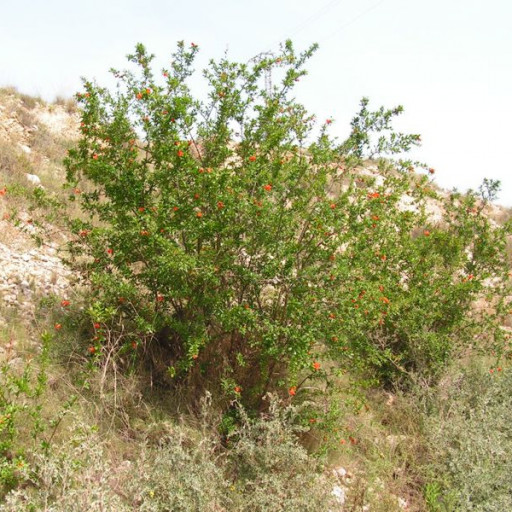
Plant Overview
Known as the "Apple of Carthage" or the "Jewel of the Winter," Punica granatum is one of the oldest cultivated fruits in human history. In Greek mythology, it was the "fruit of the dead" that trapped Persephone in the Underworld, yet it remains a universal symbol of fertility and prosperity across many cultures. Whether grown for its tart, antioxidant-rich arils or its stunning crimson blossoms, this plant adds a touch of ancient Mediterranean elegance to any landscape.
🔍 How to Identify
- 🌿 Glossy Foliage: The leaves are narrow, oblong, and have a beautiful waxy sheen that helps the plant retain moisture in hot climates.
- 🌺 Crinkled Blossoms: The flowers are a striking "safety orange" or deep red, featuring delicate, tissue-paper-like petals nestled in a thick, fleshy base.
- 🍎 Crowned Fruit: The round fruit is unmistakable with its leathery skin and a prominent, star-shaped "crown" (the calyx) at the base, which persists from the flower stage.
🏡 In Your Garden
- ☀️ Sun Seeker: To produce those iconic ruby-red fruits, this plant demands at least 6–8 hours of direct, blazing sun; in shadier spots, it will grow leaves but rarely bloom or fruit.
- ✂️ Growth Habit: Naturally a multi-stemmed shrub, it can be trained into a small tree, but gardeners should watch for "suckers"—new shoots that constantly sprout from the base and drain the plant's energy.
- 💧 Resilient Roots: Once established, it is remarkably drought-tolerant. However, consistent watering during the fruit-ripening stage is vital to prevent the skins from drying out and splitting open prematurely.
⚠️ Safety & Toxicity
- ✅ Edible Fruit: The arils (seeds) and juice are safe and highly nutritious for humans, packed with vitamins and antioxidants.
- 🚫 Roots & Bark: While the fruit is a superfood, the roots, wood, and bark contain alkaloids that are toxic if ingested and should be kept away from children and pets.
- 🐾 Pet Safety: The plant is generally considered non-toxic to dogs and cats, though the high fiber and acidity of the fruit can cause mild stomach upset if they eat a significant amount.
✨ Fun Fact
The distinctive "crown" at the top of the pomegranate fruit is said to have been the original visual inspiration for the design of royal crowns worn by monarchs throughout history!

Detailed Care Instructions
| Color | Orange, Red |
| Soil Ph | 5.5-7.0 |
| Humidity | Normal |
| Lighting | Full Sun |
| Toxicity | Non-Toxic |
| Soil Type | Deep Loamy, Well-Draining |
| Bloom Time | Spring, Summer |
| Difficulty | Medium |
| Plant Type | Perennial |
| Mature Size | From 3 Ft. (Dwarf Trees) To 30 Ft. (Tall Trees) |
| Native Area | Iran, Northern India |
| Temperature | 18°C - 25°C |
| Sun Exposure | Full Sun |
| Hardiness Zones | 7-10 |
To grow a Punica Granatum plant, also known as a pomegranate plant, you can follow these steps:
- Purchase a pomegranate plant or collect seeds from a ripe pomegranate fruit.
- Select a suitable location for planting, preferably in full sunlight. Pomegranate plants can tolerate a range of soil types but prefer well-draining soil. If your soil is heavy, cultivate it and amend it with organic matter, such as compost, to improve drainage.
- Dig a hole that is twice as wide and deep as the root ball of the plant.
- Place the pomegranate plant in the hole, ensuring that the top of the root ball is level with the soil surface. Backfill the hole with soil, gently firming it around the plant to remove any air pockets.
- Water the plant thoroughly after planting, and then water it regularly to keep the soil slightly moist but not waterlogged. Pomegranate plants are drought-tolerant but benefit from regular watering during their establishment period.
- Apply a layer of organic mulch, such as wood chips or straw, around the base of the plant to help retain soil moisture, suppress weeds, and regulate soil temperature.
- Prune the plant annually to maintain its shape and remove any dead or damaged branches. Pruning also helps improve air circulation and sunlight penetration.
- Fertilize the pomegranate plant in early spring with a balanced fertilizer. Follow the manufacturer's instructions for application rates and frequency.
- Protect the plant from extreme cold temperatures, especially during the first few years. Use a frost cloth or cover the plant with a protective barrier if necessary.
- Pomegranate plants usually take 2-3 years to bear fruit. Be patient and continue to provide proper care for your plant.
Remember to check for any specific care requirements based on your specific climate and growing conditions.

Place in a bright room that is sun drenched almost all day. Or directly in a south-facing window.

To water this particular plant, the gardener should always ensure that the soil is moist but not waterlogged or saturated. Over-watering can lead to root rot and ultimately kill the plant. Watering should be done once or twice a week, depending on the climatic conditions and the humidity levels in the environment.
The best approach to ensure that the plant gets adequate water is to water it generously until the soil is saturated. This can be done using a watering can or a hose with a soft spray nozzle to avoid soil erosion and damage to the plant.
After watering, the soil should be allowed to dry out slightly before watering again. An alternative method of watering the plant involves the use of drip irrigation systems or a self-watering container that ensures the plant gets the right amount of water it needs.
It is advisable to water the plants early in the morning or late in the evening to avoid evaporation and ensure that the plant has adequate time to absorb the water. Additionally, during prolonged dry spells, the gardener should increase the frequency of watering to ensure that the plant stays alive and healthy.
- Choose a balanced fertilizer with equal parts of nitrogen, phosphorus, and potassium.
- Apply the fertilizer to the soil around the plant, avoiding direct contact with the stem.
- Use a garden fork to lightly scratch the surface of the soil to allow the fertilizer to penetrate.
- Water the plant well after fertilizing to help the nutrients absorb into the soil.
- Repeat the fertilizing process once every two to three months during the growing season, except during winter when growth is slower.
The appropriate soil for Punica Granatum plants is a well-draining, sandy loam soil. It should have a pH range of 5.5 to 7.5. The soil should be moderately fertile and rich in organic matter. The soil should also be able to retain moisture while being well-drained to prevent waterlogging. A proper soil mixture for this plant can be made by mixing equal parts of garden soil, compost, and coarse sand. The soil should be deep enough to support the plant's extensive root system, which helps it to absorb essential nutrients and water from the soil. Avoid using heavy clay or compacted soils that hold water and retain moisture for too long, as this can lead to root rot and other diseases. It is also important to ensure proper drainage by adding a layer of gravel or sand at the bottom of the planting hole before planting.
Propagation of this plant can be achieved through various methods such as cutting, layering, and seed propagation. In cutting propagation, a healthy stem is cut and placed in soil or water until it forms roots. Layering involves bending one of the branches to the ground and covering it with soil until it develops roots, after which it can be separated and planted on its own. Seed propagation involves sowing the seeds in a well-draining soil mixture that is kept moist until the seeds germinate. The seedlings can then be transplanted into individual pots once they are large enough to handle. Regardless of the propagation method used, it is important to ensure that the plant is placed in a location with plenty of sunlight and well-draining soil to facilitate healthy growth.
Common pests of the pomegranate include Scale insect, mealybugs, spider mites, aphids, thrips. Make a habit of checking your pomegranate frequently for pests so that any infestations can be caught and managed early.








