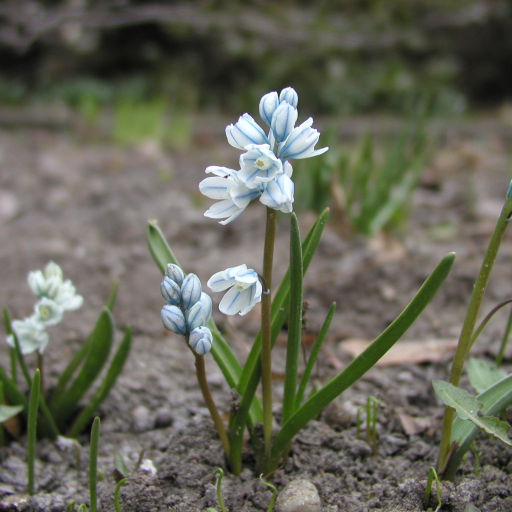
Plant Overview
Often called the Striped Squill or Lebanon Squill, this charming bulbous perennial is one of nature’s most delicate early-spring surprises. Named after the Russian botanist Apollo Mussin-Pushkin, it hails from the stony mountain slopes of the Caucasus and the Middle East. It is beloved for its "porcelain" look, appearing like a miniature work of art pushed through the late winter frost.
🔍 How to Identify
- ❄️ The Bloom: Each stem carries a dense cluster of 6 to 12 star-shaped, pale silvery-blue or white flowers.
- 🔹 The Stripe: The most defining feature is a distinct, sharp blue vein running down the center of each petal (tepal), giving it a pinstripe appearance.
- 🍃 The Foliage: Two or three narrow, strap-like basal leaves emerge at the same time as the flowers, providing a deep green contrast to the pale blooms.
🏡 In Your Garden
- 🌱 Naturalizing Expert: This plant is famous for "naturalizing," meaning it will slowly spread and form a beautiful floral carpet over the years without becoming aggressive. It is perfect for rock gardens or tucked under deciduous trees.
- ⏳ Plant and Forget: Because it originates from alpine regions, it is incredibly hardy. It prefers "cool" feet and well-drained soil; the bulbs are prone to rot if they sit in soggy ground during their summer dormancy.
- 🐜 Ant Allies: The seeds have a small, fleshy attachment that attracts ants. These insects carry the seeds back to their nests, inadvertently helping the plant "walk" and colonize new areas of your garden.
⚠️ Safety & Toxicity
- 🚫 Toxicity Status: Low to moderate toxicity.
- 🐾 Risk to Pets: Like many spring bulbs (such as Hyacinths and Daffodils), the bulbs contain alkaloids that can cause stomach upset, drooling, or vomiting in cats and dogs if chewed or swallowed.
- 👶 Human Safety: While not typically fatal, the bulbs can cause skin irritation for some gardeners. It is best to wear gloves during planting if you have sensitive skin.
✨ Fun Fact
Despite its appearance, Puschkinia scilloides is not a true "Squill" (Scilla). While they look nearly identical to the naked eye, the Puschkinia's stamens are fused into a tiny tube or "cup" at the center of the flower—a botanical secret that distinguishes it from its cousins!

Detailed Care Instructions
To grow Puschkinia Scilloides plants, commonly known as Russian snowdrop or striped squill, you can follow these steps:
- Planting time: The best time to plant Puschkinia Scilloides bulbs is in the fall, ideally between September and November. This allows the bulb to establish itself before the onset of winter.
- Choose a suitable location: Puschkinia Scilloides prefers well-draining soil and a location that receives partial shade to full sun. It can tolerate a wide range of soil types but prefers slightly alkaline conditions.
- Prepare the soil: Before planting, loosen the soil and remove any weeds or debris. Adding organic matter like compost can help improve soil drainage and fertility.
- Plant the bulbs: Dig holes that are around three times the depth of the bulb and position them with the pointed end facing upward. Space the bulbs approximately 3-4 inches apart.
- Watering: After planting, water the bulbs thoroughly to help settle the soil and initiate root growth. Maintain moist soil during the growing season but avoid overwatering to prevent rotting.
- Fertilization: Fertilizer is generally not necessary for Puschkinia Scilloides plants, as they can survive in poor soil conditions. However, if you want to provide additional nutrients, you can apply a balanced, slow-release fertilizer during the growing season.
- Maintenance: Once established, Puschkinia Scilloides plants are relatively low maintenance. However, ensure that the soil does not become waterlogged and remove any dead foliage or flower stems after the blooming period.
- Propagation: Puschkinia Scilloides plants can reproduce by producing offsets or by seed propagation. Bulb division can be performed every few years in late summer to early fall.
- Winter care: Puschkinia Scilloides is a hardy plant but can benefit from a layer of mulch to protect it during harsh winters.
- Enjoy the blooms: Puschkinia Scilloides plants typically bloom in early spring, producing delicate, blue or white flowers in clusters. Enjoy their beauty and watch them naturalize over time.
Remember, Puschkinia Scilloides is a bulb plant, so it may take a couple of years for them to establish and bloom abundantly.

Place in a bright room that is sun drenched almost all day. Or directly in a south-facing window.

Puschkinia Scilloides plant requires regular watering to grow well. It is essential to provide the plant with adequate water to promote healthy growth. The watering frequency depends on the environmental conditions, soil type, and plant maturity. Generally, it is recommended to water this plant once a week during spring and summer and reduce frequency during winter.
When watering, it is important to avoid excessive moisture around the roots as it can lead to root rot. Therefore, it's best to water deeply but moderately. The soil should be moist to a depth of 1-2 inches but not waterlogged. A good way to check the soil moisture is by sticking your finger into the soil. If the soil is dry at the top inch, it's time to water.
Use tepid water that is free from chlorine or other chemicals, as this plant is sensitive to chemicals. Water it gently around the base of the plant, avoiding the leaves to prevent fungal diseases.
In conclusion, the Puschkinia Scilloides plant requires moderate and regular watering, with proper drainage to prevent root rot. Make sure to use tepid chemical-free water and avoid excessive moisture around the roots.
To fertilize this plant, use a balanced fertilizer with equal amounts of nitrogen, phosphorus, and potassium. Apply the fertilizer in the early spring, just before flowering starts. Use a slow-release fertilizer to prevent over-fertilizing. Water the plant well after fertilization to help the nutrients penetrate the soil. Avoid fertilizing during the growing season to prevent damage to the plant.
The Puschkinia Scilloides plant prefers a well-draining soil that is rich in organic matter. It is recommended to use a soil mix that contains a combination of loam, sand, and peat moss. The pH level of the soil should be slightly acidic to neutral, with a range of 6.0 to 7.0.
When planting Puschkinia Scilloides, it is important to ensure that the soil is moist but not waterlogged. Amend the soil with compost or other organic matter to improve drainage and nutrient availability. Additionally, avoid using heavy clay soils that can become compacted and limit root growth.
Overall, the ideal soil for Puschkinia Scilloides should be well-draining, nutrient-rich, and have a slightly acidic to neutral pH.
To propagate this plant, you will need to carefully separate the bulbs from the parent plant. This can be done by gently digging around the base of the plant and carefully lifting the bulbs out of the soil. Once you have separated the bulbs, you can replant them in a new location, making sure to place them at the same depth they were originally planted. It is important to keep the soil moist but not waterlogged during this process to prevent the bulbs from drying out or rotting. You can also propagate this plant through seed, which can be sown in the fall or early spring. The seeds should be planted in a well-draining soil mix and kept moist until they germinate, which can take several weeks.
Common pests of the striped squill include Spider mites, aphids, snails. Make a habit of checking your striped squill frequently for pests so that any infestations can be caught and managed early.








