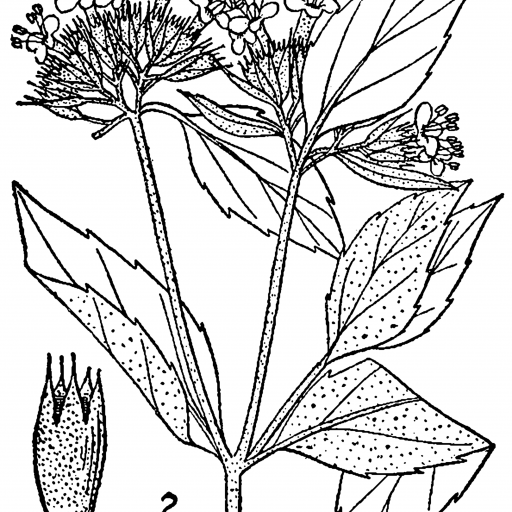
Plant Overview
Known as the "Ghost Mint" or Hoary Mountain Mint, this plant looks as though a mischievous gardener has dusted its upper leaves with powdered sugar. Native to the meadows and open woodlands of Eastern North America, it is legendary among beekeepers and butterfly enthusiasts for being perhaps the single most attractive plant for pollinators in the wild. Despite its name, it isn't a true mint (Mentha), but it carries a refreshing, spicy fragrance that can perfume an entire corner of your garden.
🔍 How to Identify
- ❄️ The "Frost" Effect: The upper leaves (bracts) turn a striking silvery-white as the plant nears bloom, making it look like it’s covered in hoarfrost or white paint.
- 🌸 Spotted Blooms: Small, tubular flowers appear in dense, flat-topped clusters. If you look closely, the white petals are often intricately "freckled" with tiny purple spots.
- 🟦 Square Stems: True to its family (Lamiaceae), it features sturdy, square-shaped stems that are covered in fine, velvety white hairs.
🏡 In Your Garden
- 🐝 The Pollinator Pub: If you plant this, prepare for a crowd. It is a magnet for the Blue-winged Scoliid wasp (a beneficial insect that hunts lawn grubs) and dozens of species of butterflies and honeybees.
- 🛡️ Natural Boundary: Unlike common peppermint, which can be an invasive nightmare, Hoary Mountain Mint is "clump-forming." It will expand its territory slowly but won't jump across the garden overnight, making it a well-behaved neighbor for other perennials.
- ☀️ Drought Warrior: Once its root system is established, it is remarkably tough. It thrives in sunny spots with rocky or thinning soil where other "thirstier" plants might wilt.
⚠️ Safety & Toxicity
- ✅ Status: Generally non-toxic and historically used in herbal teas.
- 🐶 Pet Note: While not listed as a major toxin, the concentrated essential oils in the leaves (specifically pulegone) can cause digestive upset in cats or dogs if consumed in large quantities.
- ✋ Skin Sensitivity: Most people find the fuzzy leaves pleasant, but those with very sensitive skin might experience mild irritation from the high oil content when rubbing the foliage.
✨ Fun Fact
Native American tribes and early settlers used the crushed leaves of the Hoary Mountain Mint as an organic insect repellent. Rubbing the leaves on your clothes or skin releases pulegone—the same compound found in pennyroyal—which helps ward off mosquitoes and ticks during a hike!

Detailed Care Instructions
To grow Pycnanthemum Incanum, also known as hoary mountain mint, follow these steps:
- Choose the right location: Pycnanthemum Incanum thrives in full sun to partial shade. Select a location with well-draining soil.
- Prepare the soil: Amend the soil with organic matter like compost to improve drainage and provide nutrients. Ensure that the soil pH is around neutral (6.5-7.5).
- Sow seeds: Pycnanthemum Incanum can be grown from seeds. Sow the seeds in late winter or early spring, around 6-8 weeks before the last frost. Cover the seeds lightly with soil and gently water them.
- Transplanting: Alternatively, you can purchase young Pycnanthemum Incanum plants from a nursery. Transplant them into the prepared soil after the last frost date in your region. Space the plants about 12-18 inches apart.
- Watering: Pycnanthemum Incanum prefers evenly moist soil, so water regularly. Allow the soil to dry slightly between waterings, avoiding excessive waterlogging.
- Mulching: Apply a layer of organic mulch around the plants to help retain moisture, suppress weed growth, and regulate soil temperature.
- Fertilizing: Pycnanthemum Incanum usually does not require heavy fertilization. However, you can apply a balanced slow-release fertilizer in early spring to provide necessary nutrients.
- Pruning: Trim back the plant after it finishes flowering to encourage bushier growth and prevent it from becoming leggy.
- Pests and diseases: Pycnanthemum Incanum is generally resistant to pests and diseases. However, keep an eye out for common garden pests like aphids or spider mites. Treat any issues promptly with organic insecticidal soap or neem oil if necessary.
- Harvesting: Pycnanthemum Incanum leaves can be harvested throughout the growing season. Use them fresh or dry them for future use in teas, culinary dishes, or potpourri.
By following these steps, you can successfully grow Pycnanthemum Incanum and enjoy its beautiful foliage and aromatic qualities in your garden.

Place in a bright room that is sun drenched almost all day. Or directly in a south-facing window.

1. Understand the plant's watering needs: Pycnanthemum Incanum is a plant that prefers moist soil, but it should not be watered excessively as it can lead to root rot. It is important to allow the soil to dry out slightly in between watering.
2. Check the soil moisture: Before watering the Pycnanthemum Incanum plant, it is important to check the moisture level of the soil. This can be done by inserting your finger into the soil to a depth of about an inch. If the soil feels dry to the touch, it's time to water.
3. Water thoroughly: When watering your Pycnanthemum Incanum plant, it is important to water it thoroughly. This means that you need to water until the water begins to seep out of the drainage holes at the bottom of the pot. This helps to ensure that the entire root system is receiving sufficient water.
4. Water from the base: When watering your Pycnanthemum Incanum plant, it is best to pour the water into the saucer or stand that it is sitting on. This allows the plant to absorb the water it needs without getting the leaves wet, which can increase the risk of disease.
5. Water at the right time: Pycnanthemum Incanum plants should be watered early in the morning or late in the day when the sun is not too strong. This helps to prevent the water from evaporating too quickly and ensures that the plant has sufficient moisture to get through the day.
6. Monitor soil moisture regularly: Regularly monitoring the soil moisture level of your Pycnanthemum Incanum plant is important. Overwatering can lead to root rot, while underwatering can cause the plant to wilt and die. It's a good idea to check the soil moisture level once a week or more frequently during periods of hot, dry weather.
To fertilize this plant, you should choose a high-quality organic fertilizer that is specifically formulated for native plants. Apply the fertilizer lightly, adding a thin layer of compost or well-rotted manure around the base of the plant. Water the plant immediately after fertilizing to help the nutrients absorb into the soil. It is important to avoid over-fertilizing, as this can lead to excessive growth and may even harm the plant. Instead, fertilize lightly once or twice a year, ideally in the early spring or fall, to provide the plant with essential nutrients for healthy growth.
The soil that is ideal for the growth and development of Pycnanthemum Incanum plant should be well-draining and well-aerated. It should be rich in organic matter and should have a pH level that is neutral to slightly acidic. In addition, the soil should not be compacted and should allow air circulation to the roots of the plant.
Ideally, the Pycnanthemum Incanum plant prefers sandy loam soil that is slightly moist but not water-logged. However, it can also tolerate clayey or silty soils with good drainage. The soil should be able to retain moisture but not be too moist, as this could lead to root rot.
It is recommended to amend the soil with compost or other organic matter before planting to enrich the soil and provide nutrients to the plant. Fertilization should be done in spring or early summer with a balanced fertilizer. Mulching around the base of the plant is also helpful in retaining moisture and suppressing weeds.
Overall, the soil that is best for Pycnanthemum Incanum plant is one that is well-draining, rich in organic matter, and has neutral to slightly acidic pH level.
To propagate this plant, you can take stem cuttings from the parent plant in the spring or early summer. Cuttings should be about 3-4 inches long and should have several leaves attached. Remove the lower leaves from the cutting and dip the cut end in rooting hormone.
Plant the cutting in a pot filled with a well-draining potting mix and water thoroughly. Keep the cutting in a warm, humid location and mist it regularly to keep it moist. After a few weeks, the cutting should start developing roots.
At this point, the plant can be transplanted into a larger pot or outside in a prepared bed. Make sure to keep it watered and protected from direct sunlight until it becomes established.
Common pests of the silverleaf mountain mint include Aphids, thrips, whiteflies. Make a habit of checking your silverleaf mountain mint frequently for pests so that any infestations can be caught and managed early.








