Plant Overview
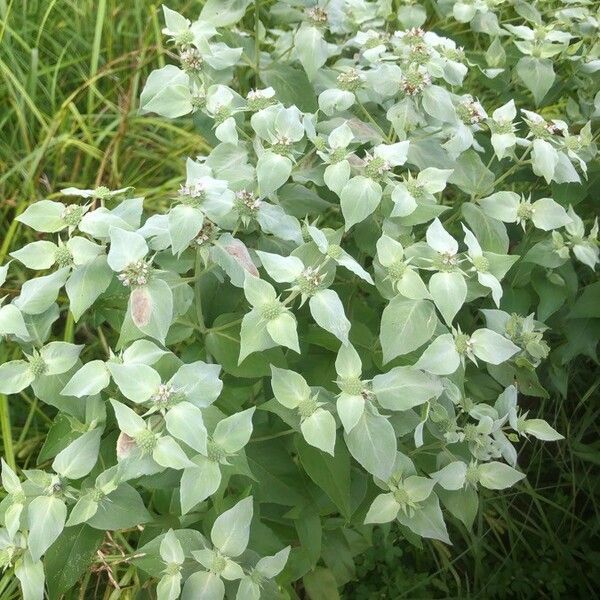
Often called the Short-toothed Mountain Mint or "Clustered Mountain Mint," this plant is a showstopper for late summer gardens. It looks as if a light dusting of silver frost has fallen on its top leaves, even in the peak of the August heat. Beyond its ethereal beauty, it is legendary among gardeners as the ultimate "party host" for butterflies, bees, and beneficial wasps.
🔍 How to Identify
- 🌿 Silvery Bracts: The most striking feature is the pair of velvety, silver-white leaves that sit just below the flower clusters, creating a "frosted" or glowing appearance.
- 🟦 Square Stems: True to the mint family (Lamiaceae), its stems are distinctly four-sided and sturdy, allowing the plant to stand tall without flopping.
- 🌸 Button Flowers: The actual flowers are tiny, tubular, and pale lavender or white with minute purple spots, packed into dense, flat-topped button-like heads.
🏡 In Your Garden
- 🐝 The Pollinator Magnet: If you want to see your garden vibrate with life, this is the plant. It is widely considered one of the top plants for supporting biodiversity, attracting everything from Great Spangled Fritillaries to tiny, helpful predatory wasps.
- 💧 Polite Spreading: Unlike its "thug" cousins in the culinary mint genus (Mentha), this native perennial spreads via rhizomes at a much more manageable pace. It forms a lush, dense clump rather than a garden-wide takeover.
- 🦌 Deer Resistance: Because of its high concentration of essential oils, deer and rabbits almost always leave it alone, making it a reliable choice for rural landscapes.
⚠️ Safety & Toxicity
- ✅ Generally Safe: Clustered Mountain Mint is non-toxic to humans and is often used to brew a strong, medicinal-tasting tea.
- 🐾 Pet Safety: It is not listed as toxic to cats or dogs by major veterinary databases, though the strong menthol scent usually acts as a natural deterrent for curious chewers.
- 🧴 Skin Sensitivity: While safe, some people with sensitive skin may experience mild irritation if they handle the plant extensively in direct sunlight due to the potent oils.
✨ Fun Fact
✨ Nature’s Bug Spray: Early American settlers and indigenous peoples would rub the crushed leaves of Mountain Mint on their clothes and skin to repel mosquitoes and ticks. Modern science confirms the plant contains pulegone, a natural compound that effectively confuses and repels biting insects!

Detailed Care Instructions
To grow Pycnanthemum muticum, also known as the mountain mint or short-toothed mountain mint, you can follow these steps:
- Climate and soil conditions: Pycnanthemum muticum thrives in full sun to partial shade and prefers moist, well-drained soil. It is usually found in dry fields, woodland edges, and prairies.
- Planting: Start by acquiring seeds or young Pycnanthemum muticum plants from a reputable nursery or garden center. You can sow the seeds directly in the desired location in spring or fall, or start them indoors 6-8 weeks before the last frost date.
- Soil preparation and planting location: Prepare the soil by removing any weeds or debris, and amend it with compost or organic matter if necessary. Pycnanthemum muticum can tolerate various soil types but prefers a neutral to slightly acidic pH. Choose a location where the plant can receive adequate sunlight.
- Sowing and spacing: If sowing seeds directly, sprinkle them on the prepared soil and cover lightly with a thin layer of soil. Keep the soil moist until germination occurs, which usually takes 2-3 weeks. Thin out the seedlings to allow sufficient spacing, as specified on the seed packet or container label.
- Watering: While Pycnanthemum muticum is relatively drought-tolerant once established, it is important to keep the soil consistently moist during the initial stages of growth, especially for seedlings. Water deeply but infrequently to encourage deep root growth.
- Mulching: Apply a layer of organic mulch around the plants to retain moisture, suppress weed growth, and provide insulation for the roots. Avoid mulching too close to the stem to prevent rotting.
- Maintenance: Prune back the plant in late winter or early spring to promote bushier growth and remove any dead or damaged foliage. Deadheading spent flowers can also encourage continuous blooming. Pycnanthemum muticum is generally resistant to pests and diseases, but occasional pest inspections are recommended.
- Harvesting: The leaves and flowers of Pycnanthemum muticum have a minty fragrance and can be used in herbal teas or potpourri. Harvest the leaves and flowers in dry weather for the best flavor and fragrance.
By following these steps, you can successfully grow Pycnanthemum muticum and enjoy its attractive foliage, unique flowers, and beneficial properties for pollinators such as bees and butterflies.

Place in a bright room that is sun drenched almost all day. Or directly in a south-facing window.

To properly water this plant, you should first check the soil moisture level by sticking your finger about an inch into the soil. If the soil feels dry, then it's time to water the plant. When watering, aim to water the soil around the plant's roots rather than the leaves or stem. You can do this by adding water slowly with a watering can or hose, being careful not to overwater. It's important to ensure proper drainage, so make sure the plant's container or planting area has adequate drainage holes or soil composition that allows for good drainage. It's also beneficial to provide this plant with regular deep watering rather than light watering more frequently, as it can encourage stronger root growth.
To fertilize this plant, you should use a balanced fertilizer with equal amounts of nitrogen, phosphorus, and potassium. Apply the fertilizer in the spring, before new growth appears, and again in mid-summer. Be sure to follow the manufacturer's directions for dosage and apply it evenly around the base of the plant. Water thoroughly after fertilizing. Avoid over-fertilizing, as this can lead to excessive growth and weaken the plant.
The best soil to use for this plant is a well-draining loamy soil that is rich in organic matter. It should have a pH level that ranges from slightly acidic to neutral, around 6.0 to 7.0. The soil should be able to retain moisture but not become waterlogged, so make sure to add perlite or sand to improve drainage if necessary. Additionally, it is beneficial to add a slow-release fertilizer to the soil when planting, and to supplement with additional fertilizer periodically throughout the growing season to promote healthy growth.
Propagation of this plant can be done by taking stem cuttings in the early summer. The ideal stem cutting should be around 4 inches long and should have several nodes on it. Remove the lower leaves from the stem, leaving only a few at the top. Dip the cut end of the stem in rooting hormone powder and plant it in a pot filled with a well-draining soil mix. Keep the soil moist and the pot in a shaded area for the first few weeks. After the cuttings take root, gradually move them to a sunnier spot and continue to water them regularly. Gradually, they will grow into mature plants.
Common pests of the blunt mountainmint include Aphids, thrips, whiteflies. Make a habit of checking your blunt mountainmint frequently for pests so that any infestations can be caught and managed early.








