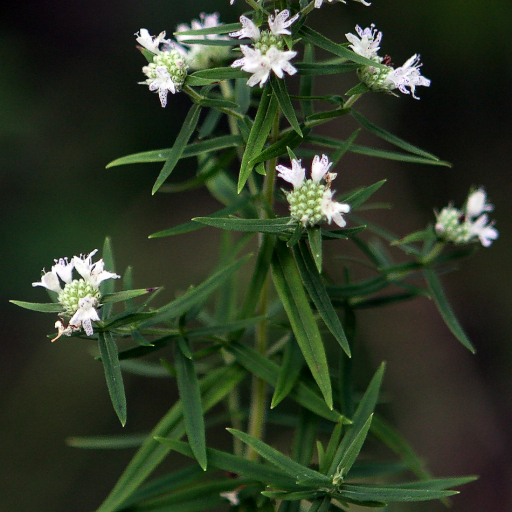
Plant Overview
Often called the "Pollinator’s Pub," Virginia Mountain Mint is a powerhouse of the North American prairie and wildflower meadows. Despite its name, you don’t need to live on a peak to grow it; it flourishes in sunny fields and moist thickets across the eastern United States. It is a favorite for gardeners who want the refreshing scent of mint without the aggressive, garden-swallowing behavior of its common culinary cousins.
🔍 How to Identify
- 🌿 The Stem: Like most members of the Mint family, it features a distinctly square, rigid stem that is often covered in fine, white hairs.
- 🍃 The Foliage: The leaves are slender, lance-shaped, and grow opposite one another. When bruised or crushed, they release a sharp, cooling peppermint aroma.
- 🌸 The Bloom: It produces dense, flat-topped clusters of small white flowers. If you look closely, you’ll see tiny, delicate purple spots decorating the petals.
🏡 In Your Garden
- 🐝 Pollinator Magnet: This plant is arguably one of the best for biodiversity. During the summer, it is almost constantly vibrating with activity, attracting a dizzying array of honeybees, native bees, butterflies, and beneficial predatory wasps.
- 🌱 Controlled Spreading: While it does spread via underground rhizomes, it is far less invasive than peppermint or spearmint. It forms tidy clumps that can be easily managed, making it a "polite" neighbor in a perennial border.
- ☀️ Site Preference: It is happiest in full sun to partial shade. It loves "medium" moisture—not too dry, but not a swamp—though it is surprisingly drought-tolerant once its root system is established.
⚠️ Safety & Toxicity
- ✅ Human Safety: The leaves are non-toxic and are frequently used to brew a potent, medicinal-tasting herbal tea.
- 🐾 Pet Sensitivity: While not considered deadly, the high concentration of essential oils (specifically pulegone) can cause digestive upset or vomiting in dogs and cats if they ingest a significant amount.
- 🖐️ Skin Contact: Most people handle it without issue, but the strong oils can occasionally cause mild skin irritation for those with very sensitive skin.
✨ Fun Fact
Native Americans and early settlers recognized the plant's potent oils as a natural chemical defense. They would rub the crushed leaves on their skin and clothes to act as a natural repellent against mosquitoes, ticks, and flies!

Detailed Care Instructions
To grow Pycnanthemum virginianum, also known as Virginia Mountain Mint, follow these steps:
- Choose a suitable location: Pycnanthemum virginianum prefers full sun to partial shade. Ensure the soil is well-draining, loamy, and fertile.
- Obtain young plants: You can purchase Pycnanthemum virginianum plants from nurseries, garden centers, or online. Alternatively, you can collect seeds from an existing plant or ask for divisions from a gardening friend.
- Planting: Dig a hole that is slightly larger than the root ball of the plant. Place the plant in the hole, making sure the top of the root ball is level with or slightly above the soil surface. Backfill the hole with soil, gently firming it around the roots. Water thoroughly after planting.
- Watering: Pycnanthemum virginianum prefers consistently moist soil. Water regularly, especially during dry periods, to keep the soil evenly moist. However, avoid overwatering, as it can cause root rot.
- Mulching: Apply a layer of organic mulch, such as wood chips or straw, around the plants. Mulching helps retain moisture in the soil, suppresses weed growth, and maintains a cool root environment.
- Pruning: Pycnanthemum virginianum doesn't require regular pruning. However, if the plant becomes leggy or crowded, you can cut it back to about half its height in early spring before new growth emerges.
- Fertilization: Pycnanthemum virginianum generally does not require fertilization. If the soil is poor, you can apply a balanced, slow-release fertilizer in early spring.
- Pests and diseases: Pycnanthemum virginianum is generally pest-free. However, monitor for common garden pests like aphids or spider mites and treat accordingly. The plant is also relatively resistant to diseases.
- Propagation: Pycnanthemum virginianum can be propagated by collecting seeds from mature plants in late summer or by dividing established clumps in early spring or fall. Sow seeds in pots or directly in the garden, and divide the clumps by carefully digging up and separating the root mass.
By following these steps, you should be able to successfully grow Pycnanthemum virginianum.

Place in a window with dappled sun or a spot in the middle of a room. Or directly in a window facing west or east.

Pycnanthemum Virginianum is a plant that requires moderate watering. It is important to water the plant deeply and infrequently rather than shallowly and frequently. The soil should be allowed to dry out slightly between watering to prevent waterlogging and root rot. The best time to water is in the morning or early evening to avoid evaporation during the hot sun. It is essential to ensure the soil is well-draining, and excess water should be allowed to drain away. Overwatering should be avoided as it can cause the plant to wilt, develop yellow leaves, and eventually die. The plant should also be watered at the base of the stem, and not over the foliage to avoid fungal diseases.
To fertilize the plant, apply a balanced, slow-release fertilizer in early spring before new growth appears. Follow the manufacturer's instructions for the proper application rate and method. Avoid over-fertilizing, as it can lead to excessive growth and poor flowering. Throughout the growing season, you can also feed the plant with a diluted liquid fertilizer every two weeks to encourage healthy growth and abundant blooms.
The ideal soil for this particular plant should be well-draining and rich in organic matter. It's recommended to use a slightly acidic soil with a pH between 5.5 and 6.5. The plant prefers soil that is moist, but not constantly waterlogged. It also thrives in soil that is loamy, meaning that it has a balanced mixture of sand, silt, and clay. Additionally, the plant is tolerant of a range of soil types, including sandy or clay soils. When planting, it's beneficial to mix compost or other organic matter into the soil to improve its fertility and structure.
To propagate this plant, you can take stem cuttings. First, select a healthy stem that is about 4-6 inches long and has at least two sets of leaves. Next, carefully remove the lower set of leaves, leaving the top set intact. Dip the cut end of the stem in rooting hormone powder and then plant it in a pot filled with a well-draining soil mix. Water the soil well and cover the pot with a clear plastic bag to create a humid environment. Place the pot in a bright but indirect light location and keep the soil moist but not soggy. In a few weeks, you should see roots beginning to form. Once the roots are established, you can transplant the new plant into a larger pot or into the ground.
Common pests of the virginia mountain-mint include Aphids, thrips, whiteflies. Make a habit of checking your virginia mountain-mint frequently for pests so that any infestations can be caught and managed early.








