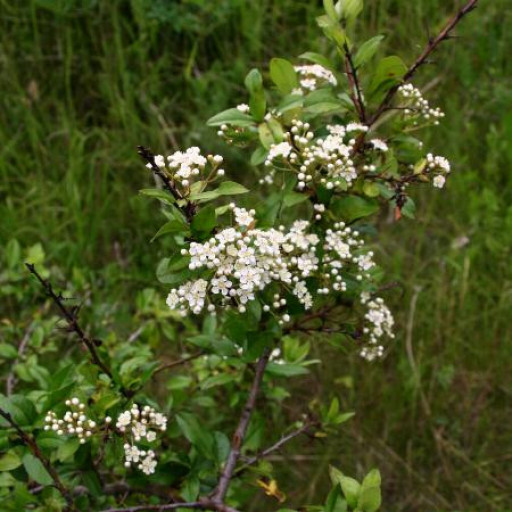
Plant Overview
Often called the "Scarlet Firethorn," this plant is a showstopper that transitions from a sea of creamy blossoms in spring to an explosion of fiery berries in autumn. It is prized by gardeners for its dual-purpose nature: it acts as a stunning ornamental and a formidable "living fence" thanks to its sharp, protective thorns. In folklore, its dense, thorny branches were often thought to guard a home against unwanted spirits and intruders alike.
🔍 How to Identify
- 🌿 The Foliage: Small, glossy, dark green leaves that are oval-shaped with slightly toothed edges. These typically remain on the plant year-round in milder climates.
- 🌸 The Blooms: Dainty clusters of five-petaled white flowers that appear in late spring, creating a "snow-covered" look that attracts bees and butterflies.
- 🔴 The Berries: Round, pea-sized fruits (pomes) that turn brilliant shades of orange, scarlet, or crimson and persist throughout the winter.
- ⚔️ The Thorns: Long, sturdy, and extremely sharp spines hidden along the woody branches, usually measuring about 1 to 1.5 inches long.
🏡 In Your Garden
- 🦅 Bird Sanctuary: The dense, thorny structure provides a perfect, predator-proof nesting site for songbirds, who also feast on the berries during lean winter months.
- 🏰 Security Screen: Because of its aggressive thorns, it is one of the best plants for creating a "living wall" or natural security barrier under windows or along property lines.
- 🧱 Espalier Potential: Firethorn is remarkably flexible when young and is famous for its ability to be "espaliered"—trained to grow flat against a brick wall or fence in beautiful, geometric patterns.
- 🌱 Toughness: It is incredibly resilient to pollution and poor soil, making it a favorite for urban gardens or roadside planting.
⚠️ Safety & Toxicity
- 🦴 Physical Hazard: The thorns are the primary danger. They are stiff and sharp enough to pierce through standard gardening gloves; always wear heavy-duty leather protection when pruning.
- 🐕 Pet & Child Alert: The berries contain cyanogenic glycosides. While birds eat them without issue, they can cause stomach upset, vomiting, and lethargy in dogs, cats, and small children if consumed in large quantities.
- 🧴 Skin Irritation: Some individuals may experience mild skin irritation after being scratched by the thorns.
✨ Fun Fact
The name Pyracantha is derived from the Greek words pyros (fire) and akanthos (thorn), perfectly describing its "burning" red berries and defensive nature. Historically, the berries were sometimes ground into meal or used for jams in times of famine, though they are quite bitter when raw!

Detailed Care Instructions
| Color | White |
| Soil Ph | Acidic, Neutral, Alkaline |
| Lighting | Full Sun |
| Soil Type | Sandy, Well-Drained |
| Bloom Time | Summer |
| Plant Type | Evergreen (Or Semi-Evergreen) Shrub |
| Mature Size | 6-18' Tall And Wide |
| Native Area | Europe, Asia |
| Sun Exposure | Full Sun To Partial Shade |
| Hardiness Zones | 6-9 |
To grow Pyracantha coccinea plant, follow these steps:
- Choose a suitable location: Pyracantha plants prefer full sun to partial shade, so select a spot that receives at least six hours of direct sunlight per day. Ensure the soil is well-drained and fertile.
- Planting: Dig a hole twice as wide and as deep as the container the plant is currently in. Gently remove the plant from its container and place it in the hole, making sure the root ball is level with or slightly above the soil surface. Fill the hole with soil, firming it gently around the base of the plant.
- Watering: Keep the soil consistently moist, especially during the plant's initial stage of growth. Water deeply but infrequently, allowing the top inch of soil to dry out before watering again.
- Mulching: Apply a layer of organic mulch around the base of the plant to conserve moisture, suppress weed growth, and regulate soil temperature. Leave a gap between the mulch and the plant stem to prevent stem rot.
- Fertilizing: Feed the Pyracantha plant with a balanced, slow-release fertilizer in spring, following the instructions on the packaging. Avoid over-fertilizing, as excessive nitrogen can lead to weak growth and increased susceptibility to pests and diseases.
- Pruning: Pyracantha plants benefit from regular pruning to promote new growth and maintain a desirable shape. Prune in early spring before new growth begins, removing dead or diseased branches, and thinning out crowded areas. Be careful of the plant's thorns while pruning.
- Pest and disease control: Monitor the plant regularly for signs of pests such as aphids, spider mites, or scale insects. Treat infestations promptly with appropriate organic or chemical controls. Ensure good air circulation around the plant to prevent fungal diseases.
- Support: As the Pyracantha grows, it may benefit from some support. Install a trellis or fence to provide a framework for the plant to climb or tie the branches to a sturdy support structure if trained against a wall.
By following these guidelines, you can successfully grow Pyracantha coccinea plants and enjoy their beautiful flowers and berries.

Place in a bright room that is sun drenched almost all day. Or directly in a south-facing window.

To properly water this plant, it is important to avoid over-watering as this can lead to root rot. The plant should be watered when the top inch of soil feels dry to the touch. Use a watering can or hose with a gentle stream to irrigate the soil around the base of the plant. Ensure that the water reaches the roots by watering until the excess water drains out of the bottom of the pot or the soil is visibly moist. It is also important to water early in the morning or in the evening to avoid evaporation and ensure maximum absorption. Finally, it is recommended to avoid getting the foliage wet during the watering process to prevent the development of fungal diseases.
To fertilize this plant, apply a balanced fertilizer in early spring before new growth appears. Follow the manufacturer's instructions for application rates and methods. Avoid over-fertilizing as it can lead to excessive foliage growth at the expense of flowers and fruit. Additionally, make sure to water the plant thoroughly before and after fertilizing to avoid burning the roots. Repeat this process annually for healthy growth.
The recommended type of soil for this particular plant species should have excellent drainage capabilities and be able to retain enough moisture to support healthy growth. It should be rich in nutrients essential for the plant's development and growth, such as nitrogen, phosphorus, and potassium. The ideal pH range for this plant is between 6.0 and 7.0, which is slightly acidic to neutral.
A good soil mix for this plant may include topsoil, coarse sand, perlite or vermiculite, and organic compost. The topsoil provides the necessary nutrients, while the sand ensures good drainage and prevents waterlogging, which can lead to root rot. Perlite and vermiculite enhance the soil's aeration, facilitate proper root development, and improve water retention capacity. Organic compost improves soil structure and adds essential nutrients to the soil.
To prepare the soil, mix all the ingredients in equal proportions and ensure the soil has the right pH range. Allow the soil mixture to settle for a few days before planting. When planting, ensure the plant's root collar is level with the soil surface and water well to settle the soil around the roots. It is essential to maintain proper soil moisture and avoid overwatering or underwatering.
One way to propagate this particular plant is through semi-hardwood cuttings. To do this, take a stem cutting that is around 4-5 inches long and has a few leaves attached. Remove any leaves from the lower half of the stem and dip the end in rooting hormone. Plant the cutting in a prepared potting mix, making sure to keep the soil moist but not waterlogged. Place the pot in a warm, bright area but out of direct sunlight. It should take around 4-6 weeks for the cutting to root. Once roots have formed, the young plant can be potted up and grown on, or planted out in the garden.
Common pests of the firethorn include Scale insect, spider mites, aphids. Make a habit of checking your firethorn frequently for pests so that any infestations can be caught and managed early.








