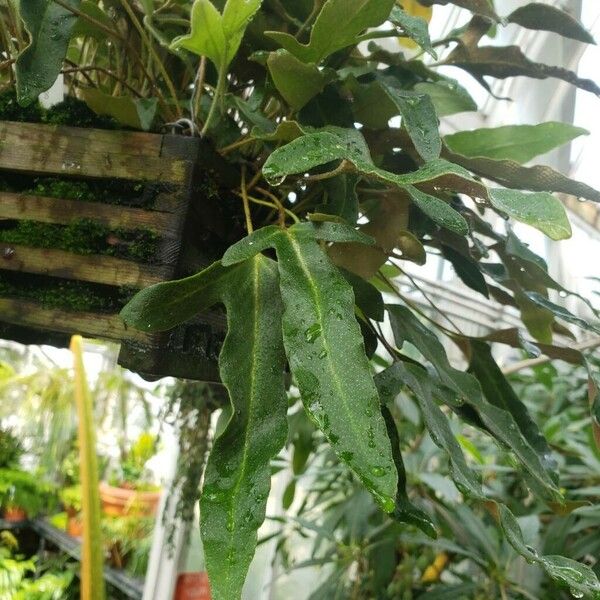
Plant Overview
Known as the Arrow-leaf Felt Fern, this hardy little survivor looks more like a piece of suede than a typical delicate fern. Native to the rocky cliffs and tree trunks of East Asia, it has traded the soft, lacy look of its cousins for a tough, leathery exterior that can handle a bit of neglect. It is a slow-growing "creeper" that adds a wonderful prehistoric or "jungle-ruin" aesthetic to any indoor collection.
🔍 How to Identify
- 🔱 The "Trident" Leaf: Unlike most ferns, its fronds are thick, stiff, and typically divided into three distinct lobes, resembling a spearhead or a small bird's foot.
- 🧶 Felted Underside: The back of the leaves is coated in a dense layer of tiny, star-shaped (stellate) hairs that feel like soft velvet or felt to the touch.
- 🪵 Creeping Rhizomes: Look for thin, fuzzy, brown "vines" (rhizomes) that crawl across the surface of the soil or bark, rather than growing from a single central clump.
🏡 In Your Garden
- 🧗 The Epiphytic Lifestyle: In the wild, this plant lives on tree branches rather than in the ground. While it can grow in a pot, it is happiest when mounted on a piece of cork or cedar wood with a bit of sphagnum moss to mimic its natural home.
- 🛡️ Built-in Protection: Those fuzzy hairs aren't just for show—they are a survival mechanism that traps moisture and reflects harsh sunlight. This makes the Felt Fern much more drought-tolerant than your average Maidenhair fern.
⚠️ Safety & Toxicity
- 🌿 Safe for All: Pyrrosia hastata is considered non-toxic to humans, cats, and dogs. It is a "worry-free" plant for households with curious pets.
- 🧼 Dust Magnet: Because of its velvet-like texture, the leaves can trap household dust. Occasionally misting the leaves or giving them a gentle lukewarm shower helps the plant "breathe" better.
✨ Fun Fact
The genus name Pyrrosia comes from the Greek word pyrros, which means "flame-colored." This refers to the vibrant orange or reddish-brown spore cases (sori) that develop on the underside of the leaves when the plant is ready to reproduce!

Detailed Care Instructions

Place in a window with dappled sun or a spot in the middle of a room. Or directly in a window facing west or east.

The presence of a dry surface layer of soil does not indicate that the plant requires water. Instead, stick your finger 1-2" (3-5 cm) deep in the soil to feel dampness or moisture content. If the soil seems dry, it's time to water your greens. If the soil is still moist, however, it is better not to water your plant and instead wait a day or two. Overwatering or waterlogging raises the risk of root rot. So if the soil takes longer than a week to dry, check the light conditions because it's likely that the plant isn't getting enough light. It's fine if the upper layer of soil is dry between waterings, but the deeper soil layer should always have some moisture.
These plant needs regular fertilizing during growing seasons. Fertilizing your plants in dormant state during the winter, might result in scorching or browning of the leaf tips. If mature plants display signs of nutrient insufficiency, fertilizer administration is necessary to restore the plant to its previous state.
You may use All Purpose Plant Food or Green Plant Food for your Three-Finger Tongue Fern
Common pests of the three-finger tongue fern include Aphids, snails. Make a habit of checking your three-finger tongue fern frequently for pests so that any infestations can be caught and managed early.








