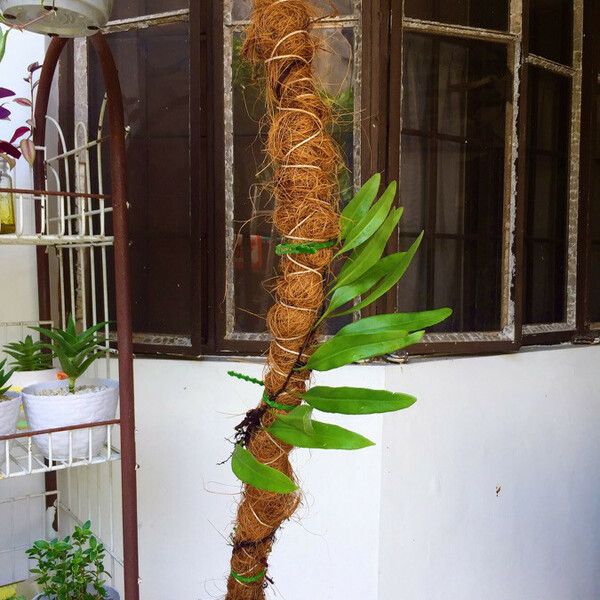
Plant Overview
Often called the Lance-leaf Tongue Fern, this hardy epiphyte is a master of adaptation, clinging to tree trunks and rocky cliffs across Southeast Asia and the Pacific. With its thick, leathery fronds that look more like succulent leaves than traditional lacy ferns, it has earned a reputation as a "tough-as-nails" greenery choice for humid environments. In many cultures, it is admired for its "resurrection" ability—shriveling up during dry spells only to bounce back to a vibrant green after a single rain.
🔍 How to Identify
- 🌿 The Fronds: Simple, undivided leaves that are narrow and lance-shaped, typically reaching 4 to 8 inches in length.
- 🧶 Felted Texture: The underside of the leaf is covered in a dense layer of tiny, star-shaped hairs (stellate hairs) that feel like felt or suede.
- 🏃 Creeping Rhizomes: Unlike clump-forming ferns, this plant travels via thin, wiry, brown-scaled stems that "crawl" along the surface of bark or moss.
🏡 In Your Garden
- 🪵 The Epiphytic Habit: Because it grows on trees in the wild, this fern hates "wet feet." It thrives best when mounted on a piece of cork bark or tucked into a very airy orchid mix rather than traditional potting soil.
- 🌤️ Light & Resilience: While most ferns crave deep shade, the Lance-leaf Tongue Fern enjoys bright, filtered light. Its thick, waxy cuticle allows it to handle lower humidity levels better than almost any other fern in the hobby.
⚠️ Safety & Toxicity
- ✅ Status: Generally considered non-toxic.
- 🐾 Details: There are no recorded toxic effects for cats, dogs, or humans. However, because it is an ornamental plant, it is best kept out of reach of curious pets to prevent digestive upset or damage to the plant’s slow-growing fronds.
✨ Fun Fact
The "tongue ferns" get their name from their scientific name Pyrrosia, derived from the Greek word pyrrhos, meaning "flame-colored," referring to the reddish-brown spore cases (sori) that sometimes cover the underside of the leaves.

Detailed Care Instructions
To grow Pyrrosia Lanceolata plants, here are some steps you can follow:
- Select a suitable location: Pyrrosia Lanceolata plants prefer bright but indirect or filtered light. They can be grown indoors or outdoors as long as they receive enough light. Choose a spot that gets partial shade or filtered sunlight.
- Prepare the soil: Pyrrosia Lanceolata plants prefer well-draining, acidic soil. Prepare the soil by mixing equal parts of potting soil, peat moss, and perlite or sand to ensure good drainage.
- Planting: Take a Pyrrosia Lanceolata plant and gently separate the rhizomes if there are multiple plants in the pot. Dig a hole in the prepared soil and place the plant in it. Cover the roots gently with soil, leaving the fronds exposed.
- Watering: Pyrrosia Lanceolata plants prefer to be kept slightly moist but not waterlogged. Water the plant whenever the top inch of soil feels dry. Use a watering can with a spout to avoid wetting the fronds excessively.
- Humidity: Pyrrosia Lanceolata plants thrive in humid conditions. Increase humidity by misting them regularly using a spray bottle or by placing a tray filled with water and pebbles near the plant.
- Fertilizing: Feed the plant with a balanced, slow-release fertilizer once a month during the growing season (spring and summer). Follow the instructions on the fertilizer packaging for the correct dosage.
- Pruning: Trim off any yellow or dead fronds to maintain the plant's appearance and health. Pruning also helps promote new growth.
- Propagation: Pyrrosia Lanceolata plants can be propagated through division. Over time, the plant forms new rhizomes that can be separated and potted in a similar manner as the parent plant.
- Pest control: Pyrrosia Lanceolata plants are generally resistant to pests, but occasionally, they can be affected by aphids or mealybugs. If you notice any pests on your plant, hand-pick or spray them with a mild insecticidal soap solution.
By following these steps, you can successfully grow Pyrrosia Lanceolata plants and enjoy their beautiful foliage.

Place in a window with dappled sun or a spot in the middle of a room. Or directly in a window facing west or east.

To water this plant, you should first identify its specific needs in terms of water requirements. Check to make sure that the soil is consistently moist but never waterlogged or completely dry. This plant prefers well-draining soil that retains some moisture, but it is important not to overwater it, as this can cause root rot. Water the plant thoroughly, allowing the soil to soak up the water, and then allow the soil to dry out slightly before watering again. You should also avoid getting water on the leaves, as this can cause fungal issues. Consider using a watering can or a drip irrigation system to direct the water towards the base of the plant and avoid wetting the foliage. Always maintain a consistent watering schedule, taking into account the weather conditions and the season, and adjust your watering frequency as needed.
To fertilize this plant, use a balanced fertilizer with equal amounts of nitrogen, phosphorus, and potassium. Follow the instructions on the fertilizer package for application rates and frequency. Apply the fertilizer evenly across the soil surface around the plant, taking care to avoid getting any on the leaves. Water the plant immediately after fertilizing to help the nutrients soak into the soil. Do not fertilize during periods of drought or extreme heat, as this can damage the plant's roots.
The ideal soil for a Pyrrosia Lanceolata plant should be well-draining and porous. A mixture of peat moss, perlite, and sand can provide the necessary drainage while also allowing air to circulate freely around the roots. The soil should be slightly acidic with a pH level between 5.5 and 6.5. It is also important to ensure that the soil is not too compact as this can lead to root rot or waterlogging. To improve the soil structure, adding bark chips or coco coir can be beneficial. Additionally, regular fertilization with a balanced, water-soluble fertilizer can help to promote healthy growth and development of the plant.
To propagate this plant, first, select a healthy and mature plant that you want to propagate. Look carefully at the plant and identify areas where you can take cuttings. Once you have identified the areas, take a sharp and clean pair of scissors or knife and cut a small section of the plant, ensuring that it has at least one healthy leaf and a small section of stem.
Next, prepare a small pot with well-draining soil. The soil should be moist and loose. Then, dip the cut end of the stem into rooting hormone powder. This will help to promote the growth of roots on the cutting. Place the cutting into the soil and gently press it in so that it stands upright.
Water the cutting regularly, but do not over-water it as this can cause the plant to rot. Place the pot in a warm and bright spot, but away from direct sunlight. The cutting should start to grow roots within a few weeks. Once you see new growth appearing, you can transplant the new plant into its own pot.
Keep the new plant well-watered and in a warm and bright spot until it becomes established. After that, you can treat it as you would any other Pyrrosia Lanceolata plant. With proper care, your new plant should thrive and grow to be a mature and healthy plant.








