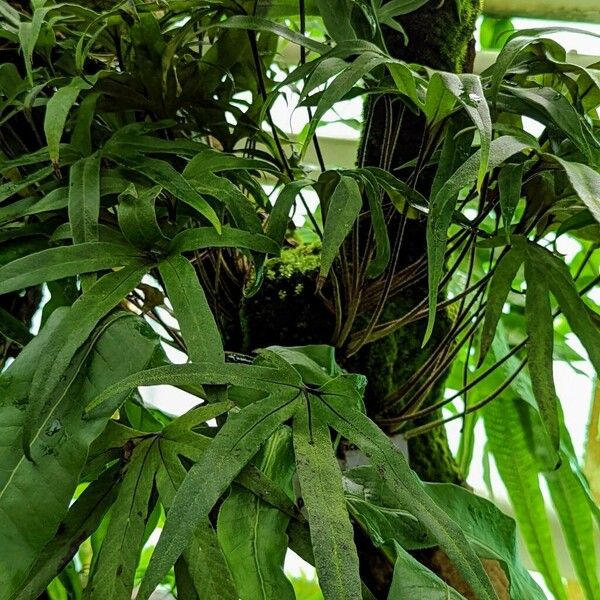
Plant Overview
Often called the "Five-fingered Tongue Fern," this Taiwanese native looks more like a collection of leathery green hands than a typical lacy fern. It is a slow-growing epiphyte that adds a prehistoric, sculptural feel to any indoor plant collection. Its thick, velvety leaves are designed for endurance, making it a favorite for those who find traditional ferns a bit too dramatic or "fussy."
🔍 How to Identify
- ✋ The "Hand" Fronds: The most striking feature is the palmate leaf shape, usually split into 5 to 8 long, pointed lobes that radiate from a single point like fingers on a hand.
- 🧥 Fuzzy Undersides: The bottom of each leaf is covered in a dense, felt-like layer of tiny, star-shaped (stellate) hairs. These help the plant trap moisture and protect it from drying out.
- 🐍 Creeping Rhizomes: Instead of growing from a single central clump, it spreads via thin, scaly rhizomes that "crawl" across the soil surface or over rocks and tree bark.
🏡 In Your Garden
- 🧗 The Epiphytic Habit: In its natural habitat, this fern grows on trees and stone cliffs. In your home, it prefers a very airy "orchid-style" potting mix rather than dense potting soil. It is a spectacular candidate for mounting on a piece of cork or driftwood.
- 💧 The "Curl" Tell: This is one of the most drought-tolerant ferns available. If the plant becomes too dry, the "fingers" will physically curl inward to protect their pores. Once watered, they dramatically unfurl back to their flat, hand-like shape.
⚠️ Safety & Toxicity
- 🐾 Pet Friendly: This species is generally considered non-toxic and safe for homes with curious cats and dogs.
- 🌿 Mild Irritant: While not poisonous, the fine hairs on the underside of the leaves can sometimes cause mild skin or throat irritation if handled excessively or ingested by small children.
✨ Fun Fact
The genus name Pyrrosia comes from the Greek word pyrros, which means "flame-colored." This refers to the vibrant reddish-brown sori (spore clusters) that completely coat the underside of the leaves when the plant is ready to reproduce!

Detailed Care Instructions

Water-loving plants flourish in wet or sloppy soil and near ponds. The extensive root system enables these plants to absorb plenty of water. The surface of the soil should be kept moist at all times. Place your pot in a container filled with water to guarantee that plants get enough water. If the ground becomes dry, it is recommended that you water it well. Plants in smaller pots will need to be watered more frequently. Water the soil in which the plant is standing thoroughly using a watering can.








