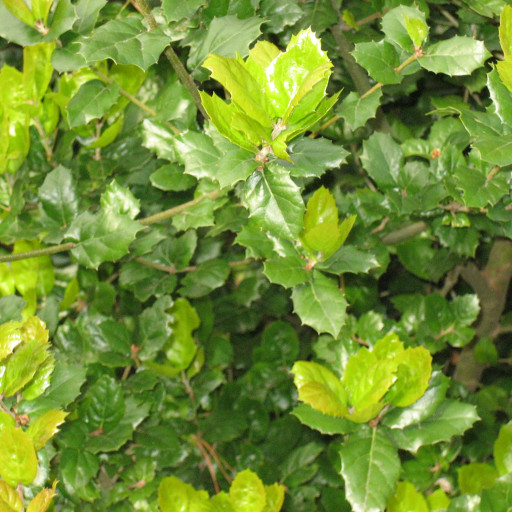
Plant Overview
The Coast Live Oak, or Quercus agrifolia, is the quintessential silhouette of the California golden hills. With its gnarled, twisting limbs and dark, evergreen canopy, this tree looks like a living sculpture designed by time itself. Historically, it served as a primary food source for Indigenous peoples and remains the backbone of coastal Mediterranean ecosystems.
🔍 How to Identify
- 🍃 Holly-like Leaves: The leaves are small, oval, and "cupped" (convex), meaning they curve downward like a tiny green spoon. They are stiff and leathery with prickly, spiny teeth along the edges.
- 🪵 Rugged Bark: Young trees have smooth, silver-gray bark, but as they age, it becomes deeply furrowed, thick, and dark charcoal-gray.
- 🌰 Slender Acorns: Look for thin, pointed acorns that sit in a scaly, turban-like cup. They typically mature in a single season, unlike many other oak species.
🏡 In Your Garden
- 💧 The Golden Rule: Once established, this tree is incredibly drought-tolerant and actually hates summer irrigation. Watering an adult Coast Live Oak during the dry season can encourage "Oak Root Fungus," which can be fatal.
- 🦋 A Living Hotel: If you plant one, you are supporting an entire universe. It hosts hundreds of species of caterpillars, provides nesting for owls, and its fallen leaves create a nutrient-rich mulch that suppresses weeds and feeds the soil.
- 🏗️ Root Protection: They are very sensitive to soil compaction and grade changes. If you are building near one, keep the "dripline" (the area under the branches) clear of heavy machinery and pavement to protect its delicate surface roots.
⚠️ Safety & Toxicity
- ✅ Generally Safe: The Coast Live Oak is non-toxic to humans and most pets.
- 🐕 Acorn Warning: While not "poisonous" in the traditional sense, the acorns contain high levels of tannins. If a dog eats a large quantity, it can lead to gastrointestinal upset or, in rare cases, kidney issues.
- ⚖️ Physical Safety: Older oaks are prone to "Sudden Branch Drop" during extremely hot, still days. It is wise not to place benches or play structures directly under massive, horizontal limbs of very old specimens.
✨ Fun Fact
The Coast Live Oak is famous for its "Oak Apples"—large, round, lightweight balls found on its branches. These aren't fruit; they are galls created by tiny wasps! The tree grows these structures to house the wasp larvae, providing them a safe, nutritious home without harming the tree's overall health.

Detailed Care Instructions
To grow Quercus agrifolia, also known as the coast live oak or California live oak, follow these steps:
- Choose an appropriate planting location: Quercus agrifolia prefers full sun but can tolerate some shade. It requires well-draining soil, so make sure that the soil is not constantly waterlogged.
- Prepare the soil: Till the soil to a depth of at least 12 inches and remove any rocks, weeds, or other debris. You can improve the soil quality by adding organic matter such as compost.
- Dig a planting hole: Make sure the hole is wider and deeper than the tree's root ball. Gently loosen the roots to encourage outward growth.
- Place the tree in the hole: Position the tree in the center of the hole and ensure that the top of the root ball is level with or slightly above the surrounding soil.
- Backfill the hole: Fill the hole with soil, gently firming it around the roots. Avoid compacting the soil too much, as it can hinder root growth.
- Water the tree: After planting, water the tree deeply, ensuring the roots are moist. Provide regular watering during the establishment phase, typically over the first year.
- Mulch around the tree: Apply a layer of organic mulch, such as wood chips or bark, around the base of the tree. This will help retain moisture, suppress weeds, and regulate soil temperature.
- Prune as needed: Perform pruning to remove dead or diseased branches, improve tree structure, and maintain the desired shape. Prune during the dormant season, preferably in winter or early spring.
- Protect the tree: Provide protection from herbivores, such as deer, that may damage the young tree. Use tree guards or fencing if necessary.
- Monitor and care for the tree: Regularly monitor the tree for signs of stress, pests, or diseases. Provide regular irrigation, especially during dry periods. Apply balanced tree fertilizer in early spring to promote healthy growth.
It is important to note that Quercus agrifolia is a long-lived tree that grows slowly, so patience is required. It can take many years for the tree to reach its full potential size.

Place in a window with dappled sun or a spot in the middle of a room. Or directly in a window facing west or east.

The best way to water this plant is to give it a deep watering once a week. After planting, make sure to water it thoroughly to ensure it establishes a strong root system. When watering, avoid getting water on the leaves or trunk, as this can lead to disease issues. An effective method is to water slowly at the base of the plant, giving the soil time to absorb the water. In times of drought, it may be necessary to water more frequently, but be sure to avoid overwatering, which can lead to root rot. In addition, mulching around the base of the plant can help retain moisture and regulate soil temperature.
To fertilize this plant, you should use a balanced fertilizer with equal amounts of nitrogen, phosphorus, and potassium. Use the fertilizer according to the manufacturer's instructions, making sure not to over-fertilize. Apply the fertilizer in the early spring, before new growth appears, and again in the mid-summer. Water the plant thoroughly before and after fertilizing, and make sure the soil is moist but not waterlogged. Avoid fertilizing during periods of drought or extreme heat.
The appropriate soil type for Quercus Agrifolia should be well-draining, nutrient-rich, and slightly acidic. The soil should have a pH range between 6.0 and 6.5. The plant grows best in a loamy soil type, with good water retention capacity. It is recommended to use a mixture of soil, sand, and organic matter to provide the plant with the necessary nutrients and drainage. A soil mix that contains compost, peat moss, and perlite, mixed in equal parts, is recommended. The soil should be well-aerated, allowing air to circulate easily around the plant’s roots. The plant prefers a soil that is porous, allowing for easy penetration of water and nutrients. It is also important to ensure that the soil is free from any contaminants and harmful chemicals that may harm the plant’s growth.
To propagate this plant, collect healthy foliage and woody stem cuttings in the late fall or early winter. Select a cutting that is at least 6 inches long and has no signs of disease or damage.
Prior to planting, treat the cuttings with rooting hormone to increase success rates. Then, plant the cuttings in a container with well-draining soil, ensuring that the soil is moist but not too wet.
Place the container in an area with bright, indirect light and maintain a consistent temperature of around 65-70°F. Mist the cuttings regularly to keep them hydrated and promote healthy growth.
In a few weeks, new growth should appear on the cuttings, indicating that they have successfully taken root. Once the roots have developed fully, transplant the young plants into larger containers or directly into the ground in a well-draining soil mix.
With proper care, the young plants should continue to mature and grow, eventually becoming strong, healthy trees.
Common pests of the california live oak include Larvae. Make a habit of checking your california live oak frequently for pests so that any infestations can be caught and managed early.








