Plant Overview
Often called the Catalan Oak, Quercus × cerrioides is a fascinating natural hybrid that bridges the gap between the soft-leaved Downy Oak and the sturdy Portuguese Oak. Found primarily in the northeastern regions of the Iberian Peninsula, this tree is a symbol of resilience, thriving in the "transition zones" where different climates meet. It is a marcescent beauty, meaning its golden-brown leaves often cling to the branches throughout the winter, providing a rustling soundtrack to the colder months before the new green of spring arrives.
🔍 How to Identify
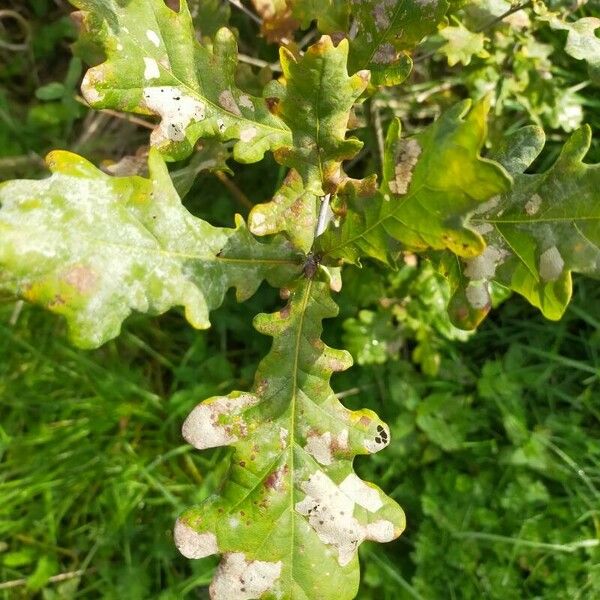
- 🍃 Hybrid Foliage: The leaves are typically oval with deep, irregular lobes. They possess a leathery texture that is tougher than a standard Downy Oak but softer than a Holm Oak.
- ☁️ Fuzzy Underside: If you flip a leaf over, you will notice a fine, velvety coating of tiny grayish hairs—a key characteristic inherited from its Quercus pubescens parentage.
- 🍂 Persistent Canopy: During winter, the tree doesn't go fully bare. It holds onto its withered, copper-colored leaves until the very last moment when new buds push them off in the spring.
🏡 In Your Garden
- ⛰️ Limestone Lover: This oak is exceptionally well-suited for Mediterranean-style gardens, particularly those with alkaline or limestone-rich soils where other species might turn yellow (chlorosis).
- 🌳 The Patient Giant: While it grows slowly, it develops a massive, deep root system. Because of this, it hates being moved once planted. Choose its "forever home" carefully, ensuring it has plenty of space away from pipes or foundations.
⚠️ Safety & Toxicity
- 🐕 Tannin Warning: Like almost all members of the Oak family, the leaves and raw acorns contain high levels of tannins. These are toxic to dogs, horses, and cattle if ingested, potentially leading to kidney damage.
- 🧤 Mild Irritant: While not poisonous to touch, the dried, fallen leaves can become quite sharp and stiff, which may cause minor scratches to sensitive skin during yard work.
✨ Fun Fact
The name cerrioides is actually a bit of a botanical "oops." It was originally named because it looked similar to the Turkey Oak (Quercus cerris), but modern science has proven it isn't related to the Turkey Oak at all—it's just a master of disguise!

Detailed Care Instructions

Place in a bright room that is sun drenched almost all day. Or directly in a south-facing window.

Some plants require more regular watering than others, which should be done every few days. It's critical to maintain the soil moist all of the time. The water requirements of the same plant placed in pots with varying sizes will differ. Because the water in the smaller pot evaporates faster than the water in the larger pot, it will require more watering. Regardless of pot size, the surface should constantly be maintained moist.








