Plant Overview
Often called the Kermes Oak or the Berry-bearing Oak, this rugged Mediterranean native is a symbol of ancient resilience. While it belongs to the mighty Oak family, it behaves more like a dense, prickly shrub than a towering tree. Historically, it was one of the most economically important plants in the world, valued not for its wood, but for the tiny "berries" (actually insects) that once lived on its branches.
🔍 How to Identify
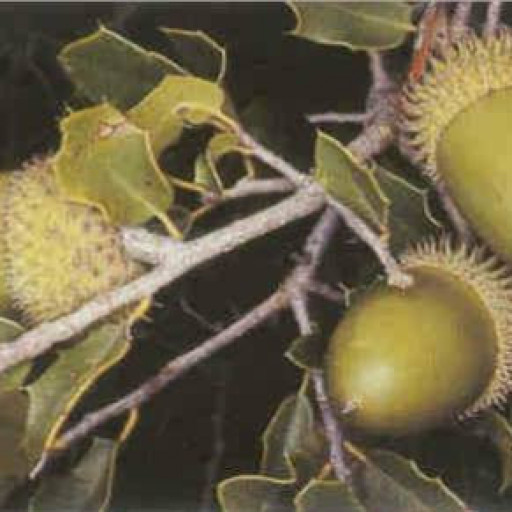
- 🍃 Holly-like Leaves: The leaves are small, leathery, and dark green with sharp, spiny teeth along the edges, making it look remarkably like a common Holly bush.
- 🌳 Growth Habit: It typically grows as a dense, multi-stemmed shrub reaching 2 to 6 feet, though ancient specimens in ideal conditions can eventually reach tree-like heights.
- 🌰 Fringed Acorn Cups: The acorns are tucked into distinctive "burred" or scaly cups that look almost like tiny hedgehogs or miniature pinecones.
🏡 In Your Garden
- ☀️ Sun Worshiper: Coming from the sun-drenched hillsides of Southern Europe and North Africa, this oak craves full sun and is incredibly resistant to extreme heat and drought once established.
- 🏜️ Taproot Sensitivity: It develops a deep, vertical taproot early in life to find deep-soil moisture. Because of this, it "hates" being moved; choose its forever home in your garden carefully to avoid transplant shock.
- 🧤 Natural Barrier: Due to its prickly nature and slow, dense growth, it makes an excellent, low-maintenance "living fence" or security hedge that requires very little pruning.
⚠️ Safety & Toxicity
- 🟢 General Safety: This plant is generally non-toxic to humans, but the sharp leaves can cause physical scratches or skin irritation if handled without gloves.
- 🐕 Pet & Livestock Note: While the leaves are harmless, the acorns contain high levels of tannins. They are generally safe for dogs in small amounts, but can be toxic to horses and cattle if eaten in large quantities.
- 👶 Child Safety: The spiny leaves are the primary concern; they are sharp enough to discourage children from climbing or playing too closely to the bush.
✨ Fun Fact
The name Coccifera means "berry-bearing." Ancient civilizations believed the red Kermes insects that lived on this oak were actually berries. These insects were crushed to produce a brilliant red dye, which is the historical origin of the color and word "Crimson"!

Detailed Care Instructions
| Humidity | Normal |
| Lighting | Full Sun |
| Difficulty | Medium |
| Hardiness Zones | 5 - 9 |
Growing Quercus coccifera, also known as the Kermes oak or Mediterranean shrub oak, can be done with the following steps:
- Climate and location: Quercus coccifera thrives in Mediterranean climates, so make sure you have a sunny spot with well-draining soil. It can tolerate poor and rocky soils.
- Propagation: Obtain Quercus coccifera seeds or young plants from a reputable nursery. Alternatively, you can collect acorns from mature trees in the fall.
- Soil preparation: Prepare the planting area by removing any weeds or grass. Loosen the soil and improve drainage if necessary by adding organic matter, such as compost.
- Planting: If you have seeds, soak them in water overnight before planting to improve germination rates. Sow the seeds directly in the garden bed or sow them in pots with well-draining soil. Plant them 1 inch deep and space them around 12 inches apart. If you have acquired a young plant, dig a hole slightly larger than the root ball and place the plant inside, backfilling the hole with soil.
- Watering: Water the newly planted seeds or young plants thoroughly and keep the soil consistently moist until they establish themselves. Afterward, Quercus coccifera is drought-tolerant and generally requires minimal watering.
- Mulching: Apply a layer of mulch around the base of the plant to help retain moisture, suppress weeds, and protect the roots from temperature fluctuations.
- Pruning: Prune Quercus coccifera to maintain its desired shape and remove any dead, diseased, or damaged branches. Pruning is best done during late winter or early spring.
- Fertilization: Quercus coccifera usually doesn't require fertilization, as it can adapt to nutrient-poor soils. However, if your soil is extremely poor or lacking in certain nutrients, you can apply a slow-release, balanced fertilizer in early spring.
- Pest and disease control: Quercus coccifera is generally resistant to pests and diseases. However, keep an eye out for any signs of infestation or disease and apply appropriate treatments if necessary.
- Enjoy your Quercus coccifera: As it grows, appreciate its compact form, glossy foliage, and ability to attract wildlife.
Remember, growing plants can vary depending on your specific location and conditions, so always consider local gardening advice when attempting to cultivate Quercus coccifera.

Place in a window with dappled sun or a spot in the middle of a room. Or directly in a window facing west or east.

To effectively water this plant, it is important to first understand its specific needs. It is recommended to water it deeply and infrequently, rather than giving it frequent shallow waterings. The soil should be allowed to dry out between waterings to prevent root rot.
To water, use a watering can or hose and water the soil around the base of the plant, being careful to avoid getting water on the leaves. It is best to water early in the morning or late in the evening to avoid evaporation.
To determine when to water, check the soil moisture by sticking your finger into the soil about an inch deep. If it feels dry, water the plant.
It is also important to consider the climate and environment in which the plant is growing. In hot, dry climates, the plant may require more frequent watering. Additionally, if the plant is grown in a container, it may require more frequent watering than if it is grown in the ground.
Overall, providing the Quercus Coccifera plant with consistent and appropriate watering will help it thrive and remain healthy.
To fertilize this plant, you should first test the soil to determine its pH level and nutrient content. If the soil is deficient in nutrients, apply a slow-release fertilizer in the spring. For optimal growth, use a fertilizer specifically formulated for broadleaf evergreens. Apply the fertilizer evenly around the base of the plant and water thoroughly. Avoid over-fertilizing, as this can cause damage to the plant and leach pollutants into the surrounding environment. Monitor the plant for signs of nutrient deficiencies, such as yellowing leaves or stunted growth, and adjust your fertilization schedule accordingly.
When selecting a suitable soil for [plant species], it is important to consider its natural habitat and growing conditions. [plant species] is typically found in [type of soil], which is characterized by [physical and chemical properties of the soil].
To recreate these conditions in a garden setting, a well-draining soil with a pH between [number] and [number] is recommended. [plant species] prefers soils that are [textural description], and organic matter can be added to improve soil structure and fertility.
It is also important to avoid soils that are excessively moist or have poor drainage, as this can lead to root rot and other plant health issues. [plant species] is adapted to [type of climate], so it may be necessary to provide additional irrigation during periods of drought or extreme heat.
Overall, a soil that closely mimics the natural habitat of [plant species] will provide the best conditions for healthy growth and development.
To propagate this plant, you can collect acorns from mature trees in the fall. Soak the acorns in water for 24 hours to remove any remaining tannins. Plant the acorns in a pot filled with well-draining soil, burying them about 1 inch deep in the soil. Water the pot well and place it in a sunny location. Keep the soil moist but not waterlogged and wait for the seedlings to emerge, which can take up to a year. Once the seedlings are large enough, they can be transplanted to their permanent location in the garden. Alternatively, you can propagate this plant by taking hardwood cuttings in late autumn or early winter and rooting them in moist soil.








