Plant Overview
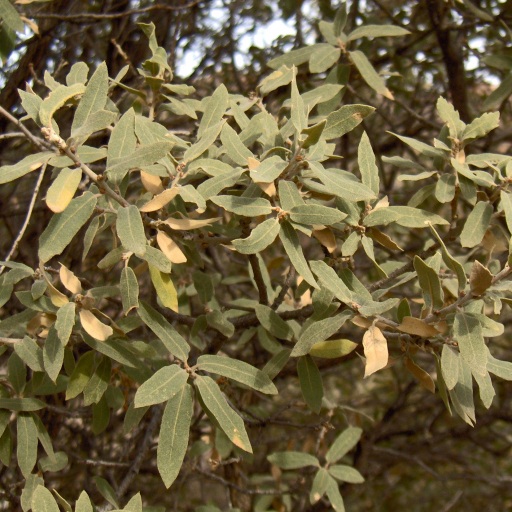
Known as the Gray Oak, Quercus grisea is the rugged, silver-hued survivor of the American Southwest. Often found clinging to rocky slopes and mountain foothills, this tree is a master of drought resistance, sporting leathery leaves that look as though they’ve been dusted with desert ash. Whether growing as a gnarled shrub or a stately tree, it provides vital shelter and food in some of the most arid landscapes of North America.
🔍 How to Identify
- 🍃 Leaf Texture: The leaves are small, thick, and leathery, usually possessing a dull, grayish-green color on top and a paler, fuzzier underside.
- 🌳 Growth Form: Depending on the water available, it can appear as a multi-stemmed shrub or a medium-sized tree with a rounded crown.
- 🧶 The Bark: As the tree matures, its light gray bark becomes deeply furrowed and scaly, giving it a rugged, "ancient" appearance even in younger specimens.
🏡 In Your Garden
- ⛰️ Rocky Roots: This oak thrives in well-draining, rocky, or limestone-heavy soils. It is an excellent choice for xeriscaping or "wild" gardens where water is scarce.
- 🦅 Wildlife Magnet: If you plant a Gray Oak, expect visitors! Its acorns are a primary food source for scrub jays, squirrels, and deer, making it a cornerstone of a backyard ecosystem.
⚠️ Safety & Toxicity
- ✅ General Safety: Gray Oaks are non-toxic to humans and common household pets like dogs and cats upon touch.
- 🐴 Livestock Caution: Like most oaks, the leaves and raw acorns contain high levels of tannins. While wild animals have adapted to them, they can be toxic to horses, cattle, and sheep if consumed in large quantities, leading to digestive issues.
✨ Fun Fact
The Gray Oak is known among botanists for being a "social climber"—it frequently hybridizes with other oak species like the Gambel Oak, creating "intergrade" trees that often leave even expert plant hunters scratching their heads in confusion!

Detailed Care Instructions
Growing Quercus grisea, or the gray oak, can be a rewarding experience. Here are some steps to help you successfully grow this plant:
- Choose the right location: Gray oaks prefer full sun or partial shade. Ensure the chosen location has well-draining soil and enough space for the tree to grow to its full size.
- Obtain healthy seedlings or acorns: You can either purchase young gray oak seedlings or collect acorns from mature trees in the wild. If you collect acorns, make sure they are viable by placing them in water – discard any that float.
- Prepare the soil: Gray oaks generally prefer slightly acidic to neutral soil. Mix organic compost into the planting area to improve soil structure and fertility.
- Planting: If you have seedlings, dig a hole slightly larger and deeper than the container they came in. Gently remove the plant from the container and place it in the hole, making sure the top of the roots are level with or slightly above the soil surface. If you have acorns, they need to be stratified (subjected to a period of cold and moist conditions) for several months before planting. Store the acorns in a plastic bag with moist sand or peat moss in the refrigerator for around 3 months before planting.
- Watering: After planting, water the seedlings or acorns thoroughly. Keep the soil consistently moist but not waterlogged throughout the growing season. Established gray oaks have good drought tolerance but may need supplemental watering during prolonged dry periods.
- Mulching: Apply a layer of organic mulch around the tree to retain moisture, suppress weed growth, and provide insulation for the roots. Leave a gap around the trunk to prevent rot.
- Pruning: Minimal pruning is usually required for gray oaks. Remove any dead, damaged, or diseased branches. Prune in late winter or early spring while the tree is dormant.
- Maintenance: Fertilize with a slow-release, balanced fertilizer in spring to provide essential nutrients. Regularly check for pests and diseases, taking appropriate measures if any are found.
- Patience: It may take several years for your Quercus grisea plant to reach maturity and begin producing acorns.
Remember to check with your local agricultural extension or forestry service for specific advice and guidelines tailored to your region's climate and soil conditions.

Place in a bright room that is sun drenched almost all day. Or directly in a south-facing window.

To properly water the Quercus Grisea plant, it is important to follow some guidelines. The first step is to determine the best watering schedule based on the environmental conditions and soil type. This can vary depending on factors such as the season, humidity, and sun exposure.
When watering the Quercus Grisea plant, it is important to ensure that the soil is thoroughly soaked to the root level. This can be achieved by slowly watering the plant until the water penetrates the soil and drains out of the bottom. It is important to avoid overwatering, which can lead to root rot and other problems.
It is also important to monitor the soil moisture level regularly, especially during hot and dry periods. If the soil becomes too dry, watering the plant should be increased, while if it is too wet, watering should be reduced.
In addition to watering, it is important to provide appropriate growing conditions to the Quercus Grisea plant, such as adequate sunlight, appropriate temperature, and fertilizer when necessary. By following these guidelines, the Quercus Grisea plant can thrive and grow healthy leaves and roots.
To properly fertilize this plant, start by selecting a balanced fertilizer with equal parts nitrogen, phosphorus, and potassium. Apply the fertilizer in the spring before new growth begins and again in the fall after the leaves have fallen. Make sure to follow the instructions on the fertilizer label and avoid over-fertilization, as this can be damaging to the plant. Additionally, consider supplementing the fertilizer with organic matter, such as compost or well-aged manure, to improve soil fertility and overall plant health.
The ideal soil for the Quercus Grisea plant should be well-draining and slightly acidic. It should contain a mix of sand, loam, and peat moss to provide adequate drainage while retaining moisture. The plant requires a soil pH of 6.0 to 6.5 for optimal growth. Additionally, the soil should be rich in organic matter to provide essential nutrients for long-term growth. A recommended fertilizer for this plant is one that is high in nitrogen. It is important to avoid using soils that are heavy in clay or prone to waterlogging, as this can lead to root rot and other problems.
To propagate this plant, one can collect acorns in the fall and store them in a cool, dry place until the following spring. In the spring, soak the acorns in water for 24 hours. Then plant them in well-draining soil that is mixed with sand to ensure good drainage. The acorns should be planted 1-2 inches deep and spaced about a foot apart. Water the soil consistently to keep it moist but not waterlogged. After a few weeks, the acorns should sprout and begin to grow. In a few years, the saplings can be transplanted to their permanent location.








