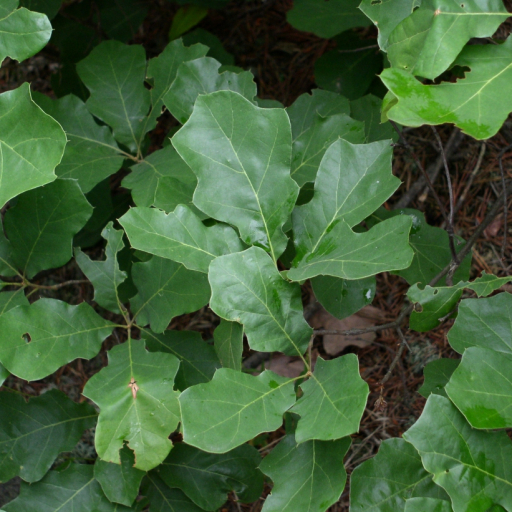
Plant Overview
Known widely as the Bear Oak or Scrub Oak, this resilient native of the eastern United States is the ultimate "tough guy" of the oak family. Often found clinging to rocky ridges or sandy barrens where other trees fail, it earned its nickname because its heavy crops of bitter acorns were historically a favorite feast for black bears preparing for winter.
🔍 How to Identify
- 🍃 Holly-Like Leaves: The leaves are relatively small (2–5 inches) with 3 to 7 sharp, bristle-tipped lobes. The name ilicifolia literally translates to "holly-leaved," referencing this distinct, jagged shape.
- 🌳 Shrubby Habit: Unlike its towering cousins, this oak rarely grows into a massive canopy tree. It typically stays a dense, multi-stemmed shrub or a small, gnarled tree reaching only 15–20 feet in height.
- 🌰 Small Acorns: It produces tiny, half-inch acorns with dark stripes, tucked into deep, saucer-shaped cups. These often grow in pairs and can stay on the branches well into the winter.
🏡 In Your Garden
- 🏜️ Thrives on Neglect: This is a "set it and forget it" plant for difficult landscapes. It is a specialist in sandy, acidic, and nutrient-poor soils where most ornamental plants would wither and die.
- 🛡️ Nature's Windbreak: Because it is exceptionally wind-tolerant and salt-resistant, it is a perfect choice for coastal gardens or exposed, breezy hillsides where it can help prevent soil erosion.
- 🦋 Wildlife Magnet: If you want to support local ecology, this is a top-tier choice. It serves as a vital host plant for hundreds of species of butterflies and moths, and its dense branches provide a "fortress" for nesting birds.
⚠️ Safety & Toxicity
- 🐾 Pet Advisory: Like all members of the Quercus genus, the acorns and young leaves contain gallotannins. While most pets find them too bitter to eat, they can cause digestive upset or kidney issues if consumed in large quantities by dogs or horses.
- 👶 Kid Friendly: The plant is non-toxic to touch, though the bristle-tipped leaves can be slightly prickly against sensitive skin if handled roughly.
✨ Fun Fact
The Bear Oak is a "fire-adapted" species. In its natural habitat of the Pine Barrens, it has evolved to survive frequent wildfires by storing energy in a massive underground root system, allowing it to sprout back with incredible speed after a fire has cleared the surrounding brush.

Detailed Care Instructions
To successfully grow Quercus ilicifolia, also known as bear oak or scrub oak, follow these steps:
- Determine the growing conditions: Bear oak thrives in full sun to partial shade and prefers well-draining soil that is slightly acidic. It is tolerant of various soil types, including sandy or rocky soils.
- Obtain seeds or seedlings: You can gather acorns from existing bear oak trees or purchase seeds from a reputable nursery or online supplier. Alternatively, you can find young bear oak seedlings from plant nurseries.
- Prepare the planting site: Clear the planting area of weeds, rocks, and debris. If the soil is heavy or compacted, loosen it by adding organic matter such as compost or peat moss.
- Planting from acorns: If you are starting from acorns, stratify them by keeping them in a moist, chilled environment (such as a refrigerator) for several weeks or months, mimicking the natural winter conditions. After stratification, sow the acorns in small pots or directly in the ground at a depth of 1-2 inches. Water regularly to keep the soil moist but not waterlogged.
- Planting seedlings: If you have seedlings, dig a hole slightly larger than the root ball and place the seedling in the hole. Ensure the seedling is planted at the same depth it was in its original container or nursery. Backfill the hole with soil, gently firm it around the seedling, and water thoroughly.
- Watering and maintenance: Bear oak plants prefer moderate moisture, so water them regularly, especially during dry periods. Once established, they have good drought tolerance. Mulching around the base of the plant helps retain soil moisture and suppresses weeds.
- Pruning and shaping: Bear oak usually requires minimal pruning. Remove any damaged or dead branches to maintain a healthy shape and appearance. Prune lightly during the dormant season if necessary.
- Protection from wildlife: Young bear oak plants might attract deer, so consider using deer repellents or fencing to protect them, especially in areas with high deer populations.
- Patience: Bear oak is a slow-growing tree, so be patient while waiting for it to reach its full size and maturity.
- Enjoy and observe: As your bear oak plant grows, take time to appreciate its unique foliage, which features holly-like leaves with spiny margins, and observe any wildlife it attracts, such as birds and butterflies.
Remember that success in growing any plant depends on your specific climate, soil conditions, and local regulations. Consider consulting with local gardening experts or extension offices for more specific guidance tailored to your area.

Place in a bright room that is sun drenched almost all day. Or directly in a south-facing window.

To water this plant species, you should first identify the soil's moisture level by inserting your finger about an inch into the soil. If the soil feels dry, it is time to water the plant. The amount of water required depends on the weather and the plant's growth stage. During the summer months, the plant may require more water compared to winter when it becomes dormant.
To water the plant, use a watering can or hose to pour water at the base of the plant. Avoid pouring water on the foliage as this can lead to fungal diseases. Allow the water to soak into the soil and avoid over-watering as waterlogging can harm the plant's roots.
It is also essential to note that the plant should not be allowed to dry out completely as this can lead to stunted growth and even death in severe cases. Additionally, the plant's water requirements may vary depending on its location and soil conditions, so it is important to monitor the plant's moisture level regularly.
To fertilize this plant, you should use a slow-release fertilizer with a ratio of 4-1-2 or 3-1-2. Apply the fertilizer evenly around the base of the plant, avoiding direct contact with the trunk or foliage. Water the fertilizer in thoroughly after application. Fertilize once in early spring and again in midsummer for optimal growth. Avoid over-fertilization, as it can lead to excessive foliage growth and weaken the plant.
It is recommended to use a well-draining soil mixture that is rich in organic matter to plant this species. The soil pH should be slightly acidic to neutral, between 5.5 and 7.0. The tree prefers a soil that is moist but not waterlogged, and should be kept consistently moist during the growing season. Furthermore, adding a layer of mulch around the base of the plant can help retain moisture and suppress weeds. It is also advisable to periodically test the soil to make sure it contains adequate nutrients and adjust the soil accordingly.
There are several methods for propagating this plant. One method is through seed propagation. The seeds should be sown in a well-draining medium and kept moist until they germinate. Another method is through hardwood cuttings taken in the winter months. These cuttings should be taken from the previous year's growth and should be about 6-8 inches in length. They should be dipped in a rooting hormone and planted in a well-draining medium. Another method is through layering, where a stem is bent down and buried in soil until it takes root. Finally, this plant can also be propagated through grafting onto a rootstock of a related species.








