Plant Overview
The Banj Oak, scientifically known as Quercus leucotrichophora, is the legendary "Giver of Life" in the Himalayan foothills. Often called the Himalayan White Oak, it is beloved by locals for its ability to act as a giant natural sponge, soaking up monsoon rains and slowly releasing them into mountain springs. In folklore, it is seen as a symbol of endurance and maternal protection for the forest.
🔍 How to Identify
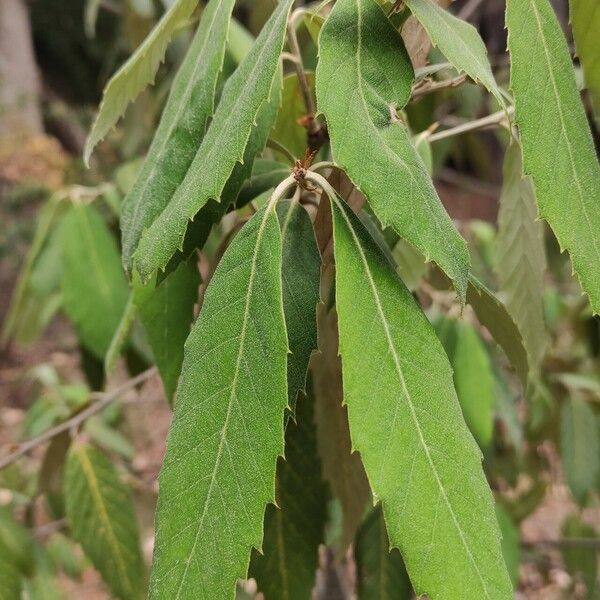
- 🍃 Silvery Leaves: The most striking feature is the foliage; while the tops are a glossy dark green, the undersides are covered in a dense, velvety white fuzz that shimmers in the wind.
- 🪵 Rugged Bark: The bark is thick, dark grey, and deeply fissured, providing a perfect home for mosses, lichens, and ferns.
- 🥜 Ovoid Acorns: It produces small, pointed acorns that sit snugly in a woody, scaly cup, usually maturing over the course of a year.
🏡 In Your Garden & Landscape
- 💧 The Water Weaver: If you have the space for one, know that this tree is exceptional at preventing soil erosion. It prefers well-drained, slightly acidic soil and deep valleys where moisture lingers.
- 🏔️ Climate Resilient: While it loves its native high altitudes, it is surprisingly hardy. However, it is a slow grower—planting a Banj Oak is a gift for future generations rather than an immediate privacy screen.
⚠️ Safety & Toxicity
- 🐾 Tannin Caution: Like most oaks, the leaves and raw acorns contain high levels of tannins. While not "deadly," they can cause digestive upset if eaten by dogs, horses, or curious children.
- 🖐️ Skin Safety: The tree is safe to touch, though the rough bark of older specimens can be abrasive to the skin during pruning.
✨ Fun Fact
The Banj Oak was a central figure in the famous Chipko Movement in India. Local villagers, particularly women, famously hugged these trees to protect them from loggers, recognizing that without the Banj Oak, their mountain springs would dry up and their soil would wash away.

Detailed Care Instructions







