Plant Overview
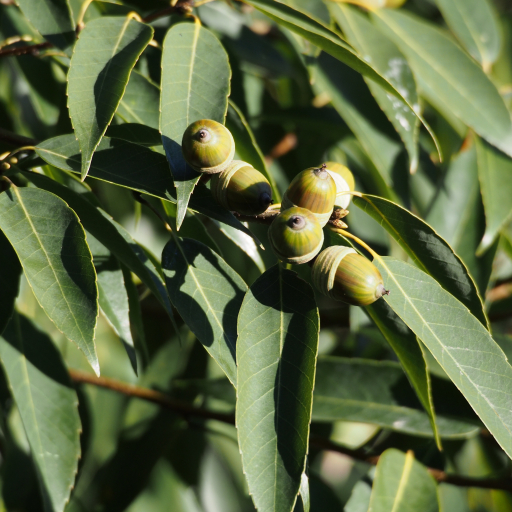
Often called the Bamboo-leaf Oak or Chinese Evergreen Oak, this elegant tree defies the classic "oak leaf" stereotype. Hailing from the misty mountain forests of East Asia, it brings a serene, Zen-like aesthetic to landscapes, staying lush and vibrant even when other trees have bared their branches for the winter. It is a favorite for those seeking a sophisticated, year-round screen or a stately specimen that whispers rather than shouts.
🔍 How to Identify
- 🍃 Slender Foliage: Unlike the wide, lobed leaves of a typical oak, these are long, narrow, and leathery. They look remarkably like bamboo leaves, featuring fine serrations along the upper half.
- 🎨 Color Transitions: One of its most beautiful traits is the new growth; in spring, fresh leaves emerge in a striking bronze or reddish-purple tint before maturing into a deep, glossy forest green.
- 🌳 Smooth Bark: While many oaks are known for rugged, craggy bark, this species maintains a relatively smooth, grey-black trunk for many years, adding to its refined appearance.
🏡 In Your Garden
- 🧊 Cold Hardiness: This is one of the hardiest evergreen oaks in existence. It serves as a "bridge" plant for gardeners in cooler climates who want a Mediterranean evergreen look without the fear of heavy frost damage.
- 🪵 The Taproot Rule: Like most members of the Quercus family, it develops a deep taproot very early. It is best to choose its "forever home" carefully, as it deeply resents being moved once it has settled in.
- 🍂 Low Mess: Because it is evergreen, you won't be raking piles of leaves every October. It sheds old leaves gradually throughout the year, making it an excellent choice for planting near patios or pools.
⚠️ Safety & Toxicity
- 🐾 Pet Safety: The foliage is generally non-toxic to touch, but like all oaks, the acorns contain high concentrations of tannins.
- 🤢 Ingestion Risk: While not usually fatal, if dogs, cats, or horses consume large quantities of raw acorns, it can lead to significant gastrointestinal distress or "oak poisoning." It is wise to sweep up fallen acorns if you have curious pets.
✨ Fun Fact
The species name myrsinifolia literally translates to "leaves like Myrsine" (a genus of tropical shrubs). This tree is a master of disguise—until the tiny, capped acorns appear in autumn, most people wouldn't guess it's a cousin of the mighty English Oak!

Detailed Care Instructions
To grow Quercus myrsinifolia (also known as the Mexican scrub oak or Colima oak), you can follow these steps:
- Obtain seeds or saplings: You can either collect seeds from mature oak trees or purchase saplings from a local nursery or online suppliers. Make sure to select healthy specimens.
- Prepare the planting site: Choose a location that receives full sun to partial shade. The soil should be well-draining and rich in organic matter. Remove any weeds or debris from the area where you plan to plant the oak tree.
- Planting seeds: If you are starting from seeds, soak them in warm water for 24 hours before planting. Sow the seeds directly in the ground or in pots filled with potting soil. Plant them at a depth of about 1 inch (2.5 cm) and cover them with soil. Water the seeds regularly to keep the soil moist.
- Planting saplings: Dig a hole slightly larger than the root ball of the sapling. Place the sapling in the hole, making sure the top of the root ball is level with the ground. Backfill the hole with soil, firming it gently around the roots. Water thoroughly after planting.
- Watering: Quercus myrsinifolia prefers moderate moisture. Water the plant regularly, especially during dry spells. However, avoid overwatering, as it can lead to root rot. Allow the top inch (2.5 cm) of soil to dry out between waterings.
- Mulching: Apply a layer of organic mulch, such as wood chips or bark, around the base of the plant. Mulch helps to conserve moisture, regulate soil temperature, and suppress weed growth.
- Pruning: Prune Quercus myrsinifolia as necessary to remove dead, damaged, or overcrowded branches. Pruning can be done during the dormant season to shape the tree and promote a strong structure.
- Fertilizing: Mexican scrub oaks generally do not require heavy fertilization. However, you can apply a balanced slow-release fertilizer in spring or early summer to promote growth and overall health.
- Protecting the plant: Protect young oak plants from extreme temperatures and heavy winds. Consider providing temporary shade or windbreaks until the tree becomes established.
- Patience: Growing Quercus myrsinifolia from seeds or saplings requires patience, as they are slow-growing trees. It may take several years for the plant to reach its full height and develop a strong root system.
Remember to consult local gardening guides or experts for specific advice tailored to your region's climate and conditions.

Place in a bright room that is sun drenched almost all day. Or directly in a south-facing window.

To water this plant, you should first check the moisture level of the soil. This can be done by sticking your finger about an inch into the soil and feeling if it is dry or moist. If the soil is dry, it is time to water.
When watering, make sure to soak the soil thoroughly, allowing the water to penetrate deep into the roots. Avoid over-watering, as this can lead to root rot.
In general, this plant prefers well-draining soil and should be watered less frequently during cooler seasons. Hotter temperatures may require more frequent watering.
It is also important to consider the plant's natural habitat and mimic those conditions as much as possible. In general, this plant is native to regions with high humidity, so misting the leaves can also be beneficial.
To fertilize this plant, apply a slow-release granular fertilizer high in nitrogen in late winter or early spring. Alternatively, you can use a liquid fertilizer diluted in water and applied directly to the soil around the plant. Avoid fertilizing during the summer months when the plant is dormant. Always follow the instructions on the fertilizer packaging and do not over-fertilize, as this can damage the plant.
Quercus Myrsinifolia is a species of tree that requires well-draining soil and prefers slightly acidic to neutral soil pH. It is best to use a mixture of loam and sand, with added organic matter such as compost or leaf mold to improve soil fertility. The soil should not be compacted, as this can inhibit root growth and lead to poor nutrient uptake. A soil pH in the range of 6.0 to 7.5 is optimal for this tree. It is also important to ensure that the soil is moist but not waterlogged, as excess water can lead to root rot. Additionally, it is recommended to avoid using heavy clay soils, as these can retain water and suffocate the roots of Quercus Myrsinifolia. Overall, a well-draining, slightly acidic to neutral soil with adequate organic matter content is ideal for this tree.
Propagation of this plant can be done through various methods such as cuttings, grafting, and seed propagation.
To propagate through cuttings, select a healthy stem from the parent plant and cut it with a sharp and sterilized tool. Remove any leaves or branches from the lower part of the stem and dip it in a rooting hormone to promote root growth. Plant the stem in a well-draining soil mixture and water it regularly until roots develop and the plant starts to grow.
Another way to propagate this plant is through grafting, which involves attaching a branch or twig of the desired plant to a rootstock of a related species. This method is usually done by horticulturists or experienced gardeners.
Seed propagation is also a common way to propagate this plant. Collect mature seeds from the parent plant and sow them in well-draining soil. Keep the soil moist and place the pot in a warm and well-lit area. After a few weeks, the seedlings should appear, and they can be transplanted to a larger pot or directly into the ground.
Regardless of the method used to propagate this plant, it is essential to provide the proper care and maintaining healthy growing conditions to ensure the success and growth of the new plant.








