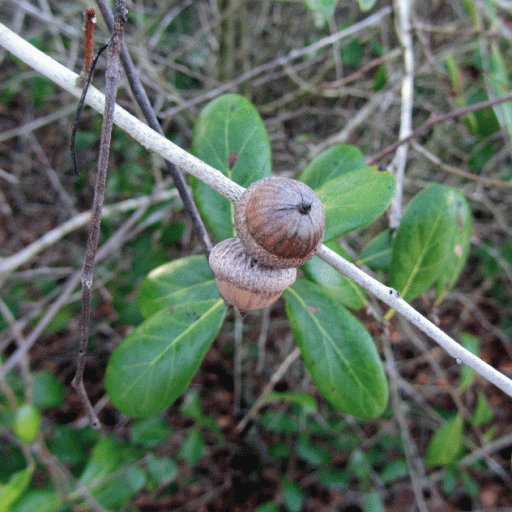
Plant Overview
The Myrtle Oak is a rugged, evergreen survivor of the American Southeast. Often found clinging to sandy dunes or forming dense thickets in scrublands, this petite oak earns its name from its small, leathery leaves that mimic the look of a common Myrtle bush. Rather than a towering giant, it is a "shrubby guardian" that protects coastal ecosystems from erosion and harsh winds.
🔍 How to Identify
- 🍃 The Foliage: Small, oval-shaped leaves that are thick and leathery. They are a deep, glossy green on top and have distinctively "rolled" edges (revolute margins) that curve slightly toward the underside.
- 🌳 Growth Habit: Unlike its massive cousins, this oak usually grows as a multi-stemmed shrub or a small, crooked tree, rarely reaching over 20 feet in height.
- 🥜 The Acorns: It produces tiny, striped acorns that sit in a shallow, saucer-like cap. These seeds take two years to fully mature on the branch.
🏡 In Your Garden
- 🏖️ Soil Preferences: This plant is a specialist in "poor" conditions. It thrives in deep, sandy soils where other plants might wither, making it an excellent choice for xeriscaping or coastal properties.
- 🌬️ Coastal Toughness: It is highly salt-tolerant and wind-resistant. If you live near the ocean, the Myrtle Oak acts as a natural screen that can handle the salty spray and tropical gusts.
- 🐦 Wildlife Magnet: If you plant a Myrtle Oak, expect visitors. It is a critical nesting site and food source for the threatened Florida Scrub-Jay, which relies on these thickets for survival.
⚠️ Safety & Toxicity
- 🐾 Mildly Toxic: Like most members of the Quercus genus, the leaves and acorns contain tannins. While not usually fatal, they can cause digestive upset, vomiting, or lethargy in dogs, cats, and horses if consumed in large quantities.
- 👶 Choking Hazard: The small, hard acorns can be a choking hazard for curious toddlers who might find them scattered on the lawn.
✨ Fun Fact
The Myrtle Oak is a master of the "pyrogenic" lifestyle. In the wild, it lives in areas prone to natural fires. While the top of the plant may burn away, it has a massive, hardy root system that allows it to resprout rapidly from the ashes, often returning thicker than before!

Detailed Care Instructions
To grow Quercus Myrtifolia, also known as Myrtle Oak, you can follow these steps:
- Choose a suitable location: Myrtle Oak thrives in full sun to partial shade. Make sure to select a spot that receives at least six hours of sunlight per day.
- Prepare the soil: Myrtle Oaks prefer well-draining soil. Mix organic matter, such as compost or aged manure, into the soil to improve drainage and add nutrients.
- Planting: Dig a hole that is deep and wide enough to accommodate the plant's root ball. Gently place the plant in the hole and backfill with soil, ensuring the roots are covered but the trunk is not buried. Press the soil down firmly around the base to remove air pockets.
- Watering: Provide adequate water to establish the plant initially. Water deeply and regularly, especially during the first growing season. Once established, they are relatively drought-tolerant and only require watering during extended dry periods.
- Mulching: Apply a layer of organic mulch around the base of the plant. This helps retain moisture, suppresses weeds, and provides a buffer against extreme temperatures.
- Pruning: Myrtle Oaks generally do not require pruning. However, you can trim away any dead or damaged branches during the dormant season.
- Fertilizing: Myrtle Oaks typically do not require regular fertilization, especially if the soil is rich and fertile. If necessary, you can apply a slow-release, balanced fertilizer in early spring.
- Pest and disease control: Keep an eye out for common pests like aphids, scale insects, and caterpillars. Treat them with appropriate insecticides or natural remedies if necessary. Ensure good air circulation around the plant to prevent foliar diseases.
- Maintenance: Regularly monitor the plant for any signs of stress, disease, or nutritional deficiencies. Provide proper care and take appropriate action if any issues arise.
Remember, Myrtle Oaks are slow-growing trees, so be patient as they establish and mature over time.

Place in a bright room that is sun drenched almost all day. Or directly in a south-facing window.

One should water this plant regularly, but not too much, as it can cause root rot. Allow the soil to dry out slightly between waterings, and do not let it sit in standing water for extended periods of time. When watering, make sure to water deeply and thoroughly, so that the water reaches the roots. Watering this plant early in the morning or late in the afternoon, when the sun is not too strong, is preferable. Additionally, it is recommended to avoid getting water on the leaves, as this can lead to fungal diseases.
For best results with the Quercus Myrtifolia plant, it is recommended to fertilize it annually in the early spring. Use a slow-release, all-purpose fertilizer, and follow the instructions on the package for the proper amount to apply based on the size and age of the plant. Avoid over-fertilizing, as this can lead to excessive growth and weaken the plant over time. Additionally, be sure to water the plant thoroughly after fertilizing to ensure that the nutrients are able to reach the roots and promote healthy growth.
The ideal soil for the Quercus Myrtifolia plant is composed of a well-draining mixture of organic matter and sandy loam. The soil should be slightly acidic, with a pH range of 5.5 to 6.5, to support healthy growth. A soil that is too alkaline may cause leaf discoloration and nutrient deficiencies. It is recommended to avoid heavy clay soils, which can retain too much moisture and suffocate the plant's roots. Adding compost or other organic amendments to the soil can improve its fertility and drainage, promoting robust growth and a healthy root system. It is also important to avoid over-watering and to ensure that the plant receives adequate sunlight and nutrients.
To propagate this plant, take softwood cuttings from the mature plant in the early summer. Cuttings should be about four to six inches in length and taken from the tips of new growth. Remove the leaves from the bottom two inches of the cutting.
Dip the cut end of the cutting in rooting hormone and then plant it in a sandy soil mix. Water the cutting well and keep it in a warm, sunny location. Cover the cutting with a plastic bag to increase humidity and keep it moist.
It may take several weeks or even months for roots to form. Once the cutting has rooted, remove the plastic bag and transplant the new plant into a larger pot or into the ground. Water the plant regularly and provide it with adequate sunlight.
Propagation can also be done through seed germination, but it may take several years for the tree to reach maturity.








