Plant Overview
Known as the Water Oak, this fast-growing giant is a quintessential symbol of the humid American South. Often nicknamed the "Spotted Oak" or "Duck-foot Oak," it is beloved by homeowners for its ability to provide a dense canopy of shade in record time. While it lacks the centuries-long lifespan of some of its cousins, it makes up for it with its rugged adaptability and unique, semi-evergreen personality.
🔍 How to Identify
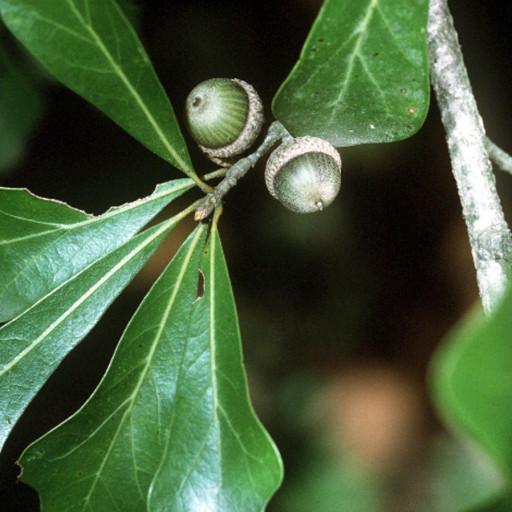
- 🍃 Leaf Shape: Look for "spatulate" leaves that are narrow at the base and broaden into a rounded, three-lobed tip, often resembling a duck's footprint or a small spade.
- 🌰 Tiny Acorns: It produces small, dark, almost black acorns (about 1/2 inch long) that sit in a very shallow, saucer-like cap covered in fine, hairy scales.
- 🌳 Bark Texture: Young trees have smooth, gray-brown bark, but as they age, the trunk develops tight, scaly ridges that can appear "spotted" with patches of lichen and texture.
🏡 In Your Garden
- 💧 The "Wet Feet" Specialist: True to its name, Quercus nigra thrives in moist, silty soils. It is an excellent choice for low-lying areas of a landscape where water tends to settle, though it is surprisingly drought-tolerant once established.
- 💨 Brittle Beauty: Because it grows so rapidly, its wood is not as dense as a Live Oak or White Oak. It is prone to "self-pruning" (dropping hollow or weak limbs) as it reaches maturity (around 50 years), so it should be planted a safe distance from power lines or rooftops.
⚠️ Safety & Toxicity
- 🐾 Mildly Toxic to Pets: Like all members of the Quercus genus, the acorns and young buds contain tannins. If ingested in large quantities, they can cause gastrointestinal distress or kidney issues in dogs, cats, and horses.
- 👶 Safe for Contact: The tree is non-toxic to touch and is perfectly safe for children to climb, provided the branches are inspected for stability.
✨ Fun Fact
- 🔄 The Winter Cheat: The Water Oak is "tardily deciduous." In milder climates, it refuses to drop its leaves in autumn, staying green all through Christmas and only shedding its old foliage once the new spring buds start to push them out!

Detailed Care Instructions
| Color | Insignificant |
| Soil Ph | Neutral |
| Soil Type | Sandy, Loams, Well-Drained Soil |
| Bloom Time | Early Spring |
| Plant Type | Deciduous Tree |
| Mature Size | 70- 80 Ft. Tall - 40-60 Ft. Wide |
| Native Area | Eastern To Midwest North America |
| Sun Exposure | Full Sun |
| Hardiness Zones | 4-9 |
To grow a Quercus nigra plant (also known as a water oak or black oak), you can follow these steps:
- Seed collection: If you have access to a mature Quercus nigra tree, collect acorns from the ground in the fall. Look for healthy acorns without any visible damage or discoloration.
- Acorn storage: Remove the caps from the acorns and place them in a bucket of water. Discard any floating acorns as they may not be viable. Keep the acorns in water for about a week to help eliminate any insect pests or diseases. Afterward, drain the water and allow the acorns to air dry for a few more days.
- Stratification: Quercus nigra acorns require a period of cold stratification to break their dormancy. You can accomplish this by placing the acorns in a sealed container with moist sand or vermiculite and refrigerating them for 60 to 90 days.
- Potting soil preparation: While the acorns are stratifying, prepare a potting mix. The ideal mix should consist of equal parts sand and peat moss or compost to provide good drainage and moisture retention.
- Potting: Fill small pots or seed trays with the potting mix. Plant the acorns about one inch deep, with the pointed end facing downward. Water lightly to keep the soil damp but not waterlogged.
- Germination: Place the pots or trays in a warm, well-lit location like a greenhouse or a sunny windowsill. Keep the soil consistently moist. Germination can take anywhere from one to six months, so be patient.
- Transplantation: Once the seedlings have a few sets of true leaves and are about six inches tall, you can transplant them into larger pots or directly into the ground. Choose a location that receives full sun or partial shade and has well-draining soil.
- Care: Water the young seedlings regularly, especially during dry spells. Mulching around the base of the plants will help retain soil moisture and prevent weed growth. Fertilize annually with a balanced slow-release fertilizer to promote healthy growth.
- Maintenance: Regularly prune and shape the Quercus nigra plant as it matures to maintain its desired form. Monitor for pests and diseases, and take appropriate action if necessary. Additionally, provide protection from extreme weather conditions, such as strong winds or prolonged drought.
Remember, growing a Quercus nigra plant from an acorn may take several years before it reaches a substantial size. Patience and proper care are key to successful growth.

Place in a window with dappled sun or a spot in the middle of a room. Or directly in a window facing west or east.

When watering this tree, ensure that the soil around the tree has dried out between waterings. The frequency of watering will depend on the climate, season, and soil type. Plants in sandy soil will require more frequent watering than those in clay soil. Use a watering can or hose to deliver water to the soil around the base of the tree, rather than directly onto the tree's leaves or trunk. Avoid overwatering the plant as this can lead to root rot and other plant diseases.
- Choose a balanced fertilizer with equal amounts of nitrogen, phosphorus, and potassium.
- Apply the fertilizer around the drip line of the tree, avoiding the trunk.
- Water the tree thoroughly after applying fertilizer.
- Repeat the process every 6 months during the growing season.
- Avoid over-fertilizing as it can lead to excessive growth, making the tree more susceptible to disease and pests.
Quercus Nigra is a type of plant that requires well-draining soil to grow properly. It prefers a soil that is fertile and has a slightly acidic pH level of around 5.5 to 6.5. The soil should be moist but not overly wet or soggy, as this can lead to root rot and other plant diseases. It is recommended to use a soil mix that contains a good amount of organic matter, such as compost or peat moss, to help promote healthy root growth and provide nutrients to the plant. Additionally, it is important to ensure that the soil has good aeration so that oxygen can reach the roots. Sand or perlite can be added to the soil mix to improve its drainage and texture. Overall, the soil used for Quercus Nigra should be well-balanced, with a mix of nutrients that can support its growth and development.
Quercus Nigra is a plant that can be propagated through several methods:
- Seeds: Collect matured acorns in autumn and let them dry for a few days. Then, soak them in water for 24 hours and plant them in well-draining soil. Keep the soil moist and place the container in a sunny spot. Germination usually occurs within 3-5 weeks.
- Cuttings: Collect hardwood cuttings in winter when the plant is dormant. Cuttings should be around 6-8 inches with 2-3 buds. Remove the lower leaves and dip the end of the cutting in rooting hormone. Plant in well-draining soil and cover with plastic to create a greenhouse environment. Keep the soil moist and place in a spot with bright, indirect sunlight.
- Layering: This method involves bending a low branch to the ground and burying it with soil while still attached to the mother plant. Wait for roots to form and then detach the new plant from the parent plant.
Regardless of the propagation method, it is important to ensure the soil is well-draining and the plant receives adequate sunlight and moisture.








