Plant Overview
The Willow Oak (Quercus phellos) is the ultimate "masquerade" tree of the forest. While its long, slender leaves might trick you into thinking it's a Willow, it is a true member of the majestic Oak family. Native to the lowlands and floodplains of North America, it is one of the most popular street trees in the Southern United States, offering a cooling canopy with a texture much softer and more elegant than its rugged, broad-leafed cousins.
🔍 How to Identify
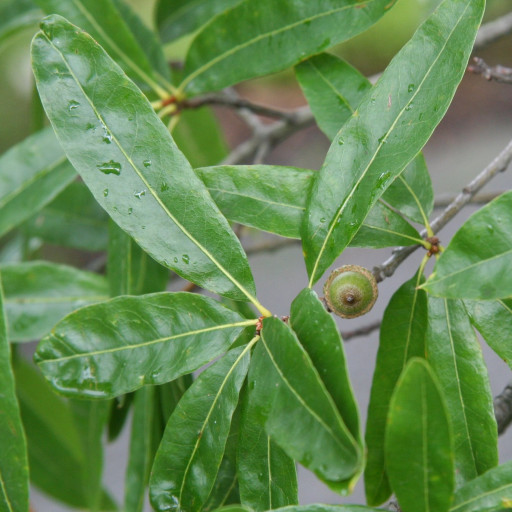
- 🍃 The Leaves: Unlike the classic lobed oak leaf, these are narrow, blade-like, and smooth-edged. They feature a tiny, hair-like bristle at the tip—a secret giveaway of its membership in the Red Oak group.
- 🧶 The Texture: The leaves are relatively small (2–5 inches long), giving the tree a fine-textured, "willowy" appearance that casts a dappled, pleasant shade rather than total darkness.
- 🌰 The Acorns: It produces tiny, almost spherical acorns nestled in thin, saucer-like caps. These are small enough to be easily swallowed by a variety of urban wildlife, from wood ducks to squirrels.
🏡 In Your Garden
- 🌳 Urban Champion: The Willow Oak is remarkably tolerant of city pollution and heat. It grows faster than many other oak species, making it an excellent choice for homeowners who want to see a "legacy tree" reach maturity within their lifetime.
- 💧 Soil & Space: While it naturally loves the moist, acidic soils of bottomlands, it is surprisingly drought-tolerant once established. Be mindful of its root system; it is shallower than other oaks, meaning it is easier to transplant but might eventually lift nearby bricks or thin pavement if planted in a tiny strip.
⚠️ Safety & Toxicity
- 🐕 Mild Toxicity: Like all members of the Quercus genus, the acorns and young buds contain tannins. While not usually fatal, they can cause digestive upset, vomiting, or (in rare cases of heavy consumption) kidney issues in dogs, cats, and horses.
- 🧒 Child Safety: The tree is physically safe for play. It lacks the sharp, prickly leaf points found on Holly Oaks or Northern Red Oaks, making it a "friendlier" tree for backyards with kids.
✨ Fun Fact
The Willow Oak was a personal favorite of Thomas Jefferson, who planted them extensively at Monticello. Because the leaves look so much like a Willow but the wood is as hard as an Oak, early settlers often used it for "light" construction where they wanted the strength of oak without the bulky weight of larger-leafed species.

Detailed Care Instructions
| Lighting | Full Sun |
| Hardiness Zones | 5A - 9B |
To grow a Quercus Phellos plant (also known as willow oak), you can follow these steps:
- Obtain seeds or seedlings: You can purchase Quercus Phellos seeds or seedlings from nurseries or online suppliers. Alternatively, you can collect acorns from mature trees with permission.
- Choose the right location: Willow oaks prefer full sun to partial shade. Select a location that receives at least 6 hours of direct sunlight per day. Make sure the soil is well-draining.
- Prepare the soil: Willow oaks thrive in moist, fertile soil. Amend the soil with organic matter like compost to enhance its fertility and drainage.
- Plant the seeds or seedlings: If you're starting from seeds, soak them in water for 24 hours prior to planting. Plant the seeds or seedlings at a depth equal to the size of the seeds or container they came in. Space multiple plants at least 20-30 feet apart to allow for proper growth.
- Watering: Keep the soil consistently moist but not waterlogged. Water regularly, especially during dry spells or droughts. Avoid overwatering as it can lead to root rot.
- Mulching: Apply a layer of organic mulch around the base of the plant to retain moisture, suppress weed growth, and regulate soil temperature.
- Fertilization: Feed the plant with a balanced, slow-release fertilizer in early spring when new growth appears.
- Pruning: Willow oaks generally require minimal pruning, mainly to remove dead, damaged, or diseased branches. Prune during the dormant season (late winter or early spring) to promote healthy growth.
- Protection from pests and diseases: Regularly monitor your plants for common pests like caterpillars, aphids, and leaf miners. Use appropriate insecticides or organic methods to control infestations. Willow oaks are generally resistant to most diseases.
- Patience and care: Quercus phellos plants are slow-growing, so patience is key. Provide regular care and monitoring, and allow the tree to establish itself over time.
Remember to check local regulations and potential invasive tendencies of this species in your area before planting.

Place in a bright room that is sun drenched almost all day. Or directly in a south-facing window.

Quercus Phellos is a species of tree that requires a sufficient and consistent supply of water to thrive and grow. To water this plant, one should first consider the soil conditions in which the plant is growing. If the soil is dry or sandy, more frequent watering might be necessary. Conversely, if the soil is dense or clay-like, watering should be done more slowly and less frequently to avoid water buildup.
The best way to water Quercus Phellos is by using a soaker hose or drip irrigation system. These methods allow water to slowly seep into the soil near the tree's roots, ensuring that the water is delivered directly where it is needed. Alternatively, a watering can or hose can also be used to deliver water to the base of the tree, being careful not to create runoff or standing water.
When watering Quercus Phellos, it is important to avoid getting water on the leaves or branches, as this could encourage the growth of fungal diseases. Additionally, it is best to water in the early morning or late afternoon when the sun is less intense, as watering in midday heat can cause the water to evaporate too quickly and not be absorbed by the tree.
Overall, watering Quercus Phellos requires attention to soil conditions, method of delivery, and timing. With proper watering techniques, this tree species can grow to be strong and healthy for years to come.
To fertilize this plant, apply a balanced slow-release fertilizer in early spring before new growth appears. Use a rate of 1 pound of nitrogen per 1000 square feet of soil. Alternatively, you can use a liquid fertilizer during the growing season. Apply the fertilizer around the drip line of the tree and water thoroughly after application. Avoid fertilizing in late summer or fall as this can promote new growth that may not harden off in time for winter.
To grow the Quercus Phellos plant, it is recommended to use well-draining, moist, and fertile soil. The ideal pH level should be between 6.0-7.5, and the texture of the soil should be loamy with good moisture-retaining capabilities.
It is best to avoid using heavy, clay-rich soil as it may lead to poor drainage and stunt the growth of the plant. Similarly, using sandy soil with poor water retention properties may require frequent watering and cause the roots to dry out.
Organic matter such as compost or well-rotted manure can be added to the soil to enrich the nutrient content. Additionally, regular fertilization with a balanced organic or synthetic fertilizer will help to maintain healthy growth.
Careful consideration of the soil type and composition is essential for the successful cultivation of the Quercus Phellos plant.
To propagate this plant, you will first need to collect mature acorns in the fall. Choose healthy looking acorns that are free of cracks or signs of pest damage. Remove the caps from the acorns and place them in a bucket of water. Discard any acorns that float, as these are not viable.
Next, place the viable acorns in a plastic bag with some damp peat moss or vermiculite. Seal the bag and store it in the refrigerator for four to six weeks. This process is known as stratification, and it simulates the natural cold period that the acorns would experience in the ground during the winter.
After the stratification period is over, remove the acorns from the refrigerator and plant them in a well-draining potting mix. Plant them about 1 inch deep and keep the soil moist but not soggy. Place the pot in a bright, filtered light and warm spot, but not in direct sun.
The acorns should germinate within a few weeks to a month. Once they have grown a few inches tall and have developed several leaves, they can be transplanted into a larger pot or into the ground.
To transplant to the ground, choose a sunny location with well-draining soil. Dig a hole twice as wide as the root ball and just deep enough to accommodate it. Gently remove the plant from the pot and place it in the hole, spreading the roots out evenly. Fill in the hole with soil, tamp it down, and water thoroughly.
Keep the newly transplanted tree well-watered until it establishes itself. Over time, the tree will continue to grow and mature, producing its characteristic leaves and acorns. Congratulations, you have successfully propagated this beautiful tree!
Common pests of the willow oak include Larvae. Make a habit of checking your willow oak frequently for pests so that any infestations can be caught and managed early.








