Plant Overview
Known as the Ubame Oak, this Japanese treasure is far from your typical towering forest giant. Often found clinging to rocky coastlines or sculpted into elegant garden hedges, it is the legendary source of "Binchotan"—the high-grade white charcoal prized by chefs worldwide. It is a slow-growing, evergreen survivor that brings a sense of ancient, rugged elegance to any landscape.
🔍 How to Identify
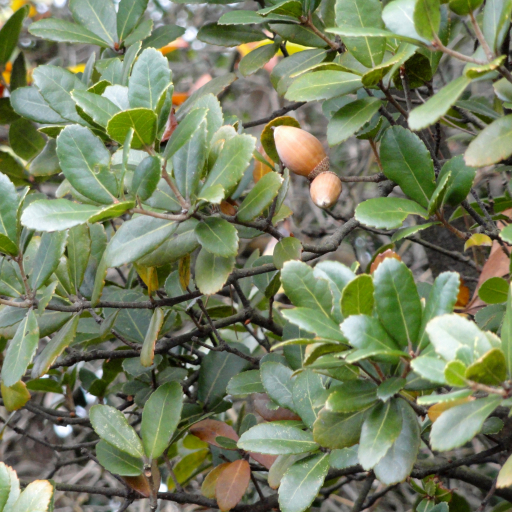
- 🍃 Leathery Foliage: The leaves are small, oval, and surprisingly thick, with a glossy finish that feels almost like plastic or high-quality leather.
- 🎨 Bronze New Growth: In early spring, the fresh foliage emerges in a striking reddish-bronze or copper hue, providing a beautiful contrast against the older, deep-green leaves.
- 🌰 Petite Acorns: It produces tiny, oval acorns nestled in scaly, bowl-shaped cups. These are much smaller than those of the English or Red Oak, fitting its shrub-like stature.
🏡 In Your Garden
- ✂️ Pruning & Topiary: Because it grows slowly and has small leaves, it is a favorite for "cloud pruning" or formal hedging. It maintains its shape for months without needing a trim, making it a low-maintenance choice for structured gardens.
- 🌊 Coastal Warrior: This plant is exceptionally resistant to salt spray and high winds. If you live near the ocean where other plants wither, the Ubame Oak will likely thrive.
- 🪵 Patience is Key: It spends its first few years focusing on its deep taproot system. Don't be discouraged if it doesn't shoot up immediately; once established, it is nearly indestructible.
⚠️ Safety & Toxicity
- 🐾 Mildly Toxic to Pets: Like all members of the Quercus genus, the leaves and acorns contain tannins. If consumed in large quantities by dogs, cats, or horses, it can cause gastrointestinal distress or kidney issues.
- 👶 Child Safety: The acorns can be a choking hazard for small children, and the serrated edges of the leaves can be slightly sharp to the touch, though they aren't considered dangerous.
✨ Fun Fact
- 🔥 The "Metallic" Wood: The wood of the Ubame Oak is so incredibly dense that it actually sinks in water! In Japan, it is used to make high-quality wind chimes and Xylophone bars because the wood clinks with a metallic, bell-like sound when struck.

Detailed Care Instructions
To grow a Quercus phillyreoides plant, also known as the Mexican white oak, you can follow these steps:
- Select the right location: Mexican white oak grows best in full sun to partial shade. Choose a location with well-draining soil.
- Planting: Dig a hole that is slightly larger than the root ball of your plant. Place the plant in the hole, ensuring that the top of the root ball is level with the surrounding soil. Backfill the hole with soil, gently pressing it down to eliminate air pockets.
- Watering: After planting, give the tree a deep watering. Keep the soil evenly moist but not waterlogged. During hot, dry periods, provide regular irrigation to keep the soil moist.
- Mulching: Apply a layer of organic mulch around the base of the tree, leaving a small gap around the trunk. Mulch helps retain moisture and suppress weed growth.
- Pruning: Minimal pruning is required for Mexican white oak trees. Remove any dead, damaged, or crossing branches to improve airflow.
- Fertilizing: Generally, Mexican white oak does not require regular fertilization. However, if your soil is poor in nutrients, you can apply a slow-release, balanced fertilizer in early spring.
- Pest and disease management: Mexican white oak trees are typically resistant to many pests and diseases. However, regular inspection of the tree's leaves and trunk for any signs of infestation or disease is recommended.
- Staking: If your young plant is struggling to stand upright, you can use stakes and ties to support it for the first year or two until it establishes strong roots.
- Winter protection: Mexican white oak is usually hardy in USDA Hardiness Zones 8-11. If you live in a colder region, you may need to protect the tree during winter months using burlap or other insulating materials.
Remember that growing plants requires patience and care. It may take several years for your Mexican white oak to reach its full size and potential.

Place in a bright room that is sun drenched almost all day. Or directly in a south-facing window.

Watering this plant requires regular attention and monitoring. The amount and frequency of water required depends on different factors such as soil type, climate, and season. Generally, a good rule of thumb for watering this plant is to keep the soil moist but not waterlogged. Overwatering can lead to root rot and under watering can cause the plant to wilt and die.
To water the plant, you should first check the soil moisture level. Inserting a finger or a wooden stick into the soil can help determine if the plant needs watering. If the soil feels dry to the touch, it is time to water.
When watering, ensure that the water penetrates the soil deeply to reach the roots. Watering the surface of the soil can cause the water to evaporate quickly, leaving the roots dry. To prevent this, water slowly and deeply until the excess water starts to drain out of the bottom of the pot.
During the winter or colder months, you should reduce the frequency of watering to prevent waterlogging or excess moisture. You can also add a layer of mulch on top of the soil to help retain moisture.
Overall, it is essential to be mindful of the watering needs of this plant as it greatly contributes to its growing success and overall health.
To fertilize this plant, select a balanced, slow-release fertilizer with a ratio of 10-10-10 or 12-12-12. Apply the fertilizer evenly around the drip line of the tree, avoiding the trunk. Use about 1 pound of fertilizer per inch of trunk diameter. Water the plant thoroughly after fertilizing to help the nutrients absorb into the soil. Fertilize in late winter or early spring before the new growth begins. Repeat the application once or twice during the growing season, from late spring through summer. Avoid fertilizing in the fall, as this can stimulate late growth that may not have time to harden off before winter.
For Quercus Phillyreoides plant, it is best to use well-draining soil that is a mix of sand, clay, and organic matter. The soil should be slightly acidic with a pH range between 5 to 6.5. It is recommended to use soil that is rich in nutrients and free of any contaminants or toxins. Additionally, the soil should be allowed to dry out slightly between watering to prevent root rot. The ideal soil for this plant will promote healthy growth and provide it with the necessary nutrients it needs to thrive.
To propagate this plant, you can take semi-hardwood cuttings in the early summer. Select a healthy, vigorously growing shoot and cut a 6-inch piece. Remove the leaves from the bottom half of the cutting and dip it into rooting hormone. Place the cutting into a pot filled with a mixture of peat and sand, and keep it moist but not soaking. Cover the pot with a plastic bag to maintain humidity and keep it in a bright, but not direct, light. After a few weeks, check for roots by gently tugging on the cutting. Once roots have formed, you can transplant the cutting into a larger pot or directly into the garden.








