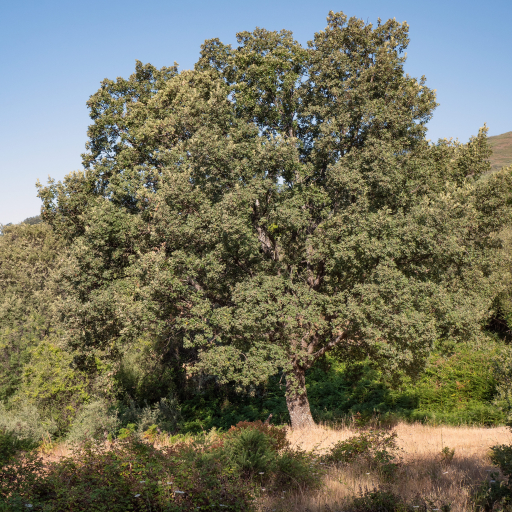
Plant Overview
The Pyrenean Oak, also known as the Marojo or "Rebollo," is a master of endurance in the rugged landscapes of the Iberian Peninsula. Unlike many of its cousins, this oak is famous for its distinctively "fuzzy" texture and its stubborn refusal to drop its dead leaves in winter, creating a ghostly brown silhouette against the snow. While its name suggests it belongs to the high Pyrenees, it is actually a hero of the dry, acidic plateaus of central Spain and Portugal.
🔍 How to Identify
- 🍃 The Velvet Touch: The most striking feature is the thick, soft hair (tomentum) covering both sides of the leaf, giving the tree a soft, grayish-green or silvery appearance compared to the glossy leaves of other oaks.
- ✂️ Deeply Cut Lobes: The leaves are deeply and irregularly lobed, with indentations that often reach more than halfway to the central vein, looking almost like jagged snowflakes.
- 🍂 Winter Shagginess: This tree is "marcescent," meaning the leaves die and turn a rustic copper in autumn but stay firmly attached to the branches until new buds push them off in the spring.
🏡 In Your Garden
- ⛰️ Acidic Affinity: This oak is a specialist for poor, siliceous (acidic) soils. If your garden has lime-heavy or alkaline soil, the tree may suffer from yellowing leaves, as it struggles to take up nutrients in "sweet" dirt.
- 🌳 The "Social" Tree: Unlike many solitary oaks, Quercus pyrenaica is highly colonial. It spreads via underground root suckers, meaning a single tree can eventually become a small grove. This makes it excellent for stabilizing slopes but a challenge for small, confined garden beds.
⚠️ Safety & Toxicity
- 🟢 Low Risk: The Pyrenean Oak is generally safe for humans and is not known to cause skin irritation upon contact.
- 🐴 Tannin Warning: Like all members of the Quercus genus, the young buds and acorns contain high concentrations of tannins. While harmless in small amounts, they can be toxic to horses, cattle, and sheep if eaten in large quantities, leading to kidney or digestive issues.
- 🐶 Pet Safety: Keep an eye on dogs; while not "poisonous" in a traditional sense, swallowing whole acorns can cause dangerous intestinal blockages.
✨ Fun Fact
The Pyrenean Oak is a bit of a geographic misnomer. It was named by a botanist who first spotted it in the Pyrenees mountains, but it is actually quite rare there! Its true kingdom is the central mountain ranges of Spain, where it forms massive, ancient forests that provide the primary habitat for the endangered Iberian Lynx.

Detailed Care Instructions
To grow Quercus pyrenaica, also known as Pyrenean oak or Portuguese oak, follow these steps:
- Climate and location: This oak tree is native to southern Europe, especially Spain and Portugal, and prefers a Mediterranean climate with mild winters and hot, dry summers. Ensure that your location provides ample sunlight and well-drained soil.
- Seed collection: Collect ripe acorns in the fall when they naturally fall from the tree. Look for healthy acorns that are free from damage, rot, or pests. Store them in a cool, dry place until spring planting.
- Stratification: To break seed dormancy, stratification is necessary. Soak the acorns in water for 24 hours, then place them in a sealed plastic bag with moist, sterile potting soil or peat moss. Store the bag in the refrigerator for 60-90 days. Check the moisture periodically to prevent drying out or mold formation.
- Soil preparation: Quercus pyrenaica prefers well-draining soil with a pH between 6.0 and 7.5. Before planting, remove weeds, rocks, and other debris from the planting area. Consider adding organic matter like compost to improve soil fertility and drainage.
- Planting: In early spring, prepare planting holes that are at least 6 inches deep and spaced at least 10 feet apart to allow proper growth. Plant the acorns about 2 inches deep and cover them with soil. Water gently to settle the soil.
- Care and maintenance:
- Watering: Keep the newly planted acorns consistently moist but not waterlogged. Do not let the soil dry out completely. Once established, Quercus pyrenaica is relatively drought-tolerant.
- Mulching: Apply a layer of mulch around the young trees to retain moisture, inhibit weed growth, and regulate soil temperature.
- Pruning: Prune any damaged or diseased branches to maintain the tree's health and shape.
- Protection: Protect young seedlings from browsing animals by using tree cages or fencing. Additionally, remove any competing vegetation to reduce competition for resources.
- Patience: Quercus pyrenaica is a slow-growing tree, so be patient and allow it time to establish and grow. It may take several years before the tree reaches a substantial height.
Remember to research specific regional requirements and consult local experts for advice tailored to your specific location.

Place in a bright room that is sun drenched almost all day. Or directly in a south-facing window.

When providing water to this plant species, it is important to consider its specific needs. Quercus Pyrenaica plants are drought-tolerant, so it is generally not necessary to water them too frequently.
It is recommended to water these plants deeply and infrequently, allowing the soil to dry out slightly between watering sessions. The frequency and amount of water needed will depend on various factors such as temperature, humidity, and soil type.
During hot and dry weather conditions, it may be necessary to water these plants more frequently to prevent them from wilting. However, it is important not to over-water them, as this can lead to root rot and other problems.
It is also important to check the soil moisture level regularly to ensure that it is not too dry or too wet. When watering, it is best to provide water directly at the base of the plant to minimize water waste and avoid getting the leaves wet, which can lead to fungal diseases.
Overall, providing adequate and appropriate water to Quercus Pyrenaica plants is essential for their growth and health.
To fertilize this plant, first ensure that the soil is moist but not waterlogged. Use a slow-release fertilizer with a balanced NPK ratio, such as a 10-10-10 formula. Apply the fertilizer at a rate of 1 tablespoon per square foot of soil, avoiding direct contact with the plant's trunk or foliage. Water the soil thoroughly after fertilizing to help the nutrients penetrate the roots. Fertilize in early spring before new growth appears and again in early fall after the plant has finished producing acorns.
Quercus Pyrenaica plant prefers well-draining soil with good aeration. The ideal soil should be slightly acidic to neutral, with a pH level between 5.5 and 7.0. The soil should also be rich in organic matter, such as compost or well-aged manure, to provide essential nutrients for the plant's growth and development. It is recommended to mix the soil with coarse sand or perlite to improve drainage and prevent waterlogging. The plant also prefers a soil that is loamy or sandy, as it prefers soil with good porosity and water permeability. The plant should be watered regularly, but care should be taken not to overwater it, as this can cause root rot. Additionally, the plant can benefit from a layer of mulch around its base to maintain moisture and prevent weed growth.
Propagation of this plant can be done through several methods including seed germination and vegetative propagation. For seed germination, the seeds should be collected when they are mature and sown in a well-draining soil mix. The soil should be kept moist until the seeds germinate.
Vegetative propagation can also be done through the use of stem cuttings or layering. For stem cuttings, select a healthy stem with several leaves and remove the lower leaves. Dip the cut end in rooting hormone and plant in a well-draining soil mix. Keep the soil moist and place in a shaded area until roots develop.
For layering, select a healthy stem and gently scrape the bark off an area near the base. Bury that area in soil and keep the soil moist until roots develop. Once roots have developed, the new plant can be separated from the parent plant and transplanted to its own container or location.








