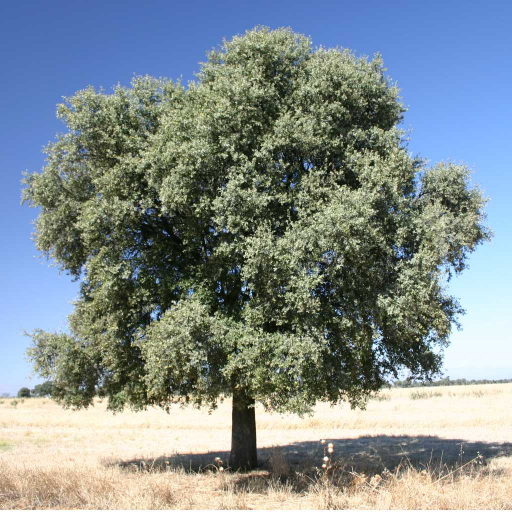
Plant Overview
Known as the "Sweet Acorn Oak" or the "Ballota Oak," Quercus rotundifolia is the soul of the Mediterranean landscape. Often found anchoring the sun-drenched "Dehesa" grasslands of Spain and Portugal, this evergreen giant is celebrated for producing the sweetest acorns in the world. Unlike its bitter cousins, this tree has been a vital food source for both humans and livestock for millennia, symbolizing endurance and generosity.
🔍 How to Identify
- 🍃 Holly-Like Foliage: The leaves are small, leathery, and oval. When the tree is young, the leaf edges are often spiny like holly to discourage grazing animals, but they become smoother as the tree grows taller.
- 🥈 Silver Lining: If you flip a leaf over, you’ll find a dense, felt-like coating of silver-grey hairs that helps the tree retain moisture in scorching heat.
- 🧱 Blocky Bark: The trunk is wrapped in dark grey bark that cracks into a distinctive pattern of small, square-like plates as the tree matures.
🏡 In Your Garden
- ☀️ Drought Warrior: This tree is a master of water conservation. Once its deep taproot is established, it can survive long periods of intense heat and drought, making it an excellent choice for low-water or "xeriscape" gardens.
- 🏗️ Slow and Steady: Do not expect a privacy screen overnight. This oak grows very slowly, prioritizing its root system before putting on height. Because of this deep root, it famously hates being moved; choose its forever home carefully.
⚠️ Safety & Toxicity
- 🟢 Safe for Humans: The acorns of this specific subspecies are famous for being edible and much lower in bitter tannins than other oaks, though they are usually roasted or ground into flour before eating.
- 🐾 Pet Watch: While the "sweet" acorns are less toxic than others, they still contain tannins. If dogs or horses ingest large quantities of green acorns or young leaves, it can lead to digestive upset or, in rare cases, kidney issues.
✨ Fun Fact
The world-famous (and very expensive) Spanish Iberian Ham (Jamón Ibérico) owes its flavor entirely to this tree. The pigs are allowed to roam freely through Quercus rotundifolia forests, eating up to 10kg of these sweet acorns every single day to develop their signature nutty fat.

Detailed Care Instructions
To grow a Quercus Rotundifolia plant, also known as the Southern live oak or Texas live oak, you can follow these steps:
- Seed Collection: Obtain acorns from a tree or purchase them from a reputable seed supplier. Collect acorns in the fall, making sure they are mature and have not been damaged by insects or disease.
- Acorn Treatment: Soak the acorns in water for 24 hours to remove any tannins that may inhibit germination. Discard any floating or damaged acorns.
- Germination: Fill small pots or seed trays with a well-draining potting mix. Plant the acorns about 1-2 inches deep. Water the soil lightly to keep it slightly moist, not overly wet.
- Light and Temperature: Place the pots in a warm, sunny location with temperatures between 60-70°F (15-21°C). Southern live oaks prefer full sun, so ensure they receive adequate light.
- Watering: Keep the soil consistently moist but avoid overwatering, as it may cause root rot. Check the soil moisture regularly, especially during dry periods.
- Transplanting: Once the seedlings reach 4-6 inches in height and develop a few true leaves, you can transplant them into larger pots or directly into the ground. Use well-draining soil and provide adequate spacing between each plant.
- Care and Maintenance: Water the growing tree regularly, especially during the first year after transplantation. Mulching around the base of the tree will help retain moisture and control weed growth. Southern live oaks are generally drought-tolerant but benefit from supplemental watering in dry periods.
- Pruning: Once the tree becomes established, you may need to prune it for desired shape or to remove dead or damaged branches. Pruning can be done in late winter or early spring, before new growth begins.
- Protection: Protect young plants from extreme temperatures, strong winds, and freezing conditions until they are well-established.
- Patience: Quercus Rotundifolia trees are long-lived and can take several years to reach their full potential. Be patient and consistent in providing proper care, and enjoy watching your live oak tree grow.

Place in a bright room that is sun drenched almost all day. Or directly in a south-facing window.

To water this plant, you should first check the soil to make sure it is dry to the touch. If it is, you should give the plant a thorough watering, making sure to soak the soil all the way through to the roots. It is important not to overwater, as this can lead to root rot and other issues. It is also important to make sure the plant is getting enough sunlight and is not being exposed to harsh weather conditions. If you notice the leaves starting to wilt or turn yellow, it may be a sign that the plant is not getting enough water or sunlight. In this case, you should adjust your watering and placement of the plant accordingly.
For optimal growth and health, fertilize the plant in early spring before new growth emerges. Use a slow-release, balanced fertilizer specifically formulated for trees. Apply according to package instructions, taking care not to over-fertilize. Water the plant thoroughly after fertilizing to help distribute the nutrients.
The ideal soil type for Quercus Rotundifolia is well-draining and fertile soil that is rich in organic matter. The soil should be slightly acidic, with a pH level between 5.5 and 6.5. It is important to avoid compacted soils as they can impede root growth and nutrient uptake. The plant also requires soil that retains moisture well without becoming waterlogged. Adding compost, leaf litter or a slow-release fertiliser to the soil can help provide necessary nutrients. The plant is tolerant of various soil textures, including sandy or loamy soils, but heavy clay soils should be avoided.
To propagate this plant, you will need to collect mature and healthy seeds from the parent plant during the autumn season. Once you have harvested the seeds, you will need to clean and dry them thoroughly before sowing them in a well-draining and nutrient-rich soil mix. The soil should be kept moist but not saturated, and you should keep the container in a warm and sunny location.
After a few weeks, the seeds should germinate, and you can transplant the seedlings once they have grown a few sets of true leaves. To ensure that the young plants develop strong root systems, it's important to transplant them carefully and avoid damaging the delicate roots. From here, you can continue to care for the plants by providing regular watering, fertilization, and pruning as needed. With proper care, your propagated plants should develop into healthy, mature specimens that you can enjoy for years to come.








