Plant Overview
Meet the "best of both worlds" tree. Turner's Oak is a botanical masterpiece first bred in an 18th-century London nursery by Spencer Turner. It is a fascinating hybrid between the majestic, deciduous English Oak and the sun-loving, evergreen Mediterranean Holm Oak, offering a lush, green canopy that refuses to quit even when other trees have gone bare for the winter.
🔍 How to Identify
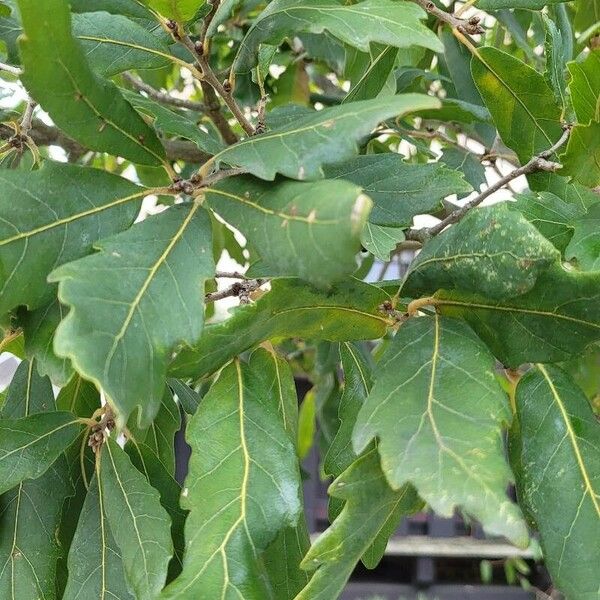
- 🍃 Persistent Foliage: The leaves are thick and leathery, resembling the Holm Oak but with the wavy, lobed edges of the English Oak. They stay dark green and glossy long after autumn has stripped other trees.
- 🌳 Stately Silhouette: It typically grows into a medium-sized tree with a dense, rounded, and spreading crown that provides deep, cool shade.
- 🌰 Classic Acorns: It produces small, pointed acorns held in scaly cups, usually appearing in pairs or small clusters during the late summer months.
🏡 In Your Garden
- 🌱 The Hybrid Advantage: Because of its parentage, Turner's Oak is remarkably adaptable. It inherits the cold-hardiness of the English Oak while keeping the drought-resistant, leathery leaves of its Mediterranean parent.
- 🧱 Urban Resilience: This tree is a champion in city environments. It handles air pollution well and, once established, its deep root system makes it quite sturdy against heavy winds, though it prefers a spot sheltered from the harshest salt sprays.
- ⏳ Patience Required: Like most oaks, this is a legacy tree. It grows at a moderate pace, meaning you are planting it for the next generation to climb and enjoy.
⚠️ Safety & Toxicity
- 🟢 General Safety: Turner's Oak is considered non-toxic to humans and common household pets like dogs and cats.
- 🐴 Livestock Caution: Like all members of the Quercus genus, the leaves and acorns contain high levels of tannins. While harmless in small amounts, they can be toxic to horses and cattle if consumed in large quantities.
- 🧤 Garden Tasks: The leaves are slightly stiff and can be prickly when dry, so wearing gloves during autumn cleanup is a good idea for sensitive skin.
✨ Fun Fact
One of the most famous specimens of Turner’s Oak lives at the Royal Botanic Gardens, Kew. During the Great Storm of 1987, the tree was partially uprooted, but the incident actually helped botanists learn that its hybrid vigor allowed it to recover much faster than its "purebred" neighbors!

Detailed Care Instructions
To grow Quercus × Turneri, also known as Turner's oak, you can follow these steps:
- Select a suitable planting location: Turner's oak prefers full sun to partial shade and well-draining soil. Choose a spot that will provide enough space for the oak tree to grow, as it can reach a height of 30-50 feet.
- Prepare the soil: Before planting, ensure that the soil is well-draining and rich in organic matter. You can add compost or well-rotted manure to improve the soil fertility and drainage.
- Planting: Dig a hole that is twice the width of the root ball and slightly deeper. Gently remove the plant from its container and place it in the hole. Make sure the top of the root ball is level with or slightly above the soil surface.
- Backfill and water: Fill the hole with soil, gently firming it around the base of the tree to remove any air pockets. Water thoroughly to settle the soil and ensure good root-to-soil contact.
- Mulching: Apply a layer of organic mulch (such as wood chips or bark) around the base of the tree to retain moisture, suppress weed growth, and regulate soil temperature. Keep the mulch a few inches away from the tree trunk to prevent moisture-related issues.
- Watering and care: Keep the soil consistently moist but not overly saturated during the initial establishment period. Once the tree is established, water deeply but infrequently, allowing the soil to partially dry out between waterings. Regularly monitor the moisture levels and adjust watering accordingly.
- Pruning: Pruning is generally not necessary for Turner's oak, except for removing any dead, damaged, or crossing branches. If desired, you can shape the tree by selectively pruning for form or size control during the dormant season.
- Fertilization: If the soil lacks essential nutrients, you can apply a balanced slow-release fertilizer during the growing season. Follow the package instructions for the correct amount and timing. However, Turner's oak usually does well without regular fertilization.
- Pest and disease control: Monitor for common oak pests and diseases, such as oak wilt, powdery mildew, or oak leaf blister. Treat any issues promptly with appropriate methods, such as insecticides or fungicides recommended for oak trees.
- Regular maintenance: Provide regular care by regularly removing weeds around the base of the tree, inspecting for any signs of problems, and ensuring adequate moisture during prolonged dry spells.
Remember, growing a Quercus × Turneri requires patience, as oaks are slow-growing trees. With proper care and maintenance, your oak tree should thrive and add beauty to your landscape.
Watering Quercus × Turneri is an essential part of its care routine. Here are some details on how to properly water this plant:
- Assess the soil moisture: Before watering, it is best to check the moisture level of the soil. Insert your finger into the soil, about an inch deep, and feel for dampness. If the soil feels dry at this depth, it is time to water the plant.
- Watering frequency: Quercus × Turneri generally requires moderate watering. It is important to provide enough water to keep the soil moist but not waterlogged. Typically, watering once every 7-10 days is sufficient, but this can vary based on factors such as temperature, humidity, and the size of the plant.
- Watering method: Instead of watering the plant from above using a watering can or a hose, it is advisable to water Quercus × Turneri directly at the base. This helps ensure that the water reaches the roots more effectively. Slowly pour water near the base of the plant, allowing it to soak into the soil evenly.
- Adequate drainage: It is crucial to ensure that the soil has good drainage to prevent waterlogged conditions, which can harm the plant. Make sure the pot or planting area has drainage holes to allow excess water to escape.
- Deep watering: When watering Quercus × Turneri, aim to provide deep waterings that penetrate the root zone. This helps encourage the roots to establish and grow deeply into the soil. Avoid surface-level or shallow waterings, as they may cause the roots to stay close to the surface where they can dry out quickly.
- Seasonal variations: During the growing season, which typically occurs in spring and summer, Quercus × Turneri may require more frequent watering due to increased evaporation and higher temperatures. On the other hand, in colder months or during dormancy, the watering frequency can be reduced.
Remember, it is always better to underwater than overwater Quercus × Turneri, as excessive moisture can lead to root rot. The specific watering needs may vary depending on various factors, so it is important to observe the plant closely and adjust the watering routine accordingly.
For the Quercus × Turneri plant, it is important to provide regular fertilization to ensure healthy growth. Here are some fertilizing instructions:
- Start fertilizing when the plant is actively growing, typically during the spring season.
- Choose a balanced, slow-release fertilizer with an NPK ratio of 10-10-10 or similar.
- Read the instructions on the fertilizer packaging carefully to determine the correct application rates for your specific plant size.
- Apply the fertilizer evenly around the root zone of the Quercus × Turneri plant, keeping it at least 6 inches away from the base of the trunk.
- Gently work the fertilizer into the top layer of soil using a hand tool or rake.
- Water the plant thoroughly after applying the fertilizer to help nutrients reach the root system.
- Repeat the fertilization process every 4-6 weeks during the growing season, but avoid overfertilizing as it can harm the plant.
- Adjust the fertilization schedule based on the plant's response and the specific fertilizer recommendations.
Remember to monitor the plant's overall health and adjust the fertilizer regimen accordingly. Additionally, it is always beneficial to refer to specific fertilization guidelines provided by your local horticultural extension office or nursery for the Quercus × Turneri plant.
Quercus × Turneri, a deciduous plant, prefers a specific type of soil for healthy growth and development. The recommended soil for this plant is well-draining, loamy soil with a slightly acidic to neutral pH level. A composition of organic matter such as compost or peat moss can be beneficial for its growth.
The ideal soil texture is loose and friable, enabling proper root development and facilitating nutrient absorption. It should have adequate moisture retention properties to ensure the plant receives sufficient water without becoming waterlogged, as excess water can lead to root rot.
Soil fertility is important for the Quercus × Turneri plant's nutrition. A soil enriched with organic matter and essential nutrients provides the necessary elements for optimal growth. It is advised to conduct a soil test to determine the nutritional requirements of the soil and adjust accordingly. Generally, adding a slow-release fertilizer formulated for acid-loving plants can promote healthy growth.
While Quercus × Turneri can adapt to various soil conditions, it is less tolerant of heavy clay soils or extremely sandy soils, as they may have poor drainage and impede root growth. Amending such soils with organic matter, like compost or well-rotted manure, can improve drainage and nutrient content.
When planting Quercus × Turneri, it is essential to ensure the soil is prepared adequately. Any weeds or debris should be removed, and the soil should be loosened to break up compacted areas. Additionally, amending the soil with organic matter can help enrich it further and create a favorable environment for the plant's root development.
Regularly monitoring soil moisture levels is crucial for the optimal growth of Quercus × Turneri. Maintaining a consistent level of moisture, neither letting the soil become bone dry nor waterlogged, will support healthy growth. Mulching around the plant can help maintain soil moisture by reducing evaporation and preventing weed growth.
Overall, providing well-draining loamy soil with a slightly acidic to neutral pH, enriched with organic matter and nutrients, is essential for the successful cultivation of Quercus × Turneri.
To propagate Quercus × Turneri, follow these steps:
- Start by collecting the seeds from mature Quercus × Turneri plants. These seeds are typically found inside acorns that have fallen from the tree. Make sure the acorns are ripe and intact, without any signs of damage or disease.
- Before sowing the seeds, it is recommended to perform a process called stratification. This helps break the seed dormancy and enhance germination rates. To stratify the seeds, moisten a paper towel or a piece of cloth with water and place the seeds on it. Fold the paper towel or cloth over the seeds and place them in a plastic bag or container. Refrigerate them for a period of 2-3 months, ensuring that the temperature remains between 33-41°F (1-5°C).
- After the stratification period, remove the seeds from the refrigerator and allow them to reach room temperature.
- Once the seeds are ready for sowing, prepare a propagation tray or pots with a well-draining soil mix. The soil should be a combination of peat moss, perlite, and sand, providing good aeration and moisture retention.
- Sow the seeds at a depth of approximately 1 inch (2.5 cm) in the soil. Space them adequately to allow for healthy root development.
- After sowing, moisten the soil gently using a spray bottle or a fine misting nozzle on a watering can. Ensure the soil remains consistently moist but not waterlogged throughout the germination process.
- Place the tray or pots in a warm and brightly lit location, but avoid direct exposure to intense sunlight. Ideally, a partially shaded area is suitable for germination.
- Germination can take anywhere from a few weeks to several months, depending on the conditions and specific characteristics of the Quercus × Turneri variety you are propagating. Regularly monitor the soil moisture levels and provide additional moisture as needed to prevent drying out.
- Once the seedlings have grown to a suitable size, they can be transplanted into individual pots or directly into the ground. Ensure that the new planting location provides adequate sunlight and well-draining soil.
- As the Quercus × Turneri plants grow, provide regular watering, especially during dry spells. Apply a balanced fertilizer during the growing season to provide necessary nutrients.
By following these instructions, you can propagate Quercus × Turneri from seed and enjoy the growth and beauty of this plant.








