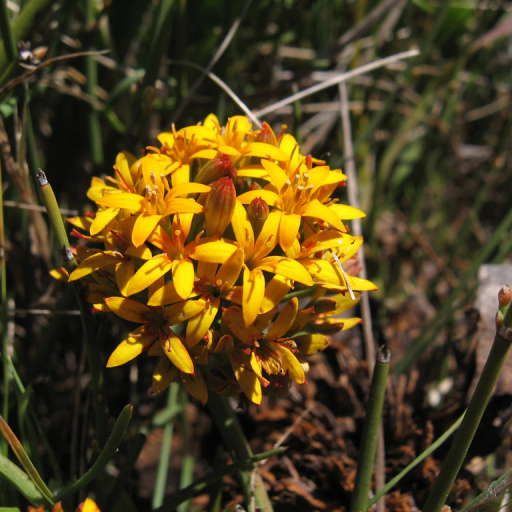
Plant Overview
Often called "Quinchamalí" or the "Healing Star," Quinchamalium chilense is a resilient little herb native to the high altitudes and coastal plains of Chile and Argentina. Deeply rooted in Mapuche folklore and traditional South American medicine, it is celebrated as a "panacea" for liver ailments and skin healing. In the wild, it looks like a scattered collection of golden-orange stars tucked into the rugged, sun-baked landscapes of the Andes.
🔍 How to Identify
- 🌼 Starry Clusters: The flowers are small, tubular, and end in four or five pointed petals, forming dense, flattened clusters (cymes) at the tips of the stems.
- 🌿 Needle-like Foliage: The leaves are narrow, linear, and almost needle-like, often appearing slightly fleshy to help the plant conserve moisture in dry climates.
- 📏 Prostrate Habit: It typically grows low to the ground, rarely exceeding 30 centimeters in height, creating a mounded or creeping appearance.
🏡 In Your Garden
- 🤝 The Hidden Connection: This plant is a "hemiparasite," meaning it has roots that can latch onto neighboring grasses to "borrow" extra water and minerals. Because of this unique lifestyle, it can be tricky to grow in isolation; it prefers having companions nearby.
- 🏔️ Mountain Hardiness: It is incredibly drought-tolerant and thrives in poor, rocky, or sandy soils. If you are trying to cultivate it, avoid heavy potting soil or over-watering, as it is adapted to the "lean" conditions of the mountains.
⚠️ Safety & Toxicity
- 💊 Medicinal Profile: While historically used in Mapuche medicine for internal infusions (teas) and external poultices, it should be treated with caution.
- 🐾 Pet Awareness: There is little scientific data on its toxicity to domestic pets. However, due to its high mineral concentration and medicinal compounds, it is best to keep it away from curious cats or dogs to prevent potential digestive upset.
✨ Fun Fact
The name "Quinchamalí" is derived from the Mapudungun word küñchaman, which translates to "to join" or "to unite." This is a poetic reference to the plant’s parasitic roots, which physically link it to the other plants in its community!

Detailed Care Instructions
To grow a Quinchamalium Chilense plant, also known as the Chilean Mitre or Angel's Trumpets, you can follow these guidelines:
- Climate and location: Quinchamalium Chilense plants thrive in mild to warm climates. They prefer full sun but can tolerate some shade. Choose a location in your garden or outdoor space that receives at least 6-8 hours of direct sunlight per day.
- Soil: The soil should be well-draining and fertile. It is best to amend the soil with organic matter like compost before planting to improve drainage and provide nutrients. Quinchamalium Chilense plants prefer slightly acidic soil with a pH of 5.5 to 6.5.
- Watering: These plants require regular watering, especially during hot, dry periods. However, overwatering can lead to root rot, so ensure the soil is moist but not waterlogged. During the growing season, water deeply once or twice a week, depending on the weather conditions.
- Fertilization: Quinchamalium Chilense plants benefit from regular feeding during the growing season. Use a balanced fertilizer or one specifically formulated for flowering plants. Follow the instructions on the fertilizer packaging and avoid over-fertilizing, as it can result in excessive foliage growth and fewer flowers.
- Pruning: Pruning is essential to maintain the shape and overall health of the plant. Remove any dead or damaged branches or flowers regularly. Pruning after the blooming period encourages new growth and more abundant flowering in the following season.
- Pests and diseases: Quinchamalium Chilense plants are relatively pest and disease resistant. However, they can occasionally face issues with aphids, spider mites, or whiteflies. Monitor the plant regularly and address any pest or disease problems immediately with appropriate organic or chemical treatments.
- Propagation: Quinchamalium Chilense plants can be propagated from seeds or through hardwood cuttings. Collect seeds from mature flowers and plant them in a well-draining seed-starting mix. Keep the soil consistently moist and provide warmth and light for germination. Hardwood cuttings can be taken in late winter or early spring and rooted in a moist growing medium.
Remember to research and follow any local regulations regarding the cultivation of Quinchamalium Chilense plants, as they may be considered invasive in some areas.

Quinchamalium chilense is a flowering plant that requires regular watering to ensure its optimal growth and health. When watering this plant, it is important to keep the following considerations in mind:
1. Watering Frequency: Quinchamalium chilense prefers a moderately moist soil, so it is essential to water it regularly. However, it is equally important to avoid overwatering, as excessive moisture can lead to root rot. As a general guideline, water your Quinchamalium chilense plant when the top inch of soil feels dry to the touch.
2. Watering Method: Water your plant at the base, directly onto the soil. Avoid overhead watering, as this can lead to the development of fungal diseases and may not effectively reach the roots. A gentle and thorough watering is recommended to ensure proper moisture penetration throughout the root zone.
3. Soil Drainage: Quinchamalium chilense thrives in well-draining soil. Ensure that the pot or planting area has adequate drainage holes to prevent water from pooling and saturating the roots. This will help prevent the risk of root rot.
4. Watering Technique: While watering, apply water slowly and evenly to allow the soil to absorb it gradually. This will help prevent runoff and ensure that water reaches the deeper root zones rather than just wetting the surface.
5. Mulching: Applying a layer of organic mulch (such as wood chips or straw) around the base of the plant can help retain moisture in the soil and reduce evaporation. Mulching also regulates soil temperature and inhibits weed growth, thus benefiting the overall health of Quinchamalium chilense.
6. Environmental Factors: Environmental conditions such as temperature, humidity, and sunlight intensity can affect the watering needs of Quinchamalium chilense. During hot or dry weather, it may require more frequent watering, while during cooler or rainy periods, less watering may be necessary. Monitor the plant's soil moisture levels and adjust watering accordingly.
To fertilize the Quinchamalium Chilense plant, follow these instructions:
- Use a balanced, water-soluble fertilizer with a N-P-K ratio of 10-10-10 or 20-20-20.
- Dilute the fertilizer according to the package instructions. It is usually recommended to mix 1 tablespoon of fertilizer in 1 gallon of water.
- Water the plant thoroughly before applying the fertilizer to ensure the soil is moist.
- Pour the diluted fertilizer solution around the base of the plant, avoiding direct contact with the leaves.
- Make sure to distribute the fertilizer evenly around the plant, covering the entire root zone.
- Repeat the fertilization process every 4-6 weeks during the growing season, which is typically spring and summer.
- Monitor the plant for signs of nutrient deficiencies or excesses. If the leaves turn yellow or show other symptoms, adjust the fertilizer application accordingly.
- Always follow the fertilizer manufacturer's instructions and recommendations for the best results.
- Remember to read and follow any warnings or precautions on the fertilizer packaging to ensure safety when handling and applying the product.
The ideal soil for Quinchamalium Chilense plant should have good drainage capacity and be slightly acidic to neutral in pH. The soil should be loose, loamy, and well-aerated to allow for proper root development. A soil mixture containing peat moss, coarse sand, perlite, and vermiculite can be used to achieve optimal soil conditions for the plant. It is essential to avoid using heavy, compact soils that can impede root growth and drainage. Additionally, the soil should be rich in organic matter and nutrients to promote healthy plant growth and development.
To propagate Quinchamalium Chilense, you can follow these steps:
- Prepare the soil: Fill a pot or container with well-draining soil. A mixture of perlite and peat moss is ideal for this plant as it provides good aeration and moisture retention.
- Take cuttings: Select a healthy stem from the parent plant that is approximately 4-6 inches long. Ensure that the cutting has at least two to three nodes (points where leaves emerge). Nodes are crucial as this is where roots will develop.
- Remove lower leaves: Strip the lower leaves from the cutting, leaving only a few leaves intact at the top. This is done to promote root growth rather than focusing energy on maintaining leaves.
- Apply rooting hormone (optional): Using a rooting hormone powder or gel can increase the chances of successful rooting. Dip the bottom end of the cutting into the hormone, ensuring it covers the exposed part of the stem.
- Plant the cutting: Make a small hole in the soil using your finger or a pencil. Insert the cutting into the hole, gently pressing the soil around it to secure it in place.
- Provide proper conditions: Place the potted cutting in a location with bright, indirect sunlight. Maintain a temperature range of 65-75°F (18-24°C) to encourage root development.
- Mist regularly: Quinchamalium Chilense prefers a slightly humid environment. Mist the cutting with water regularly to keep the foliage hydrated.
- Watering: Water the cutting whenever the top inch of soil feels dry. Avoid overwatering as this can lead to root rot. Ensure the soil remains moist but not waterlogged.
- Monitor growth: Over time, new growth should emerge from the top of the cutting. This indicates successful root development.
- Transplanting: Once the cutting has developed a healthy root system and has grown a few inches in height, it is ready to be transplanted into a larger pot or directly into the garden. Be gentle when removing the plant from the container to avoid damaging the roots.
By following these steps, you can propagate Quinchamalium Chilense and create new plants to enjoy or share with others.








