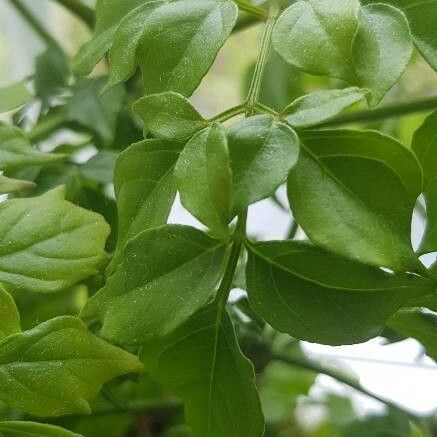
Plant Overview
Often called the "Fried Egg Tree" or "Peep Thong" in its native Southeast Asia, Radermachera boniana is the elegant, flowering cousin of the popular China Doll houseplant. While most people know this genus for its lacy indoor foliage, this specific variety is a showstopper in tropical gardens, prized for its large, fragrant blossoms that look remarkably like a sunny-side-up egg nestled against glossy green leaves.
🔍 How to Identify
- 🍳 The "Fried Egg" Bloom: The most striking feature is the trumpet-shaped flower, which boasts creamy white petals and a deep, golden-yellow center.
- 🌿 Lacy Foliage: It features bipinnate leaves that are exceptionally glossy and dark green, giving the tree a lush, feathered appearance even when not in bloom.
- 🌳 Growth Habit: In the wild, it grows as a medium-sized tree with a sturdy woody trunk, but in home gardens, it is often kept as a large, multi-stemmed shrub.
🏡 In Your Garden
- 💧 The "Goldilocks" Humidity: This plant thrives in high humidity and consistent moisture. If the air is too dry, it may drop its leaves in a "protest," a common trait shared by its Radermachera relatives.
- ☀️ Light & Stability: It prefers bright, filtered light. One of the most important things to remember is that it hates being moved; once you find a spot where it is happy, avoid relocating it to prevent "transplant shock" or sudden foliage loss.
- 🌱 Well-Draining Soil: While it loves water, its roots are prone to rot if left in standing water. It requires a rich, loamy soil mix that allows excess moisture to escape quickly.
⚠️ Safety & Toxicity
- ✅ Safe Status: Radermachera boniana is generally considered non-toxic to humans and common household pets like cats and dogs.
- 🧪 Mild Irritation: As with many tropical plants, the sap can occasionally cause mild skin irritation for those with sensitive skin, and ingesting any plant material may lead to minor stomach upset in curious pets.
✨ Fun Fact
The "Fried Egg" flowers aren't just for show—they produce a delicate, sweet fragrance that is most potent during the early morning hours, making it a favorite for gardeners who enjoy a scented stroll at sunrise!

Detailed Care Instructions
To properly water this plant, first ensure that the soil is dry to the touch before watering. Fill a watering can with room temperature water and slowly pour it onto the soil until it just begins to run out of the drainage holes at the bottom of the pot. Make sure not to let the plant sit in standing water, as this can lead to root rot. Watering should be done once a week in the spring and summer, and every two to three weeks in the fall and winter, as this plant prefers slightly drier conditions during its dormant period.
For optimal growth of this plant, it is recommended to use well-draining soil that is rich in nutrients. The soil should have a pH level of 5.5 to 6.5 and a good balance of sand, silt, and clay particles. The ideal texture is light and loamy, with good moisture retention capacity but not excessively waterlogged. This type of soil will help to promote healthy root growth and prevent overwatering and nutrient deficiencies. It is often recommended to mix in some organic matter such as compost or peat moss to further enrich the soil and enhance its fertility. Additionally, regular fertilization and proper watering should be maintained to ensure healthy growth and development of the plant.








