Plant Overview
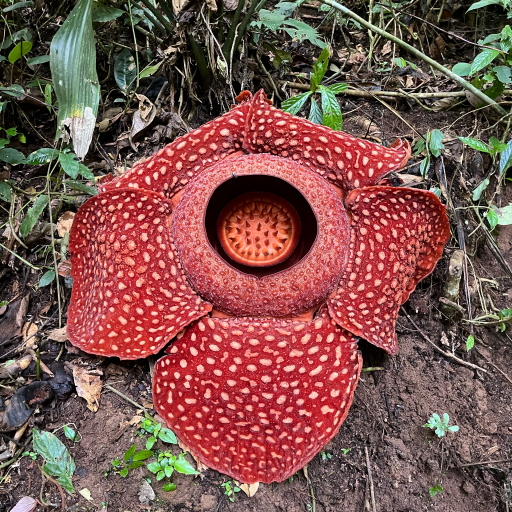
Known as the "Corpse Lily" or "Monster Flower," Rafflesia arnoldii is the undisputed heavyweight champion of the botanical world. This bizarre parasite doesn't bother with leaves, stems, or even roots, instead living entirely inside a host vine until it is ready to explode into a massive, stinking bloom. Found only in the rainforests of Sumatra and Borneo, it is a rare, prehistoric-looking marvel that pushes the definition of what a plant can be.
🔍 How to Identify
- 🌸 The Bloom: A colossal, five-lobed flower that can reach over three feet in diameter and weigh up to 15 pounds. It is the largest individual flower on Earth.
- 🔴 Texture and Color: The petals are thick, leathery, and a deep burnt-orange or reddish-brown, covered in raised, pale-white warts that resemble a strange skin texture.
- 🕳️ The Central Well: A deep, bowl-like opening in the center (the diaphragm) that houses the plant's reproductive organs and serves as the source of its infamous odor.
🌲 Habitat & Ecology
- 🍄 The Hidden Parasite: Unlike most plants, Rafflesia has no chlorophyll and cannot photosynthesize. It lives as a series of thread-like filaments inside the Tetrastigma vine, only becoming visible when its cabbage-like bud bursts through the vine's bark.
- 🪰 The Scent of Death: To attract pollinators like carrion flies, the flower mimics the smell and appearance of rotting meat. It is a master of deception, using the "perfume" of decay to ensure its survival in the dense jungle undergrowth.
⚠️ Safety & Toxicity
- 🚫 Status: This plant is not toxic to touch, but it is critically endangered and protected by law. It is nearly impossible to grow in a home garden or even in most professional botanical gardens.
- 🤢 Sensory Warning: While it won't harm you physically, the intense smell of decaying flesh can be nauseating to humans, especially in the humid heat of the rainforest where the scent lingers heavily.
✨ Fun Fact
- 🎮 Pop Culture Icon: Rafflesia arnoldii served as the real-life inspiration for the Pokémon "Vileplume." Just like its digital counterpart, the real plant is famous for its massive, spotted petals and its association with "stun spores" and pungent scents!

Detailed Care Instructions
Growing a Rafflesia Arnoldi plant can be a difficult task as it is a parasitic plant with specific requirements. However, if you still want to attempt growing one, here are some steps to consider:
- Obtain a host plant: Rafflesia Arnoldi requires a specific host plant to grow. It parasitizes the vine species of Tetrastigma. Look for a suitable Tetrastigma vine in the wild or plant one in your garden.
- Mimic natural conditions: Rafflesia Arnoldi grows naturally in tropical rainforests. It requires hot and humid conditions similar to its natural habitat. Maintain a warm and humid environment with temperatures between 25°C to 35°C (77°F to 95°F) and high humidity.
- Provide appropriate lighting: Rafflesia Arnoldi prefers indirect, filtered light. Place the host plant in a shady location or under a canopy to create a suitable lighting condition.
- Nourish the host plant: The host plant provides nutrients to the Rafflesia Arnoldi. Make sure the host plant is healthy, well-watered, and well-fertilized. Use a nitrogen-rich fertilizer to promote growth.
- Be patient: Rafflesia Arnoldi takes a long time to grow and may take several years to produce a flower. It typically takes 9-14 months for the flower to bloom once it appears.
- Monitor the progress: Keep an eye on the host plant. Look for any signs of Rafflesia Arnoldi growth, such as unusual bumps or growth on the plant. Regularly check the plant at different stages of development.
Note: Growing Rafflesia Arnoldi is a challenging and specialized endeavor. This plant is also a protected species in many countries, so ensure you are not violating any laws or regulations before attempting to grow it. It is advised to seek guidance from local botanical experts or conservatories who can provide specific instructions tailored to your region.
To properly water the Rafflesia Arnoldi plant, it is important to consider its specific moisture requirements. This plant usually thrives in a high-humidity environment commonly found in the rainforests of Southeast Asia.
- Monitor the soil: Regularly check the moisture level of the soil. The ideal condition for Rafflesia Arnoldi is consistently moist, but not waterlogged. Avoid letting the soil become excessively dry or saturated.
- Use tepid water: When watering the plant, always use lukewarm or room temperature water. Avoid using very cold or hot water, as extreme temperatures can stress the plant.
- Gentle watering technique: When watering, ensure a gentle, slow stream that allows the water to penetrate deep into the soil. This helps in preventing surface runoff and encourages the plant's roots to grow and absorb moisture effectively.
- Water at the base: Direct the water flow towards the base of the plant, aiming to wet the soil evenly around the roots. Avoid splashing water on the leaves or flowers to prevent any potential damage.
- Maintain humidity: Rafflesia Arnoldi plants require high humidity levels. Consider using a humidifier in the room where the plant is located, or group it with other moisture-loving plants to create a microclimate. Mist the leaves occasionally to mimic the natural conditions it thrives in.
- Mulching: Apply a layer of organic mulch, such as sphagnum moss or wood chips, around the base of the plant. This helps retain moisture in the soil, reduces evaporation, and maintains a consistent level of humidity.
- Adjust watering frequency: The watering frequency depends on various factors such as the plant's size, pot size, and environmental conditions. As a general guideline, check the soil moisture regularly and water whenever the top inch of the soil feels dry to the touch.
- Observe plant response: Always observe how the plant responds to watering. If the leaves droop or turn yellow, it may indicate either over or under-watering. Adjust the watering regimen accordingly to provide the plant with the appropriate moisture level.
Remember, Rafflesia Arnoldi is an extremely rare and unique plant, so it's crucial to provide it with the care it needs to thrive. Consulting with a professional horticulturist or botanist may also be beneficial to ensure its specific watering needs are met.
To provide optimal nourishment for the Rafflesia Arnoldi plant, follow these fertilizing instructions:
- Select a balanced, slow-release fertilizer specifically designed for blooming plants.
- Dilute the fertilizer according to the manufacturer's instructions, usually at a ratio of 1 tablespoon of fertilizer per gallon of water.
- Apply the diluted fertilizer to the soil around the base of the plant, avoiding direct contact with its stems or leaves.
- Fertilize the Rafflesia Arnoldi plant once every two to three months during its active growing season.
- Adjust the frequency of fertilization based on the plant's response, making sure not to over-fertilize, as it can cause harm.
- During the plant's dormant period, typically when it is not actively growing, refrain from fertilizing to allow it to rest and rejuvenate.
- Water the plant thoroughly after fertilization to help the soil absorb the nutrients effectively.
- Regularly monitor the plant for any signs of nutrient deficiencies or excessive fertilizer application, such as yellowing leaves or stunted growth.
- Consider supplementing the fertilizer with organic matter, such as compost or well-rotted manure, to enrich the soil and promote overall plant health.
- Seek advice from a professional horticulturist or consult specific fertilization guidelines if available to ensure the best care for your Rafflesia Arnoldi plant.
Rafflesia arnoldi is a unique and fascinating plant that requires specific soil conditions for optimal growth. To support the growth and development of this plant, it is essential to use a specific type of soil that complements its natural habitat. The ideal soil for Rafflesia arnoldi typically possesses the following characteristics:
- Nutrient-rich: The soil should be rich in nutrients, as Rafflesia arnoldi is a parasitic plant that lacks chlorophyll and must obtain its nutrients from the host plant it resides on. The soil should, therefore, contain a good amount of organic matter and essential minerals to promote healthy growth.
- Moisture-retentive: Rafflesia arnoldi thrives in humid and moist environments. The soil should be able to retain moisture adequately without becoming waterlogged. This allows the plant to extract moisture from the soil as needed and prevents the roots from rotting.
- Well-draining: While moisture retention is crucial, the soil should also be well-draining to prevent excessive water accumulation, which can lead to root rot. Good drainage ensures that water flows freely through the soil, allowing for oxygen exchange and preventing waterlogged conditions.
- Slightly acidic to neutral pH: Rafflesia arnoldi prefers slightly acidic to neutral soil pH levels ranging from 5.5 to 7. This pH range supports the absorption of nutrients by the plant and creates an environment conducive to its growth.
- Porous and loose texture: The soil should have a loose texture to allow for easy root penetration and root expansion. A porous soil structure promotes aeration and prevents compaction, ensuring that the roots have access to oxygen and can establish a healthy root system.
It is important to note that Rafflesia arnoldi is not typically grown in conventional gardening situations, as it requires specific host plants and unique environmental conditions to survive and flower. Creating the appropriate soil conditions is just one aspect of successfully cultivating this rare and extraordinary plant.
The process of propagating Rafflesia arnoldi involves several steps to ensure successful reproduction:
- Locate mature Rafflesia arnoldi individual: The first step is to find a mature Rafflesia arnoldi individual in its natural habitat. This is essential as only mature plants produce flowers and have the potential for reproduction.
- Observe flower development: Carefully observe the flower development of the selected Rafflesia arnoldi. The flower undergoes various stages, starting from a small bud to eventually blooming into a large, fleshy, and distinctive flower.
- Identify receptive female flower: Once the flower starts blooming, identify the receptive female flower. The female flower is distinguishable by its presence of a cavity containing numerous tiny circular depressions on its bottom surface.
- Male flower identification: Locate a nearby male flower in close proximity to the female flower. The male flower can be identified by the elongated structure at its center, which contains pollen-producing organs.
- Pollination: Transfer pollen from the male flower to the depressions present on the female flower's cavity. This can be done by gently pressing the male flower against the depressions, ensuring the transfer of pollen.
- Fertilization: Following successful pollination, the pollen grains should germinate on the female flower's depressions, leading to fertilization. This step is crucial for the development of seeds within the flower.
- Seed maturation: After fertilization, the female flower starts developing seeds within its cavity. It is important to let the seeds mature adequately to ensure their viability before attempting to collect them.
- Seed collection: Once the seeds have matured, carefully collect them from the female flower's cavity. Treat the seeds gently to avoid any damage during the collection process.
- Germination: Prepare a suitable germination medium, which typically consists of a mixture of peat moss or sphagnum moss. Sow the collected seeds onto the germination medium, ensuring they are spaced apart to allow each seedling sufficient space for growth.
- Ideal conditions for seedling growth: Provide optimal conditions for seedling growth, including warm and humid environments with moderate to high amounts of sunlight. Maintaining a consistent temperature, as well as providing regular moisture, is important for the germination and subsequent growth of Rafflesia arnoldi seedlings.
- Transplantation: Once the seedlings have developed into healthy plants with a well-established root system, carefully transplant them into individual pots or suitable permanent locations within a controlled environment, such as a greenhouse or botanical garden.
By following these steps, it is possible to propagate Rafflesia arnoldi and contribute to the conservation of this unique and rare plant species.







