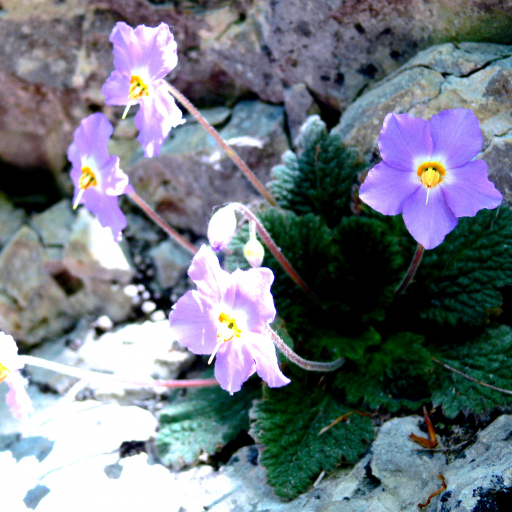
Plant Overview
Known as the "Pyrenean Violet" or the "Resurrection Plant," Ramonda myconi is a living fossil that has survived since the Tertiary period. While it looks like an African Violet, it is actually a hardy mountain dweller from the Pyrenees that can survive complete dehydration, turning brown and shriveled only to "wake up" and turn green within hours of a rainstorm.
🔍 How to Identify
- 🍃 The Rosette: It grows in a flat, hugging rosette of dark green, oval leaves that spread outward from a central point.
- 🧶 Textured Foliage: The leaves are deeply wrinkled (crinkly) and covered in fine, brownish hairs that help the plant trap moisture.
- 🌸 The Blooms: In late spring, it sends up leafless stems bearing clusters of five-petaled, violet-purple flowers with a distinct orange or yellow "beak" in the center.
🏡 In Your Garden
- 🧗 Vertical Living: In the wild, this plant grows on vertical limestone rock faces. In your garden, it hates sitting in flat soil where water can pool in its crown—plant it tucked into a stone wall or a crevice at an angle so water drains away immediately.
- 🌥️ The North Face: Unlike many flowering plants, Ramonda craves cool, deep shade. It is the perfect choice for those "difficult" north-facing spots where other plants struggle to thrive.
- 💧 Drought Mimicry: If the plant looks dead and crispy during a dry spell, don't pull it out! This is its natural defense mechanism. Once watered, the cells rehydrate and the leaves will miraculously unfurl.
⚠️ Safety & Toxicity
- 🟢 Non-Toxic Status: Ramonda myconi is generally considered non-toxic to humans and common household pets.
- 🧤 Minor Irritation: While not poisonous, the fine hairs on the leaves can occasionally cause mild skin irritation for people with very sensitive skin if handled excessively.
✨ Fun Fact
Ramonda myconi is a "relict" species, meaning it is one of the few plants that survived the massive climate shifts of the Ice Age by hiding in the microclimates of the Pyrenean mountain canyons. It has remained virtually unchanged for millions of years!

Detailed Care Instructions
To grow a Ramonda Myconi plant, follow these steps:
- Purchase or obtain Ramonda Myconi seeds or a small plant from a nursery or reputable online seller. This plant is native to the Balkans, so it may not be readily available in some areas.
- Choose a suitable location for your plant. Ramonda Myconi prefers a shady spot with indirect sunlight. It thrives in cool, humid environments, so consider a location with high humidity, such as a bathroom or a shaded part of the garden.
- Prepare the soil. Ramonda Myconi prefers well-draining, slightly acidic soil. If your soil is heavy or clayey, you may need to amend it with organic matter or sand to improve drainage.
- Plant the seeds or seedling. If you start with seeds, sow them on the soil surface and lightly press them down, but do not bury them. If you have a seedling, dig a hole slightly larger than the root ball and gently place the plant in the hole, covering the roots with soil.
- Water the plant regularly. Ramonda Myconi requires consistent moisture. Keep the soil slightly moist, but avoid overwatering, as it can lead to root rot. Use a spray bottle to mist the foliage occasionally to mimic the humid conditions it prefers.
- Mulch around the plant. Apply a layer of organic mulch, such as wood chips or bark, to help retain moisture and regulate the soil temperature.
- Provide winter protection. Ramonda Myconi is a cold-hardy plant but can experience damage in severe winters. If you live in a region with harsh winters, consider providing some form of protection, such as covering the plant with a layer of mulch or leaf litter during the coldest months.
- Regularly feed the plant. Apply a balanced, water-soluble fertilizer during the growing season to promote healthy growth. Follow the instructions on the fertilizer packet for the correct dosage.
- Prune as needed. Remove any dead or damaged foliage to maintain the plant's health and appearance. Pruning can be done in early spring when new growth begins.
- Monitor for pests and diseases. While Ramonda Myconi is generally resistant to pests and diseases, check regularly for any signs of trouble, such as aphids or powdery mildew. If found, treat with an appropriate organic pesticide or fungicide.
Remember, Ramonda Myconi is a delicate plant that requires attention and care. Patience is key, as it can take some time for the plant to establish and start flowering.

Place in a window with dappled sun or a spot in the middle of a room. Or directly in a window facing west or east.

To water this particular plant, it's important to consider its natural habitat and ensure that you are mimicking its ideal growing conditions as closely as possible. A good rule of thumb is to water it sparingly to avoid oversaturating the soil, as these plants typically thrive in cool, moist environments with well-draining soil. Try to water only when the top inch of soil feels dry to the touch and make sure to avoid getting water on the leaves, as this can lead to fungal growth. If you're unsure when to water, it may be helpful to invest in a soil moisture meter to help you gauge the plant's needs. Ultimately, with some careful observation and attention, you should be able to find the right watering routine for your Ramonda Myconi plant and help it thrive in your care.
To fertilize the Ramonda Myconi plant, use a balanced fertilizer with equal ratios of nitrogen, phosphorus, and potassium. Apply the fertilizer every two weeks during the growing season, but reduce the frequency to once a month during the winter months. Avoid over-fertilizing as it may damage the roots and limit the growth of the plant. Alternatively, you can use organic fertilizers such as compost or liquid seaweed extract for a more natural approach.
The ideal soil for this plant should be well-draining and slightly acidic with a pH between 4.5-5.5. It should also be rich in organic matter and moisture-retentive. A mix of peat moss, perlite, and loam or a high-quality potting mix specifically designed for acid-loving plants is suitable. It is important to avoid using heavy clay soil or soils that retain too much moisture, as this could lead to root rot. Adding a layer of mulch to the soil can help maintain moisture levels and protect the roots from extreme temperature fluctuations.
Ramonda Myconi can be propagated through division or propagation by leaf-cuttings.
To propagate through division, carefully dig up the plant and separate the small plants from the parent plant. Make sure each divided plant has a good root system. Plant them in a suitable container with good quality potting soil and moisture levels.
To propagate through leaf-cuttings, take a healthy leaf from the plant and cut the petiole or leaf stem. Make sure the cut is clean and without any damage. Dip the cut end in rooting hormone powder and plant the stem in a container filled with a light, well-draining propagation mix. Moisten the soil and cover the container with a plastic bag to create a humid environment. Keep the container in a bright, indirect light and maintain consistent moisture levels. New plantlets will emerge from the leaf base within a few weeks. Once they are big enough, they can be transplanted to individual containers.








