Plant Overview
Known as the "Phoenix Flower," the Ramonda serbica is a living relic from the Ice Age that holds a legendary status in the Balkan mountains. It is famous for its incredible "resurrection" ability—even if the plant appears completely dry and dead, a few drops of water can bring it back to lush, green life within hours. This tiny mountain dweller is more than just a plant; it is a symbol of resilience and survival against all odds.
🔍 How to Identify
- 🍃 The Rosette: It grows in a low-profile, circular rosette pattern with dark green, thick, and leathery leaves that hug the ground or rock face.
- 🧶 Textured Foliage: The leaves are spatulate (spoon-shaped) and covered in a dense layer of fine, brownish hairs, giving them a wrinkled, felt-like appearance.
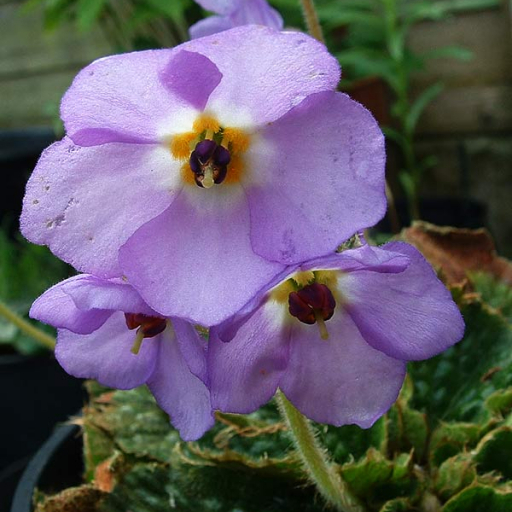
- 🌸 Violet Blooms: In late spring, it produces delicate, five-petaled flowers ranging from pale violet to deep purple, featuring a distinct yellow "eye" at the center.
🏡 In Your Garden
- 🪨 Vertical Living: In its natural habitat, it thrives in the crevices of limestone rocks. In a garden setting, it prefers being planted at an angle or vertically to ensure water never sits in its crown, which can cause rot.
- ☁️ Cool & Shady: Unlike most "resurrection" plants that love the sun, Ramonda serbica prefers cool, north-facing spots. It thrives in high humidity and struggles in the intense, direct midday heat.
- 💧 Drought Strategy: If the plant shrivels and turns brown during a dry spell, do not discard it! This is a biological defense mechanism. Simply mist it or wait for rain, and watch it "re-awaken."
⚠️ Safety & Toxicity
- ✅ Safe Status: This plant is generally considered non-toxic to humans and common household pets.
- 🧤 Garden Care: While not irritating to the skin, its fuzzy leaves can trap dust and debris, so it is best to keep it in a clean, air-circulated spot to prevent fungal issues.
✨ Fun Fact
The Ramonda serbica is the official symbol of Armistice Day in Serbia. It is worn as a badge to represent the country’s struggle and ultimate rebirth following the hardships of World War I, echoing the plant's own ability to return to life from a state of total dehydration.

Detailed Care Instructions
To grow a Ramonda Serbica plant, you can follow these steps:
- Choose a suitable location: Ramonda Serbica plants prefer cool and moist conditions. Select a location with partial shade or filtered sunlight, preferably protected from strong winds.
- Prepare the soil: Ramonda Serbica plants require well-draining soil with high organic content. Prepare the soil by adding compost or organic matter to improve fertility and drainage.
- Planting: Dig a hole slightly larger than the root ball of the plant. Place the plant in the hole, ensuring that the top of the root ball is level with the soil surface. Gently backfill the hole with soil, firming it around the roots.
- Watering: Keep the soil consistently moist but not overly wet. Water the plant deeply whenever the top inch of soil feels dry. Avoid allowing the soil to dry out completely or become waterlogged.
- Mulching: Apply a layer of organic mulch around the plant to help retain moisture, regulate soil temperature, and suppress weed growth. Avoid placing the mulch directly against the stem of the plant to prevent rot.
- Fertilizing: Ramonda Serbica plants do not require heavy fertilization. However, you can apply a balanced, slow-release fertilizer in spring to promote healthy growth.
- Pruning: Remove any dead or damaged foliage to maintain the plant's appearance and health. Pruning can be done in spring or after the blooming period.
- Protection in winter: Ramonda Serbica plants are semi-evergreen and may require protection in cold winter climates. Applying a layer of mulch or providing a protective cover during freezing temperatures can help safeguard the plant.
- Propagation: Ramonda Serbica can be propagated from division or seed. Division can be done in early spring by carefully separating the clumps of plants and replanting them. Seeds can be sown in pots or trays filled with well-draining soil and kept in a cool, shaded area until they germinate.
- Monitor for pests and diseases: Check the plant regularly for signs of pests such as aphids or diseases like powdery mildew. Treat any issues promptly using appropriate organic or chemical remedies.
By following these steps, you can successfully grow a Ramonda Serbica plant. Remember to provide consistent care, suitable conditions, and enjoy the delicate beauty of this plant.
To properly water this plant, you should first make sure that the soil is slightly moist but not waterlogged. It is recommended to water it sparingly, allowing the soil to dry slightly between waterings. This plant prefers to be watered from the bottom, so consider using a tray or saucer to allow the roots to soak up water as needed. Water should be room temperature and preferably free of any chemicals or minerals that could harm the plant. Avoid getting water on the foliage as this can promote fungal growth and disease.
To fertilize the Ramonda plant, mix a balanced fertilizer with equal parts of nitrogen, phosphorus, and potassium. Apply the fertilizer once a month during the growing season, from spring until autumn. Make sure to dilute the fertilizer in water before applying it to the soil. Use a watering can or sprayer to apply the fertilizer to the soil around the base of the plant. Avoid getting the fertilizer on the leaves or stems of the plant. During the winter months, reduce the frequency of fertilizing to once every three months or suspend it entirely.
Ramonda Serbica plant prefers a specific type of soil that is rich in nutrients and organic matter. The soil should have good drainage, yet retain some moisture to provide consistent hydration to the plant. A well-aerated soil is necessary for healthy root growth. It is important to avoid using soils that are too heavy, as they can retain too much water and lead to root rot. Also, the soil pH should be slightly acidic to neutral, between 5.5 and 7.5. Adding compost or leaf mould to the soil can improve its quality and enhance the Ramonda Serbica plant's growth and health.
Ramonda Serbica plant can be propagated through several methods, including seed propagation, division, and leaf cuttings. Seed propagation involves sowing the seeds in a well-draining soil mix in a container or seed tray and covering with a layer of vermiculite. The seeds should be kept moist and in a warm, bright spot until germination occurs.
Division involves separating the plant's root ball into smaller sections and replanting in a new location. This should only be done with mature plants that have several stems and healthy roots.
Leaf cuttings involve taking a healthy leaf from the plant and carefully cutting it at the base where it attaches to the stem. The leaf should then be planted horizontally in a well-draining soil mix and kept moist until new growth appears.
It is important to note that Ramonda Serbica plant prefers cool and moist conditions and should be kept away from direct sunlight. Propagation should be done in the early spring or fall for the best results.








