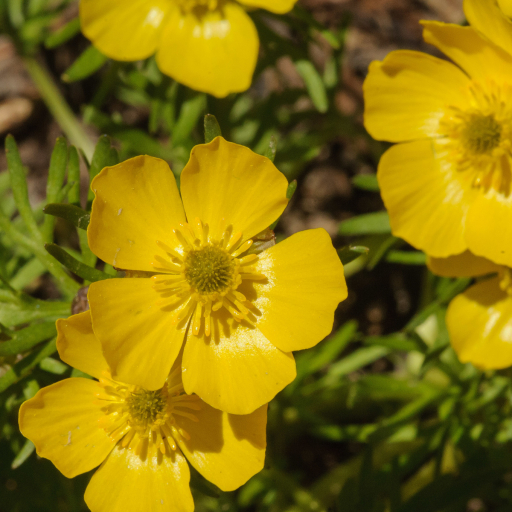
Plant Overview
Often called the Alpine Buttercup or the Snow Buttercup, this golden gem is a true mountaineer of the plant world. Found high in the Rocky Mountains, it is famous for its incredible resilience, often poking its bright yellow head directly through retreating snowbanks. In the high-altitude tundra, it serves as one of the first heralds of the short alpine summer, signaling the awakening of the peaks.
🔍 How to Identify
- ☀️ The Bloom: Features brilliant, waxy yellow flowers with 5 to 10 petals. The petals have a high-gloss sheen that almost looks like polished plastic or lacquer, designed to reflect sunlight.
- 🌿 The Foliage: The leaves are deeply "dissected," meaning they are divided into many narrow, finger-like segments, giving the base of the plant a feathery or lace-like appearance.
- 📏 Growth Habit: This is a low-growing perennial, usually staying under 10 inches tall. Its stems are thick and succulent, storing energy to push through the crust of frozen ground.
🏡 In Your Garden & Habitat
- 🏔️ Snowbank Specialist: In the wild, this plant is "hydrophilic," meaning it follows the moisture of melting snow. It is rarely found far from a direct source of icy meltwater.
- 🌡️ The Heat Gap: Because it is adapted to the freezing alpine tundra, it is notoriously difficult to grow in traditional home gardens. It requires a long, cold dormant period and absolutely hates high humidity or nighttime heat, which can cause the roots to rot rapidly.
- 🧪 Soil Preference: It thrives in rocky, gravelly soils that provide excellent drainage but remain consistently moist from the overhead snowmelt.
⚠️ Safety & Toxicity
- 🚫 Status: Toxic if ingested.
- 🤢 The Irritant: Like most members of the Ranunculus family, it contains protoanemonin, a chemical that can cause severe blistering of the mouth and throat if eaten.
- 🐾 Pet Safety: Keep it away from curious dogs or livestock; the acrid taste usually prevents large consumption, but it can cause significant gastric distress and drooling.
✨ Fun Fact
The Alpine Buttercup is a master of "Heliotropism." Its cup-shaped flowers act like tiny satellite dishes, tracking the sun across the sky to focus heat into the center of the flower. This extra warmth attracts pollinators who need to warm up, and it helps the seeds develop faster in the freezing mountain air!

Detailed Care Instructions
To grow Ranunculus adoneus, also known as Western Buttercup, follow these steps:
- Planting Time: Ranunculus adoneus is typically planted in the fall or early spring. Choose a time when the temperature is between 40-60°F (4-15°C).
- Soil Preparation: Prepare the soil by removing any weeds or debris. Ranunculus adoneus prefers well-draining soil rich in organic matter. Consider adding compost or well-rotted manure to improve soil fertility and drainage.
- Planting Depth: Dig holes that are around 2-3 inches (5-7.5 cm) deep and spaced approximately 4-6 inches (10-15 cm) apart. The corms of the plant should be placed in the holes with the pointed ends facing up.
- Watering: Water the newly planted corms thoroughly, ensuring the soil is moist. However, avoid overwatering, as overly wet soil can cause the bulbs to rot. Once established, water the plants regularly, providing approximately 1 inch (2.5 cm) of water per week.
- Sunlight and Location: Ranunculus adoneus needs full sun to partial shade. Choose a location that receives at least 6 hours of sunlight per day. Ensure the area is sheltered from strong winds, as this can damage the delicate stems.
- Fertilization: Apply a balanced, slow-release fertilizer to the soil during the planting phase. Follow the instructions on the fertilizer package for the correct dosage. Additional fertilization may not be necessary unless the plants show signs of nutrient deficiency.
- Mulching: Apply a layer of organic mulch, such as straw or wood chips, around the plants to help retain moisture, suppress weed growth, and insulate the soil during colder months.
- Maintenance: Remove any dead or faded flowers regularly to encourage continuous blooming. This process, known as deadheading, also prevents the plant from putting energy into seed production and instead focuses on producing new flowers.
- Winter Protection: In areas with cold winters, Ranunculus adoneus may benefit from some protection. Apply a layer of mulch or straw over the planting bed before winter to insulate the bulbs and prevent frost damage.
- Division: After a few years, the corms may become crowded, leading to decreased flowering. In late summer or early fall when the foliage has died back, dig up the corms, separate the offsets, and replant them to rejuvenate the plant.
By following these steps, you can successfully grow Ranunculus adoneus, enjoying their beautiful, vibrant blooms in your garden.
The Ranunculus Adoneus plant requires careful and specific watering techniques to ensure its healthy growth and development. Here are the details on how to provide appropriate watering for this plant:
- Observe the moisture content of the soil: Before watering, check the moisture level of the soil by inserting your finger about an inch or two deep into the soil. If it feels dry at this depth, it's an indication that the plant needs watering.
- Watering frequency: Ranunculus Adoneus plants benefit from a regular watering schedule. Aim to water the plant consistently, but avoid overwatering as it can lead to root rot. A good guideline is to water every 3-4 days during the growing season, depending on the surrounding environment and climate.
- Watering method: It is crucial to water at the base of the plant rather than from overhead. This helps in preventing the foliage from getting wet, which can lead to the development of fungal diseases. Use a watering can, hose with a gentle spray nozzle, or a drip irrigation system to deliver water directly to the soil.
- Water quantity: When watering, provide enough water to fully penetrate the soil surrounding the roots. This ensures that the water reaches the plant's root zone where it can absorb nutrients effectively. Avoid flooding the soil, as excessive water may lead to drowning the roots.
- Adjust watering in different seasons: During the plant's active growth phase, typically in spring and early summer, provide slightly more water to accommodate its increased needs. As the plant enters its dormant period, usually in late summer or fall, reduce the frequency of watering and allow the soil to dry out more between waterings.
- Watch for signs of overwatering or underwatering: Regularly monitor your Ranunculus Adoneus plant for signs of over or underwatering. Overwatering may cause wilting, yellowing or dropping leaves, while underwatering can lead to leaf curling or a generally unhealthy appearance. Adjust the watering schedule accordingly based on the plant's response.
Remember that specific watering requirements can vary based on the climate, soil type, pot size (if it's potted), and overall growing conditions. Monitoring the plant's needs and adjusting the watering regimen accordingly will help ensure the optimal health and vitality of your Ranunculus Adoneus plant.
- Select a well-draining pot or garden bed for your Ranunculus Adoneus plant.
- Fill the pot or garden bed with a nutrient-rich potting mix or well-amended garden soil.
- Prior to planting, incorporate a slow-release fertilizer into the soil according to the manufacturer's instructions. This will provide a steady supply of nutrients to the plant over time.
- When the plant is established and actively growing, apply a balanced liquid fertilizer every two to three weeks during the growing season. Dilute the fertilizer according to the instructions on the packaging to avoid over-fertilization.
- Alternatively, you can use a water-soluble fertilizer by mixing it with water and applying it directly to the soil around the plant. Be careful not to splash the foliage, as this may cause fertilizer burn.
- During the flowering period, you can switch to a bloom-boosting fertilizer specifically formulated for flowering plants. Follow the package instructions for application rates and frequency.
- Water the plant thoroughly after each fertilization to help the nutrients penetrate the root zone.
- Monitor the plant for any signs of nutrient deficiencies or excesses, such as yellowing leaves or stunted growth. Adjust the fertilizer application accordingly, if necessary.
- It is essential to follow a balanced fertilization approach and avoid over-fertilizing, as excessive nutrients can lead to nutrient imbalances, burn the plant's roots, or harm the environment.
- Regularly remove any spent blooms or faded foliage to help divert the plant's energy towards new growth and flowering.
Ranunculus Adoneus is an exquisite flowering plant that thrives in a specific type of soil to ensure its healthy growth and development. This plant prefers a well-draining, fertile soil with a slightly acidic to neutral pH level. The ideal soil composition for Ranunculus Adoneus includes a balanced mix of organic matter, sand, and loam.
Organic matter, such as compost or well-rotted manure, helps enhance soil fertility and moisture retention. It also aids in supplying vital nutrients to the plant. Sand is crucial for improving drainage and preventing waterlogged soil, reducing the risk of root rot. Loam, a blend of sand, silt, and clay, creates a soil structure that retains water while allowing excess moisture to drain away.
It's important to avoid heavy clay soils, as they tend to become compacted, preventing proper water drainage and air circulation to the plant's roots. Similarly, sandy soils can drain too quickly and fail to retain adequate moisture for the Ranunculus Adoneus. The ideal soil consistency should be loose, crumbly, and well-aerated.
Regular fertilization is also beneficial for the optimal growth of Ranunculus Adoneus. Consider using a slow-release, balanced fertilizer specifically formulated for flowering plants during the growing season. This will provide the necessary nutrients for healthy foliage and abundant blooms.
In summary, when cultivating Ranunculus Adoneus, it is crucial to use a well-draining, fertile soil with an ideal composition that includes a blend of organic matter, sand, and loam. This will ensure proper moisture retention, adequate aeration, and optimum nutrient availability for the plant's thriving growth and beautiful blossoms.
Propagation of Ranunculus Adoneus can be achieved through various methods. One common method is by collecting seeds from the mature plants. The seeds should be harvested when they turn brown and are easily detached from the plant. After collecting the seeds, they should be air-dried for a period of time and then stored in a cool and dry place until they are ready for sowing.
To start growing the plants from seeds, it is recommended to create a moist and well-draining seed-starting mix. Fill a seed tray or small pots with the mix, ensuring it is evenly spread and lightly compacted. Sow the seeds on the surface, gently pressing them down, and then cover them with a thin layer of additional seed-starting mix. Water the tray or pots from the bottom by placing them in a water-filled saucer until the top layer of the mix becomes moist.
Place the tray or pots in a warm location with ample indirect light. Ensure that the seeds receive consistent moisture, checking the moisture level regularly. Avoid overwatering, as it may lead to fungal diseases. Germination typically occurs within two to three weeks, but it can vary depending on the conditions.
As the seedlings grow, they can be transplanted into larger pots or containers when they have developed strong roots and a few sets of leaves. Before transplanting, it is advisable to harden off the seedlings by gradually exposing them to outdoor conditions, starting with a few hours a day and increasing the duration over a period of one to two weeks. This process helps the seedlings acclimate to the outdoor environment and prevents shock.
When choosing a permanent location for the young plants, consider a site that receives full to partial sun and is well-drained. Prepare the soil by incorporating organic matter and ensuring it is loose and friable. Dig holes deep enough for the root system of the seedlings and gently place them into the holes, backfilling with soil and pressing down lightly to eliminate air pockets. Water the newly transplanted seedlings thoroughly.
To increase the chances of successful propagation, it is beneficial to provide regular care and maintenance to the growing plants. This includes regular watering, especially during dry spells, and ensuring they receive adequate sunlight. Applying a balanced fertilizer according to the manufacturer's instructions can also promote healthy growth.
With proper care and favorable growing conditions, the propagated Ranunculus Adoneus plants should develop into mature specimens, displaying their beautiful flowers for you to enjoy.








