Plant Overview
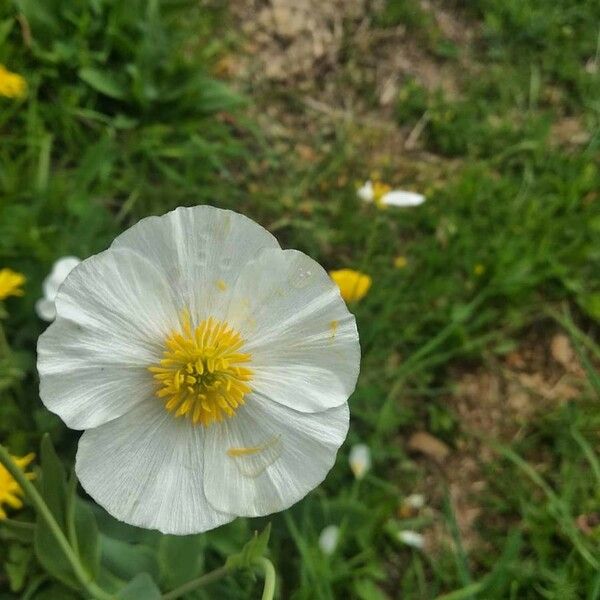
Known as the Pyrenean Buttercup, this mountain beauty trades the traditional gold of its cousins for a sophisticated, icy white. Native to the high meadows and rocky slopes of the Pyrenees and North-Central Spain, it is a favorite for rock gardeners looking to capture a bit of alpine elegance. Its name, amplexicaulis, hints at its most unique physical trait—leaves that seem to "embrace" the flower stem.
🔍 How to Identify
- ❄️ The Blooms: Features delicate, bowl-shaped flowers with five pure white petals and a contrasting cluster of bright yellow stamens at the center.
- 🍃 Clasping Foliage: The smooth, blue-green (glaucous) leaves are heart-shaped or lance-shaped; the upper leaves uniquely wrap themselves entirely around the stem.
- 📏 Growth Habit: A compact, clump-forming perennial that typically reaches about 12 inches (30 cm) in height, making it a perfect front-of-border specimen.
🏡 In Your Garden
- 🏔️ Alpine Aspirations: This plant thrives in conditions that mimic its mountain home—cool roots, plenty of light, and exceptionally well-drained soil. It loves a "scree" garden where gravel helps prevent water from sitting around its crown.
- 💧 The Moisture Balance: While it hates "wet feet," it does not like to dry out completely during its spring growing season. Think of it like mountain snowmelt: constant but quickly moving. It is quite hardy but can be sensitive to humid, stagnant air.
⚠️ Safety & Toxicity
- 🚫 Status: Toxic if ingested.
- 🧤 Skin Irritant: Like most members of the Ranunculus family, it contains protoanemonin. This acrid sap can cause skin redness or even blistering upon contact. It is best to wear gloves when pruning or dividing.
- 🐾 Pet Warning: Keep away from curious dogs, cats, or livestock, as eating the foliage can cause oral irritation, drooling, and digestive distress.
✨ Fun Fact
The name amplexicaulis is derived from the Latin words amplexus (to embrace) and caulis (stem). If you look closely at the base of the upper leaves, they look like they are giving the flower stalk a tiny, permanent hug!

Detailed Care Instructions

Place in a bright room that is sun drenched almost all day. Or directly in a south-facing window.

To water this particular plant, it is important to use a watering can or hose with a gentle flow. Overwatering can lead to root rot, so it is important to allow the soil to dry slightly between waterings. When watering, be sure to water the soil directly beneath the plant and try to avoid getting water on the leaves. This will help prevent fungal diseases and sun scorch. It is also a good idea to water early in the morning or late in the evening when temperatures are cooler, as this will help reduce water loss through evaporation. Finally, be sure to use a well-draining soil mix that allows excess water to escape easily, preventing waterlogging.
The ideal type of soil for the plant in question is one that is well-draining and rich in nutrients. A mixture of peat moss, perlite, and vermiculite is recommended for maximum growth and health. The pH level of the soil should be around neutral (6.5-7.5). It is important to avoid using heavy clay soil or planting the plant in an area that is prone to waterlogging, as this can lead to root rot. Additionally, adding organic matter to the soil can help improve its fertility and moisture retention capabilities. Regular fertilization and watering are also essential to ensure the plant thrives.








