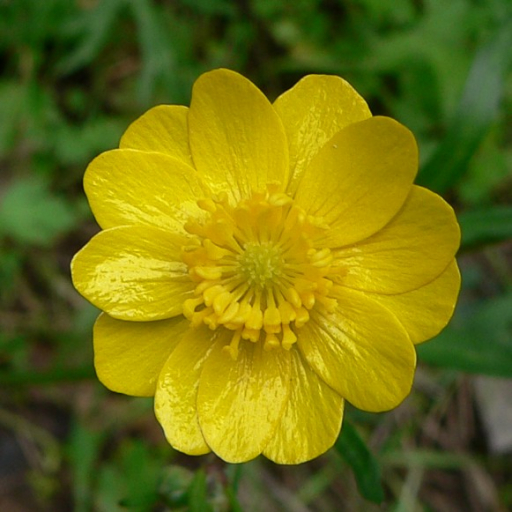
Plant Overview
Known as the classic California Buttercup, this golden wildflower is a hallmark of Western spring meadows. While it looks like a simple daisy at first glance, its petals possess a mirror-like finish that catches the sun, making entire hillsides appear to glow with a metallic luster. It is a resilient native perennial that serves as a vital bridge for early-season pollinators waking up from winter.
🔍 How to Identify
- 🌼 The Petals: Unlike common buttercups that have 5 petals, the California variety boasts 9 to 16 narrow, shiny yellow petals that look almost like they’ve been polished with wax.
- 🌿 The Foliage: The leaves are deeply lobed and divided into three main segments, creating a jagged, feathery appearance near the base of the plant.
- ☀️ The Center: A prominent, fuzzy dome of yellow stamens sits at the heart of the flower, which eventually turns into a spiky cluster of seeds (achenes).
🏡 In Your Garden
- 🌱 Summer Dormancy: This plant is a "drought-evader." It grows lushly during the moist winter and spring but will completely disappear underground during the hot summer. Don't dig it up—it’s just sleeping until the next rain!
- 🦋 Pollinator Magnet: It is a critical food source for the endangered Bay Checkerspot butterfly and various native solitary bees, making it a "must-have" for restoration-style gardens.
⚠️ Safety & Toxicity
- 🚫 Toxic if Ingested: Like all members of the Ranunculus family, the plant contains ranunculin. When crushed or chewed, this turns into a bitter toxin called protoanemonin.
- 🐾 Pet & Skin Warning: Contact with the sap can cause skin blistering or "buttercup itch" in sensitive individuals. Keep it away from grazing livestock and pets, as it can cause severe mouth irritation and digestive distress if eaten.
✨ Fun Fact
The "Buttercup Mirror" isn't just for show! The petals have a unique layer of starch cells that reflect yellow light while allowing other wavelengths to pass through to the pigment below. This creates a high-intensity "flash" that acts as a solar beacon for bees flying high above the meadow.

Detailed Care Instructions
To grow Ranunculus Californicus plants, also known as California buttercups, follow these steps:
- Choose the right location: These plants prefer full sun or partial shade, so select a spot in your garden that receives at least 6 hours of direct sunlight per day. Ensure that the soil is well-draining.
- Prepare the soil: Before planting, loosen the soil by tilling or using a garden fork. Remove any weeds or rocks from the area.
- Sow the seeds: Californicus seeds can be sown directly into the ground in autumn, or you can start them indoors in late winter and transplant them outside once the danger of frost has passed. If starting indoors, sow the seeds in pots or trays filled with moist seed-starting mix. Press the seeds gently into the soil, and cover them lightly with a thin layer of soil.
- Watering: Keep the soil consistently moist during the germination period. Once the plants are established, you can reduce the frequency of watering, allowing the top inch of soil to dry out before watering again. Be careful not to overwater, as this can cause root rot.
- Fertilization: Ranunculus Californicus plants don't typically require much fertilization. However, you can apply a balanced, slow-release fertilizer once a month during the growing season to promote healthy growth.
- Mulching: Place a layer of organic mulch around the plants to retain moisture, suppress weed growth, and regulate soil temperature.
- Pruning: Deadhead faded flowers to encourage more blooming and prevent the plant from diverting energy to seed production. Additionally, prune the plants back in late summer or early fall to control their size and encourage bushier growth.
- Pests and diseases: Ranunculus Californicus plants are generally resistant to pests and diseases. However, keep an eye out for aphids and snails, which might occasionally appear. If necessary, use organic pest control methods or handpick them.
It's worth noting that Ranunculus Californicus is native to California and thrives in Mediterranean-like climates, which have mild, wet winters and dry summers. If you live in a drastically different climate, you may need to provide extra care and protection to help the plants adapt.

Place in a bright room that is sun drenched almost all day. Or directly in a south-facing window.

Ranunculus Californicus is a plant that requires adequate watering to thrive. To properly water this plant, ensure that the soil is moist but not waterlogged or saturated. Check the soil moisture levels by inserting your finger into the soil up to your first knuckle. If it feels dry, it's time to water the plant.
When watering, use a gentle watering can or hose nozzle to avoid disturbing the soil or damaging the plant's delicate leaves and stems. Water around the base of the plant rather than directly on the foliage. Allow the water to soak into the soil for several minutes, then check the soil moisture levels again to ensure it has been adequately hydrated.
Be mindful not to overwater the plant, as too much water can lead to root rot and other issues. Only water when the soil has dried out, and ensure proper drainage to prevent water from sitting in the soil for extended periods.
Overall, aim to maintain consistent, moderate moisture levels for Ranunculus Californicus to support healthy growth and blooming.
To fertilize the plant, use a balanced fertilizer with equal parts nitrogen, phosphorus, and potassium. Apply the fertilizer during the growing season, which is typically in the spring and early summer. Be sure to follow the instructions on the fertilizer packaging, as too much fertilizer can harm the plant. Water the plant thoroughly after applying the fertilizer.
The best type of soil to use for this plant is a well-draining, sandy loam soil that is rich in organic matter. The pH level of the soil should be slightly acidic, with a range between 6.0 and 7.0. It is important to avoid using heavy clay soils or soils that retain too much moisture, as this can lead to root rot. Adding compost or well-rotted manure to the soil before planting can help improve fertility and drainage. Additionally, it is recommended to plant these flowers in areas that receive full sun to partial shade for optimal growth and flowering.
- Collect seeds from mature and healthy plants during the flowering season.
- Soak the seeds in water for at least 24 hours to help soften the tough outer seed coat.
- Prepare a potting mix by combining coarse sand, perlite, and peat moss in equal parts.
- Fill small pots or seed trays with the potting mix and make small indentations in the soil.
- Place a seed in each indentation and cover with a light layer of potting mix.
- Keep the soil moist but not waterlogged and place the pots in a bright, warm location.
- Germination can take up to 2-3 weeks. Once the seedlings have emerged, gradually move them to a location with more sunlight.
- After the seedlings have developed at least 2-3 true leaves, they can be transplanted into larger pots or directly into the garden.
- To propagate Ranunculus Californicus using division, dig up a mature plant and carefully separate the plant into smaller sections.
- Replant the sections immediately in a new location and water them well.








