Plant Overview
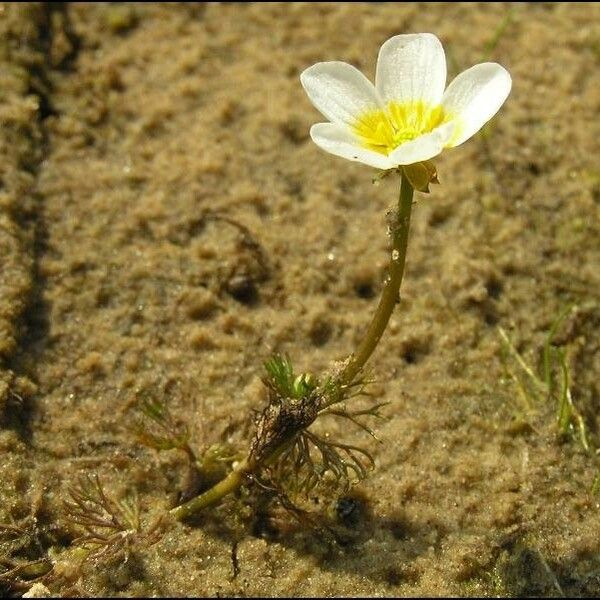
Often called the Fan-leaved Water-crowfoot, this delicate-looking aquatic perennial is a true star of still-water ecosystems. Unlike its "floppy" relatives, this plant maintains its elegant, circular shape even when pulled from the water, resembling a tiny green lace snowflake. It is a specialized member of the buttercup family that has traded the meadow for the pond, providing essential oxygen and shelter to underwater life.
🔍 How to Identify
- 🌿 Leaf Architecture: The submerged leaves are remarkably rigid and fan-shaped, forming a distinct circle around the stem. Unlike other water-crowfoots, these leaves do not collapse into a limp "paintbrush" shape when removed from the water.
- 🌼 The Bloom: Small, pristine white flowers with five petals and a bright yellow center emerge just above the water's surface, looking like miniature daisies floating on the current.
- 📏 Growth Habit: It lacks the floating, flat leaves found in other Ranunculus species; it is almost entirely submerged except for the flowers, creating a "forest" beneath the surface.
🏡 In Your Garden
- 🏞️ Pond Placement: This is an elite oxygenator for garden ponds. It thrives best in slow-moving or stagnant water that is relatively rich in nutrients and calcium (alkaline water).
- ☀️ Sun Seeker: While the foliage can grow in partial shade, the plant needs plenty of direct sunlight to trigger its mid-summer blossoms. Without enough light, it will remain a strictly leafy, underwater resident.
- 🌱 Anchoring: It prefers to root in silty or muddy pond bottoms. In smaller artificial ponds, it is best contained in a mesh planting basket to manage its spread and ensure it doesn't crowd out other species.
⚠️ Safety & Toxicity
- 🐾 General Toxicity: Like all members of the Ranunculus family, this plant contains protoanemonin, a bitter and irritating compound.
- 🚫 Handling & Ingestion: It can cause skin irritation or "buttercup itch" if handled excessively with bare hands. It is toxic to humans, dogs, and cats if ingested, though its extremely bitter taste usually serves as a natural deterrent.
✨ Fun Fact
The specific name circinatus comes from the Latin word for "coiled" or "made circular." This refers to the leaves' uncanny ability to maintain a perfect, rigid radius, making them look like tiny, mathematically precise gears or snowflakes underwater.

Detailed Care Instructions
To grow Ranunculus Circinatus plants, follow these steps:
- Choose a suitable location: The plant prefers full sun to partial shade conditions. Ensure the site has well-draining soil.
- Prepare the soil: Amend the soil with compost or well-rotted organic matter to improve its fertility and drainage ability.
- Plant the tubers: Ranunculus Circinatus grows from tubers. Plant them in early spring or fall, spacing them around 4-6 inches apart. The tubers should be placed 2-4 inches deep, with the claw-like end facing downwards.
- Watering: Provide regular watering, especially during the growing season, to keep the soil slightly moist. Avoid overwatering as it can lead to rotting.
- Mulching: Apply a layer of organic mulch, such as straw or wood chips, around the plants to conserve moisture and suppress weed growth.
- Fertilization: Apply a balanced slow-release fertilizer when planting, and then follow up with a light application every few weeks during the growing season.
- Provide support: As the plants grow, you may need to provide support with trellises or stakes to prevent them from flopping over.
- Deadheading: Remove spent flowers regularly to encourage new blooms and prolong the flowering period.
- Protect from extreme weather: In areas with harsh winters, apply a layer of mulch or straw to protect the tubers from frost. In areas with extremely hot summers, provide some shade or afternoon shade to prevent wilting.
- Pests and diseases: Keep an eye out for common pests like aphids or slugs. Use organic pest controls or handpick them to protect your plants. Additionally, avoid overhead watering to prevent fungal diseases.
- Dormant period: Ranunculus Circinatus goes dormant during summer, so reduce watering and allow the foliage to die back naturally. Avoid removing the yellowing foliage, as it provides nutrients to the tubers.
- Propagation: After a few years, you can divide the tubers to increase your plant population or share with others. Do this during the dormant period in early spring or fall.
With proper care and attention, your Ranunculus Circinatus plants will thrive and provide you with beautiful blooms.

Place in a window with dappled sun or a spot in the middle of a room. Or directly in a window facing west or east.

To properly water this plant, ensure the soil is completely dry before watering. Water the plant deeply, saturating the soil until water begins to seep through the drainage holes. It is important to avoid overwatering, as this can lead to root rot and other issues. To prevent water from sitting in the bottom of the pot, be sure to empty any excess water from the saucer beneath the pot after watering. Watering should be carried out on a regular basis, with the frequency depending on the temperature, humidity, and lighting conditions in the plant's environment.
- Start by preparing a well-draining soil with low nitrogen content.
- Apply a slow-release fertilizer once a month during the growing season.
- Use a balanced fertilizer with equal amounts of nitrogen, phosphorus, and potassium.
- Avoid applying too much fertilizer, as this may lead to excess growth and weak stems.
- Water the plant thoroughly after fertilizing to ensure proper absorption of nutrients.
- Monitor the plant for any signs of fertilizer burn, such as yellowing leaves or wilting.
- Adjust fertilization rates and timing as necessary based on plant growth and health.
The ideal soil for this plant should be well-draining and moderate in fertility. It should have a pH level of between 6.5 and 7.5. A mix of sand, peat moss, and perlite is ideal as it provides good drainage and aeration. The soil should be kept moist but not waterlogged, as excessive moisture can lead to root rot. It is also important to ensure that the soil has good drainage, as standing water can lead to problems with rot and other fungal diseases. A light, loamy soil that is rich in organic matter is ideal for this plant, and it should be kept consistently moist but not soggy. Fertilizers should be used sparingly, as too much can lead to an overgrowth of foliage and reduced blooms.
To propagate this plant, first identify healthy stems with at least 2-3 leaves. Cut the stem close to the base, making sure to leave a few inches of stem attached to the leaves. Remove the bottom leaves from the stem cutting.
Prepare a pot filled with a well-draining soil mix that is moist, but not waterlogged. Dip the cut end of the stem into rooting hormone powder and insert it into the soil, making sure that the cutting is planted deep enough to keep it upright. Water the cutting thoroughly and cover it with a plastic bag or create a mini greenhouse using a clear plastic cup.
Place the pot in a bright, but not direct sunlight, location that is consistently warm (around 70°F). Check on the cutting regularly, watering it whenever the soil feels dry to the touch.
After a few weeks, the cutting should start to root and new growth should appear. Once the new growth is established, remove the plastic covering. Continue to care for the new plant as you would any other established Ranunculus Circinatus plant.








