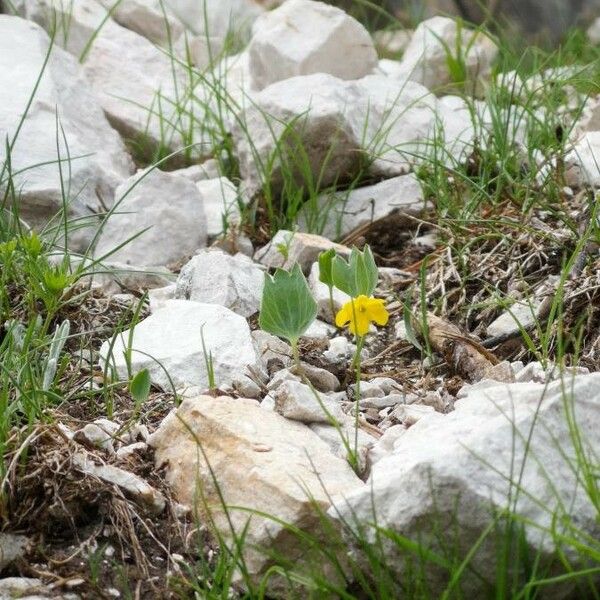
Plant Overview
Known as the Hybrid Buttercup, this charming alpine native looks like a splash of liquid sunshine across rocky mountain slopes. Found primarily in the Eastern Alps, it is a resilient perennial that bridges the visual gap between various buttercup species, hence its name hybridus. It is a favorite for rock garden enthusiasts who want to recreate a piece of the high-altitude European wilderness at home.
🔍 How to Identify
- 🍃 The Leaves: Unlike the deeply "clawed" leaves of common buttercups, these are rounded, kidney-shaped, and often have scalloped edges. They feel slightly fleshy to the touch.
- 🌼 The Bloom: Features bright, glossy yellow petals with a distinct waxy sheen that reflects sunlight, surrounding a cluster of lime-green and gold stamens.
- 📏 Growth Habit: A compact, low-growing plant that rarely exceeds 10–20 centimeters in height, making it look like a tiny golden bouquet tucked between stones.
🏡 In Your Garden
- ⛰️ Alpine Aspirations: This plant thrives in limestone-rich, rocky soils. It prefers "cool feet and a sunny head," meaning it loves well-draining, gritty soil that stays moist while its foliage enjoys the bright light.
- ❄️ Climate Context: It is exceptionally cold-hardy but can struggle in hot, humid lowland summers. In gardens, it is best placed in a rockery or a scree bed where water can drain away quickly from the crown to prevent rot.
⚠️ Safety & Toxicity
- 🚫 Toxicity Status: Toxic if ingested.
- 🐾 The Details: Like all members of the Ranunculus family, it contains a compound called protoanemonin. If the leaves are crushed or eaten, they can cause mouth blistering and digestive upset. It is best kept away from curious pets and should be handled with gloves if you have sensitive skin, as the sap can cause mild irritation.
✨ Fun Fact
🐸 Little Frog: The genus name Ranunculus is Latin for "little frog." This is because many wild buttercups are found growing near water or in damp meadows, sharing their habitat with amphibians!

Detailed Care Instructions
To grow Ranunculus hybridus plants, follow these steps:
- Location: Choose a sunny spot for the plants as they prefer full sunlight. Make sure the area has well-draining soil.
- Soil preparation: Before planting, amend the soil with organic matter, such as compost or aged manure, to improve drainage and fertility.
- Timing: Ranunculus hybridus plants are usually grown from corms, which are small bulb-like structures. Plant them in late winter or early spring, depending on your climate. This will allow them to establish roots before the summer heat arrives.
- Planting: Dig a hole that is about 2-3 inches deep. Place the corm in the hole with the "claws" facing downward and the pointy end facing upward. Space the corms about 4-6 inches apart to provide enough room for growth.
- Watering: After planting, water the area thoroughly to settle the soil and encourage root development. Keep the soil consistently moist but not soggy throughout the growing season. Water deeply whenever the top inch of soil feels dry.
- Mulching: Apply a layer of mulch around the plants to help retain moisture, suppress weeds, and regulate soil temperature. Organic mulches like straw, wood chips, or compost work well.
- Fertilizing: Ranunculus hybridus plants benefit from regular feeding during the growing season. Apply a balanced, slow-release fertilizer according to package instructions or use a liquid fertilizer every few weeks.
- Pest and disease control: Keep an eye out for common pests like aphids, snails, and slugs. Use organic or chemical controls to manage insect infestations. Ranunculus plants are generally resistant to diseases if they have proper growing conditions.
- Support: As the Ranunculus hybridus plants grow taller and produce flowers, they may need support to prevent them from falling over. Use stakes or small trellises to provide support.
- Harvesting: After the flowers bloom and start to fade, the foliage will turn yellow. This is a sign that the plant is entering a dormant phase. Wait until the foliage completely dies back, then carefully dig up the corms and store them in a cool, dry place until the next planting season. Alternatively, you can leave the corms in the ground if your climate allows for overwintering.
By following these steps, you can enjoy the beautiful blooms of Ranunculus hybridus plants in your garden.

Place in a bright room that is sun drenched almost all day. Or directly in a south-facing window.

When watering this plant, it's important to make sure that the soil is evenly moist but not waterlogged. Water deeply, allowing the water to penetrate the soil to the roots, but be careful not to overwater as this could lead to root rot. It's best to water early in the morning or late in the evening to avoid evaporation. Watering frequency will depend on the weather conditions, but a good rule of thumb is to water when the top inch of soil feels dry to the touch. To prevent water from getting on the leaves, it's best to use a watering can or a soaker hose.
To fertilize this plant, use a slow-release fertilizer with a balanced ratio of nitrogen, phosphorus, and potassium. Apply the fertilizer at a rate of one tablespoon per square foot around the base of the plant. Water the area thoroughly after fertilizing. Repeat this process every four to six weeks during the growing season. Avoid over-fertilizing, as this can lead to excessive vegetative growth and reduce flower quality.
Ranunculus Hybridus plants require a soil that is well-draining and fertile. The soil should have a pH level between 5.5 and 7.0. A mix of loamy soil, sand, and organic matter, such as aged compost, is ideal for these plants. The soil should be prepared by tilling or digging to a depth of at least six inches to allow for good root development. The planting hole should be deep enough to accommodate the entire root system without crowding or bending. After planting, the soil should be watered thoroughly to ensure good soil contact and to eliminate air pockets around the roots. Regular watering and fertilization throughout the growing season will help to ensure the success of your Ranunculus Hybridus plant.
To propagate this plant, select a healthy parent plant and choose a mature, healthy stem. Using sterilized pruning shears, cut a stem with at least 3 leaves and a root node at the bottom. Remove the lower leaves from the stem and dip the cut end into rooting hormone powder. Place the stem in a small container filled with a well-draining soil mixture and water it thoroughly. Cover the container with a plastic bag to create a humid environment for the plant. Keep the container in a bright but shaded location and mist the plant occasionally. After a few weeks, new growth should appear, indicating successful propagation.








