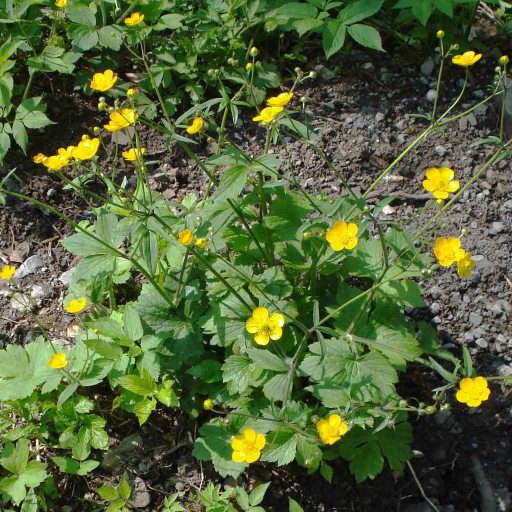
Plant Overview
Known as the Woolly Buttercup, this perennial wildflower is the softer, fuzzier cousin of the common meadow buttercup. Often found carpeting European woodlands, it brings a splash of golden sunshine to damp, shady corners where other flowers might struggle. Its name reflects the dense, velvety hairs that cover its stems, giving the plant a soft, silver-green glow when it catches the light.
🔍 How to Identify
- 🌼 Glossy Blooms: Five bright, waxy yellow petals that form a perfect cup shape, shimmering as if they’ve been polished.
- ☁️ Woolly Stems: The most defining feature is the thick coating of soft, spreading hairs (lanugo) that cover the stems and leaf stalks.
- 🍃 Deeply Lobed Foliage: The leaves are divided into three distinct, toothy lobes and feel noticeably soft or "downy" to the touch compared to other buttercups.
🏡 In Your Garden
- 💧 Moisture Lover: This plant is a specialist for damp spots. It thrives in moisture-retentive soil and is an excellent choice for the edges of a garden pond or a low-lying "bog" garden.
- 🌥️ Dappled Shade: While many flowers crave the sun, the Woolly Buttercup prefers the protection of tree canopies. It performs best in partial shade, as direct, scorching afternoon sun can cause its delicate foliage to wilt.
⚠️ Safety & Toxicity
- 🚫 Toxic Assessment: Harmful if ingested. Like all buttercups, it contains a bitter juice called protoanemonin.
- 🐾 Pets & Kids: Keep this plant away from curious pets and children. Ingesting any part of the plant can cause mouth blistering, drooling, and digestive distress.
- 🧤 Skin Irritation: The sap can be an irritant to sensitive skin. It is best to wear gardening gloves when pruning or thinning out a patch.
✨ Fun Fact
The genus name Ranunculus is actually Latin for "little frog." This is a nod to the plant's favorite habitat—wet, marshy areas where you are likely to hear frogs croaking nearby!

Detailed Care Instructions
To grow Ranunculus lanuginosus (woolly buttercup) plants, you can follow these steps:
- Climate and planting time: Determine if Ranunculus lanuginosus is suitable for your climate. It generally grows in USDA zones 5-9. Plant the seeds or bulbs in early spring or fall.
- Site selection: Choose a sunny location with well-drained soil for optimal growth. The plant can tolerate a variety of soil types, but it thrives in loamy soil.
- Soil preparation: Prepare the soil by removing any weeds, rocks, or debris. Loosen the soil to improve drainage by tilling or digging a hole.
- Planting seeds: If starting from seeds, sprinkle the seeds over the prepared soil and lightly cover them with a thin layer of soil. Water gently to ensure the seeds make good contact with the soil.
- Planting bulbs: If using bulbs, dig holes about 2-3 inches deep and 4-6 inches apart. Place the bulbs in the holes with the knobby side facing up. Cover the bulbs with soil and water thoroughly.
- Watering: Provide regular watering to keep the soil consistently moist but not waterlogged. Avoid overhead watering, as it can lead to fungal diseases.
- Fertilization: Apply a balanced, slow-release fertilizer or organic compost in early spring before new growth emerges. Follow the product instructions for proper dosage.
- Mulching: Apply a layer of organic mulch, such as bark chips or straw, around the plants to help retain moisture, suppress weeds, and regulate soil temperature.
- Pruning: Deadhead spent flowers regularly to promote continuous blooming and prevent the plants from producing seeds.
- Pests and diseases: Keep an eye out for common pests like aphids and slugs. If necessary, treat them with appropriate organic or chemical pest control methods. Protect the plants from fungal diseases by providing adequate air circulation and avoiding overwatering.
- Overwintering: In colder climates, provide protection during winter by covering the plants with a layer of straw or mulch.
By following these guidelines, you can successfully grow Ranunculus lanuginosus plants and enjoy their beautiful flowers.

Place in a bright room that is sun drenched almost all day. Or directly in a south-facing window.

Ranunculus Lanuginosus plants need consistent, moist soil in order to thrive. When watering this plant, it is important to ensure that the soil is evenly moist throughout. This can be achieved by using a watering can or hose, and applying water slowly and evenly to the soil. It is important to avoid over-watering, as this can lead to root rot and other issues. It is generally recommended to water Ranunculus Lanuginosus plants about once a week, or as needed to maintain consistent soil moisture. It is also a good idea to water in the morning or early afternoon, as this allows the foliage to dry before evening, reducing the risk of fungal diseases.
To fertilize this plant, apply a balanced fertilizer formula, such as a 10-10-10 or a 20-20-20, at the rate recommended on the product label. Apply the fertilizer to the soil around the plant, taking care not to get it on the leaves or stems. Water the plant thoroughly after fertilizing. Repeat this process every 4-6 weeks during the growing season.
When planting the Ranunculus Lanuginosus, it is important to use soil that has a good balance of nutrients and moisture. The soil should be well-draining and have sufficient organic matter content to facilitate healthy plant growth. A pH level between 6.0 and 7.5 is ideal for the plant's optimal growth. It is also recommended to mix in sand or perlite to ensure proper drainage and prevent waterlogging. It is generally not recommended to use heavy clay or sandy soils for this plant, as they can hinder its growth. The soil should be prepared well in advance of planting by working in organic matter and fertilizers. The plant requires a rich soil that can retain moisture, as it has a shallow root system that requires consistent moisture. It is important to ensure that any fertilizers used are balanced and not overly rich in nitrogen, as this can cause the plant to become leafy and diminish its flowering potential. Lastly, it is important to choose a location that provides good sunlight and shelter from extreme winds, as the Ranunculus Lanuginosus requires these conditions for optimal growth and flowering.
Propagation of this plant can be done through division of its rhizomes. Carefully dig up the plant from the soil and separate the rhizomes with a clean knife. Each division should have at least one healthy shoot and some roots. Plant these divisions in a well-draining soil mix and water thoroughly. Water regularly and provide sufficient sunlight for the plant to thrive.








