Plant Overview
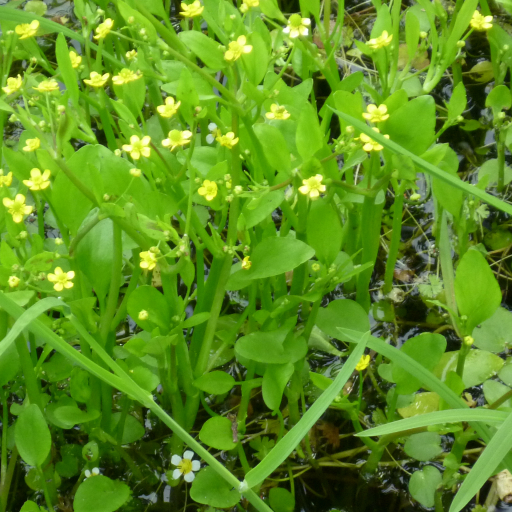
Known as the Adder's-tongue Spearwort, this delicate member of the buttercup family is a master of the wetlands. It earns its unique name from its distinctive, tongue-shaped upper leaves and its historical association with marshy grounds where "adders" might hide. This rare annual is a specialist of seasonal pools, often appearing as if by magic when the winter rains subside and leave behind muddy, sun-drenched hollows.
🔍 How to Identify
- 🌼 The Bloom: Small, pale yellow flowers (usually 5-9mm across) with petals that are notably shorter than the green sepals behind them, giving them a "button-like" appearance.
- 🍃 Leaf Shape-Shift: It features two types of leaves; the lower ones are broad and heart-shaped, while the upper leaves are long, narrow, and lance-like (the "adder's tongue").
- 🌱 Growth Habit: A relatively short, upright plant with hollow, furrowed stems that help it stay buoyant and breathe in waterlogged soil.
🏡 In Your Garden & Habitat
- 💧 The Mud Factor: This plant doesn't just like water; it loves "poached" ground. It thrives in soil that has been churned up by animal hooves or foot traffic, which reduces competition from aggressive grasses.
- ☀️ Ephemeral Nature: It is a pioneer species. It germinates in the autumn under shallow water, grows through the winter, and puts on a show in late spring before the mud dries up completely.
- 🌾 Open Spaces: It is a poor competitor. If a pond edge becomes overgrown with reeds or tall shrubs, the Adder's-tongue Spearwort will quickly disappear, waiting in the seed bank for the ground to clear again.
⚠️ Safety & Toxicity
- 🚫 Toxic Compound: Like most members of the Ranunculus genus, it contains protoanemonin, a chemical that serves as a defense mechanism against herbivores.
- 🤢 Ingestion Danger: If eaten, it can cause intense burning of the mouth, salivation, and severe gastrointestinal distress. It is dangerous for humans, dogs, and livestock.
- 🧤 Skin Sensitivity: The sap can be a "vesicant," meaning it can cause blistering or redness if it stays in contact with the skin for too long. It is best to wear gloves if thinning them out in a pond.
✨ Fun Fact
In the United Kingdom, this plant is so rare that it is protected at one of the nation's smallest nature reserves—Badgeworth Nature Reserve—which was created specifically to save this single species from extinction!

Detailed Care Instructions
To grow Ranunculus ophioglossifolius, also known as grassland buttercup, you can follow these steps:
- Select a suitable location: Choose an area that receives full sun or partial shade. This plant prefers moist soil and can tolerate a range of soil types, including clay, loam, and sandy soil.
- Prepare the soil: Ensure the soil is well-draining by adding organic matter, such as compost or well-rotted manure. Incorporate it into the soil to improve its fertility and drainage.
- Planting: Plant the Ranunculus ophioglossifolius tubers in early spring or fall. Dig a hole deep enough to cover the tuber with about 2-3 inches of soil. Space the tubers around 4-6 inches apart to allow sufficient room for growth.
- Watering: Keep the soil evenly moist, but avoid waterlogging. Water the plants regularly, especially during dry periods. Ensure the soil stays moist but not soaked.
- Mulching: Apply a layer of organic mulch around the plants to retain moisture and suppress weed growth. This also helps in moderating soil temperature and protects against extreme weather conditions.
- Fertilizing: Apply a balanced slow-release fertilizer, such as a 10-10-10 blend, during the growing season. Follow the manufacturer's instructions regarding application rates.
- Maintenance: Remove any weeds that may compete for nutrients and water with the Ranunculus ophioglossifolius. Deadhead the spent flowers to encourage continuous blooming.
- Propagation: You can propagate Ranunculus ophioglossifolius by division. Lift the clumps in early spring or fall, separate them into smaller sections, and replant in suitable locations.
- Overwintering: Ranunculus ophioglossifolius is hardy in USDA zones 5-9. If you live in a colder region, you may need to protect the plant by adding a layer of mulch or covering it with a frost cloth during winter.
- Pest and disease management: Monitor for any pests or diseases, such as aphids or powdery mildew. Treat infestations or fungal issues promptly using appropriate organic or chemical methods.
With proper care and maintenance, your Ranunculus ophioglossifolius should thrive and produce beautiful yellow flowers.

Place in a bright room that is sun drenched almost all day. Or directly in a south-facing window.

To water this particular plant, it is important to ensure that the soil is moist but not waterlogged. It is recommended to use room temperature water and water the plant deeply so that the water reaches the roots. The frequency of watering will depend on the temperature and humidity of the environment, but it is important to avoid letting the soil completely dry out between waterings. Overwatering can lead to root rot, so it is important to monitor the soil consistently.
- Apply a balanced fertilizer to the soil around the plant during the growing season.
- Use a slow-release fertilizer to avoid over-fertilizing the plant.
- Fertilize the plant once a month during the growing season for best results.
- Follow the instructions on the fertilizer package for the correct dosage and application method.
- Water the plant after fertilizing to help distribute the fertilizer throughout the soil.
Ranunculus Ophioglossifolius is a plant species that requires well-draining soil with a pH between 6 and 7.5. It prefers soil that is rich in organic matter and has good water-holding capacity. A mixture of garden soil, compost, and sand is ideal. The plant should not be planted in heavy or compacted soil, as this can lead to root rot and stunted growth. It thrives in soil that is moist but not waterlogged, and should be watered deeply but infrequently. It is important to avoid using fertilizers that are high in nitrogen, as these can promote leafy growth at the expense of flowers. Instead, a balanced fertilizer with a higher concentration of phosphorus and potassium can be used to encourage healthy root development and abundant blooms. When planting, the soil should be worked to a depth of at least 6-8 inches to ensure good root growth. Overall, providing a well-draining, nutrient-rich soil is key to promoting healthy growth and flowering in Ranunculus Ophioglossifolius.
There are various methods of propagating this plant, but one common method is through seed propagation. To start, collect mature seeds from the plant and remove any debris or chaff. Then, sow the seeds into a well-draining potting mixture and place the container in a warm, moist location with indirect light. Keep the soil evenly moist and ensure good ventilation to prevent fungal growth. Germination can take up to two weeks or longer.
Another method of propagation is through division. Gently dig up the mature plant and separate the roots into several smaller clumps, making sure each clump has a few healthy shoots and roots. Replant the clumps into well-draining soil and keep the soil evenly moist until the new plants establish themselves.
Finally, stem cuttings can also be taken from the plant. Cut a 4- to 6-inch section of stem with several leaves and remove any lower leaves. Dip the cut end in rooting hormone and plant it in a well-draining potting mixture. Keep the cutting in a warm, moist location with indirect light and water regularly until roots and new growth appear.








