Plant Overview
Commonly known as the Parnassus-leaved Buttercup, this alpine jewel is a far cry from the common yellow weeds found in suburban lawns. Named for its leaves' striking resemblance to the Parnassia genus, it is a specialist of the high mountains, clinging to life on the rocky scree slopes of the Alps and Pyrenees. It is a symbol of mountain resilience, often seen blooming at the very edge of retreating snowlines.
🔍 How to Identify
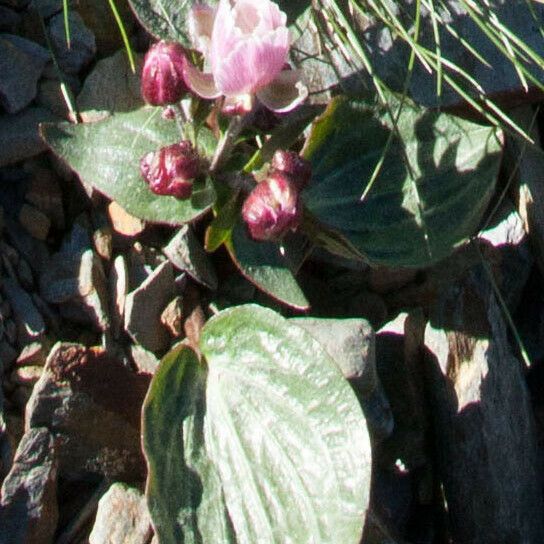
- 🌸 The Flowers: Large, cup-shaped white petals that often blush with a delicate pink hue as they age. They feature a brilliant, dense cluster of golden-yellow stamens at the center.
- 🍃 Unique Foliage: Unlike the deeply lobed or "crowfoot" leaves of other buttercups, these are thick, heart-shaped, and glossy. They are deep green with prominent, almost silvery veins.
- 📏 Compact Stature: This is a low-growing perennial that rarely exceeds 10–15 cm in height, forming a tidy, prostrate tuft designed to hug the ground and escape harsh mountain winds.
🏡 In Your Garden
- 🏔️ The Scree Specialist: In a home setting, this plant is an "extremophile." It thrives in limestone scree—essentially crushed rock—and requires extremely sharp drainage. If its roots sit in damp, heavy soil for even a day, it may succumb to rot.
- ❄️ The Need for Cold: This plant requires a true winter. It needs a "vernalization" period (a long cold snap) to trigger its flowering cycle. It is best suited for dedicated rock gardens or alpine troughs where its specific drainage needs can be met.
⚠️ Safety & Toxicity
- 🚫 Status: Toxic if ingested. Like almost all members of the Ranunculaceae family, the plant contains protoanemonin.
- 🐾 Details: The sap can cause skin redness or even blistering in sensitive individuals. It is toxic to cats, dogs, and horses if eaten, causing oral irritation and digestive distress. Always wear gloves if you are dividing or pruning the plant.
✨ Fun Fact
- 💡 Solar Heating: Because it lives in high-altitude environments where pollinators are scarce, this buttercup's petals are shaped like parabolic mirrors. They reflect sunlight toward the center of the flower, warming up the reproductive organs by several degrees to provide a "heated" landing pad for chilly insects!

Detailed Care Instructions








