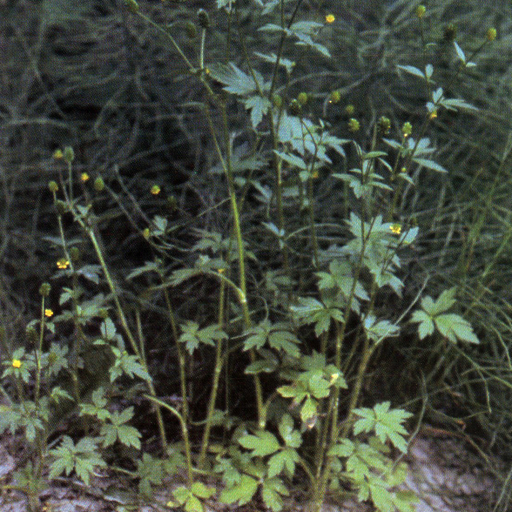
Plant Overview
Often called the Bristly Buttercup, Ranunculus pensylvanicus is the rugged, hairy cousin of the more delicate meadow flowers. Native to North America, it acts as a golden sentinel in wetlands and marshes, signaling the presence of rich, damp earth. Unlike its shiny, polished relatives, this plant wears a stiff coat of hairs that gives it a distinctively wild, unkempt appearance.
🔍 How to Identify
- 🌼 The Flowers: Features small, bright yellow flowers with five petals. Uniquely, the petals are often shorter than the green sepals underneath, and they frequently curve backward (reflexed) toward the stem.
- 🪶 Bristly Stems: The entire plant is covered in stiff, spreading hairs. If you run your finger along the stem, it feels rough and bristly rather than smooth.
- 🍍 Cylindrical Fruit: Once the petals fall, the seed head develops into a distinct, elongated cylinder (rather than a round ball), looking a bit like a tiny, green, prickly pineapple.
🏡 In Your Garden
- 💧 Moisture Indicator: This plant has "wet feet." It thrives in mud, marshes, and ditches. If it pops up in your landscape, it is a natural bio-indicator that your soil is heavily saturated or has poor drainage.
- 🌿 Wild Aesthetic: While not a traditional choice for manicured beds, it is excellent for stabilizing soil in rain gardens or along the edges of a backyard pond. It is a tough survivor that can handle seasonal flooding that would kill other perennials.
⚠️ Safety & Toxicity
- 🚫 Toxic if Ingested: Like all buttercups, it contains a chemical called protoanemonin. If leaves or stems are eaten, they can cause intense mouth pain, blistering, and digestive upset.
- 🐾 Pet & Livestock Warning: It is toxic to dogs, cats, and horses. Fortunately, its bitter taste usually discourages animals from taking more than a single nibble.
- 🧤 Skin Sensitivity: The sap can cause "buttercup itch" or mild skin blistering. It is best to wear gloves if you are pulling it out of your garden or clearing a patch near a pond.
✨ Fun Fact
🐸 The "Little Frog": The genus name Ranunculus is Latin for "little frog." Ancient botanists gave it this name because buttercups are almost always found near water or in damp spots, sharing their home with croaking amphibians!

Detailed Care Instructions
To grow Ranunculus pensylvanicus, also known as Pennsylvania buttercup, follow these steps:
- Choose a suitable location: Pennsylvania buttercup is native to eastern North America and prefers moist, sunny to lightly shaded areas. It can tolerate a range of soil types, but prefers moist and well-draining soil.
- Prepare the soil: Amend the soil with compost or organic matter to improve drainage and fertility. Remove any weeds or grass from the area, as they can compete with the Ranunculus plant.
- Planting: Sow the seeds directly into the prepared soil in early spring or early fall. Scatter the seeds evenly over the soil surface, and lightly press them into the soil with your hand or a garden tool. The seeds require light to germinate, so avoid burying them too deep (approximately 0.25 inches or 0.6 centimeters).
- Watering: Keep the soil evenly moist but not waterlogged until the seeds germinate. Once the plants are established, reduce watering and allow the top inch of soil to dry between waterings. Overwatering can increase the risk of diseases and root rot.
- Mulching: Apply a layer of organic mulch, such as straw or shredded leaves, around the plants to retain moisture and suppress weeds.
- Maintenance: Pennsylvania buttercup is a low-maintenance plant, but occasional weeding and removal of dead foliage may be necessary. It's important to note that it can spread aggressively, so it's recommended to keep an eye on its growth and remove unwanted plants if necessary.
- Propagation: Ranunculus pensylvanicus can also be propagated by dividing established plants in spring or fall. Dig up the plant and gently separate the clumps into smaller sections, ensuring each section has roots attached. Replant the divisions at the same depth they were previously growing.
- Pests and diseases: This plant is relatively resistant to pests and diseases. However, occasional issues with slugs, snails, and fungal diseases like powdery mildew may occur, especially in humid conditions. Monitor the plants regularly and take appropriate actions if any problems arise.
By following these steps, you can successfully grow Ranunculus pensylvanicus in your garden and enjoy its beautiful yellow flowers.

Place in a bright room that is sun drenched almost all day. Or directly in a south-facing window.

The best way to water this plant is to thoroughly saturate the soil around its roots. It is important to water it consistently, but not excessively, as too much water can lead to root rot. It is recommended to water it once a week or as needed, depending on the climate and conditions in which the plant is growing. It may be helpful to use a watering can or hose with a soft spray nozzle to avoid damaging the delicate stems and leaves of the plant. Additionally, it is important to avoid watering the foliage directly, as this can lead to fungal growth and other diseases. Instead, water at the base of the plant, allowing the water to soak into the soil and reach the roots.
To fertilize this plant, use a slow-release granular fertilizer in early spring before new growth emerges. Apply the fertilizer lightly around the base of the plant and water it in well. Repeat once or twice more during the growing season, spacing out applications at least 6 weeks apart. Avoid fertilizing after late summer to prevent encouraging tender growth that can be damaged by winter cold.
The ideal soil for the plant in question is well-drained and moderately fertile. It should have a pH level of 5.5 to 7.0. The soil should be light and loamy, with good drainage properties to prevent waterlogged roots. It's recommended to mix in sand or perlite to improve drainage. Organic matter like compost or aged manure can also be incorporated to improve soil structure and provide nutrients. It is important not to over-fertilize as this can cause excessive growth and reduce flowering. The plant prefers a slightly moist soil, so regular watering is advised, but care must be taken to avoid overwatering. In summary, the ideal soil for this plant is one that is well-drained, moderately fertile, slightly moist, and has a pH level of 5.5 to 7.0.
To propagate this plant, you can take stem cuttings from a mature plant. Cut a stem at a 45-degree angle and remove any leaves from the bottom 1/3 of the stem. Dip the cut end in rooting hormone and plant it in a pot with a well-draining soil mix. Keep the soil moist and place the pot in a warm, bright location, but out of direct sunlight. In a few weeks, roots should start to form and new growth will appear. Once the plant has established roots, it can be transplanted into a larger pot or outdoors in a suitable location.








