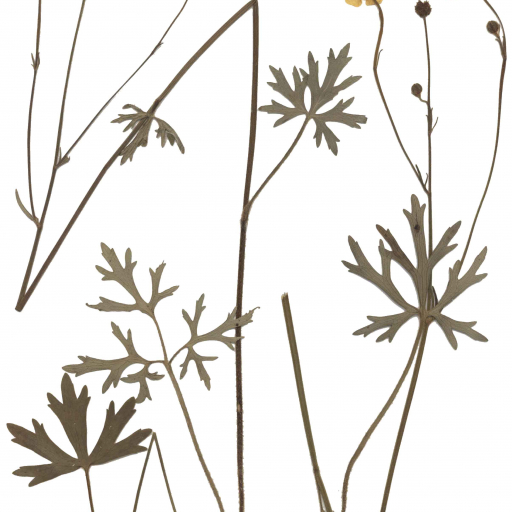
Plant Overview
Known commonly as the Multiflowered Buttercup, this sunny perennial is a staple of European meadows and light woodlands. Its genus name, Ranunculus, literally translates to "little frog," a nod to the damp environments where many buttercups thrive. While it looks like a cheerful wildflower, it is a sturdy survivor that uses its glossy, reflective petals to beam sunlight directly toward its center to stay warm.
🔍 How to Identify
- 🌼 Multiple Blooms: Unlike some of its solitary cousins, this species lives up to its name by producing several bright yellow, five-petaled flowers on a single branching stalk.
- 🍃 Divided Foliage: The leaves are deeply "palmately" divided, meaning they look like a hand with fingers spread wide, and are often covered in fine, soft hairs.
- ✨ Waxy Gloss: The petals have a unique, mirror-like finish that reflects light intensely, a characteristic trait that gives the buttercup its "glow."
🏡 In Your Garden
- ⛰️ Soil Specialist: This plant is a "calciphile," meaning it has a strong preference for lime-rich or alkaline soils. If you see it thriving, it is a good indicator that your soil is high in calcium.
- 🦋 Pollinator Support: It is a vital early-season food source for hoverflies and solitary bees, who find the open, bowl-shaped flowers very easy to land on and navigate.
- 🌾 Meadow Style: Because it grows more upright than the invasive Creeping Buttercup, it is a preferred choice for naturalistic "wildflower" lawns where it won't completely take over the grass.
⚠️ Safety & Toxicity
- 🚫 Toxic Status: All parts of the Multiflowered Buttercup are poisonous if eaten. It contains a compound called protoanemonin that is common to the buttercup family.
- 🐾 Pets & Livestock: It is particularly dangerous for horses and cattle if grazed fresh; however, the toxins break down and become harmless once the plant is dried into hay.
- 🖐️ Skin Sensitivity: The sap can cause "phytophototoxicity" or skin blistering in some people. It is wise to wear gloves when weeding or handling broken stems.
✨ Fun Fact
The "buttercup-under-the-chin" game isn't just folklore! The petals have a layer of starch cells that reflect yellow light while the rest of the petal structure reflects the rest of the spectrum. This creates a directional "flash" of yellow light that is more intense than almost any other flower in the world.

Detailed Care Instructions
To grow Ranunculus Polyanthemos, also known as the fairy buttercup or bouquet buttercup, you can follow these steps:
- Climate and location: this plant prefers full sun to light shade and thrives in cool to temperate climates. Check if your climate is suitable for this plant.
- Soil preparation: Ranunculus Polyanthemos prefers well-draining soil rich in organic matter. Prepare the soil by adding compost or well-rotted manure to improve its fertility and drainage.
- Planting: Plant the ranunculus bulbs or tubers in early fall or late winter/early spring, depending on your climate. Dig shallow holes, about 2 to 3 inches deep, and space the bulbs about 6 to 8 inches apart.
- Watering: Water the soil thoroughly after planting to settle it around the bulbs. Keep the soil consistently moist, but avoid overwatering, as it can cause rotting. Water deeply about once a week, or more frequently in dry weather.
- Fertilization: Apply a balanced fertilizer, such as a 10-10-10 or 14-14-14, in early spring as new growth emerges. Follow the instructions on the fertilizer package for the appropriate amount to use.
- Mulching: Apply a layer of organic mulch, such as straw or wood chips, around the plants to help retain moisture, suppress weed growth, and regulate soil temperature.
- Maintenance: Remove any weeds that may appear around the plants to prevent competition for nutrients and water. Deadhead spent flowers regularly to promote continuous blooming.
- Winter care: In regions with harsh winters, cover the plants with a layer of mulch or straw during the dormant period to protect them from freezing temperatures.
- Propagation: After a couple of years, the ranunculus plants may produce small bulbs or tubers called cormels. These can be used for propagation by carefully digging them up and replanting them in prepared soil.
Remember to always check for specific care instructions or variations for your specific location and climate.

Place in a bright room that is sun drenched almost all day. Or directly in a south-facing window.

To water this plant, first ensure that it is planted in well-draining soil. Check the moisture level of the soil before watering, as this plant prefers to be moist but not waterlogged. Water thoroughly and allow any excess water to drain away, rather than letting the plant sit in standing water. Water more frequently during hot and dry weather, and adjust watering as needed during cooler seasons. Avoid getting water on the leaves and blooms, as this can cause damage or disease.
To fertilize this plant, apply a balanced fertilizer with equal amounts of nitrogen, phosphorus, and potassium. Spread the fertilizer evenly around the base of the plant and water thoroughly. Follow the instructions on the fertilizer package for the correct application rate. It is important not to over-fertilize as this can lead to burning of the plant. Fertilize once in early spring and once again in mid-summer for optimal growth and bloom production.
Ranunculus Polyanthemos is a type of flowering plant that requires a well-draining and nutrient-rich soil to thrive. It is important to use a soil that is slightly acidic with a pH ranging from 5.5 – 6.5. The soil should be high in organic matter such as compost or well-rotted manure to promote healthy growth. Additionally, a soil that is sandy or loamy with good drainage is preferred as this plant does not like to sit in water-logged soil. It is recommended to add a slow-release fertilizer to the soil before planting to ensure a constant supply of nutrients. The plant should be watered deeply but infrequently to prevent the soil from becoming water-logged. Overall, the best soil for Ranunculus Polyanthemos is one that is rich in organic matter, well-draining, slightly acidic, and has good nutrient availability for optimal plant growth.
Sure, here's a detailed explanation on how to propagate Ranunculus Polyanthemos without using its common names:
Ranunculus Polyanthemos can be propagated through two main methods: division and seed propagation.
Division:
- Choose a healthy mature plant with multiple stems and shoots.
- Carefully dig up the plant and remove it from the soil.
- Gently separate the plant into smaller sections, making sure each section has roots attached.
- Plant each section in its own pot or in the ground, making sure the crown of the plant is just below the soil surface.
- Water the newly planted sections thoroughly and keep the soil moist until new growth appears, usually within 2-3 weeks.
Seed Propagation:
- Collect seeds from the mature plant after the blooms have faded and the seed pods have dried out.
- Clean and dry the seeds before planting.
- Fill seed trays or small pots with a well-draining soil mix.
- Sow the seeds on the soil surface, lightly pressing them into the soil.
- Cover the seed tray or pot with plastic wrap or a clear lid and place in a warm, brightly lit spot.
- Check the soil regularly and mist with water as needed to keep it moist.
- Within 2-4 weeks, the seedlings should begin to germinate.
- Once the seedlings have grown large enough to handle, transplant them into individual pots or directly into the ground, being careful not to damage the delicate roots.
- Water regularly and provide proper care to encourage healthy growth.
Overall, ranunculus polyanthemos is an easy plant to propagate, making it a great choice for gardeners looking to expand their collection without spending a lot of money. By following these simple steps, you can grow new plants quickly and easily.








