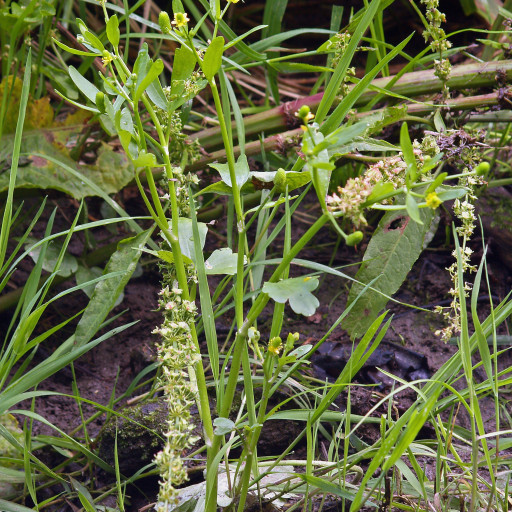
Plant Overview
Known as the "Cursed Buttercup" or "Celery-leaved Crowfoot," this plant is a notorious resident of muddy riverbanks and damp ditches. While its tiny yellow blooms might look innocent, it is one of the most chemically potent members of the buttercup family. Historically feared by livestock owners, it is famous for its "sceleratus" (wicked) nature, earned by its ability to cause painful blisters on anyone who handles it carelessly.
🔍 How to Identify
- 🌼 Petite Blooms: The flowers are surprisingly small (about 5-10mm) and pale yellow, with petals that are often shorter than the green sepals tucked underneath.
- 🥦 Celery-Like Leaves: The lower leaves are thick, shiny, and deeply divided into three lobes, bearing a striking (and dangerous) resemblance to flat-leaf parsley or celery.
- 🧪 Cylindrical Seeds: Unlike most buttercups that have rounded seed heads, this species develops elongated, cylinder-shaped fruit clusters as the flower fades.
🏡 In Your Garden
- 💧 Moisture Seeker: This isn't a plant you typically "plant"—it finds you. It thrives in waterlogged soil, pond margins, and stagnant ditches, acting as a pioneer in muddy, disturbed sites.
- 🌱 The Great Spreader: A single plant can produce over 20,000 seeds. If you find it in your garden, it’s usually a sign of poor drainage or over-saturated soil that needs attention.
⚠️ Safety & Toxicity
- 🚫 Strict Warning: Highly toxic to humans, livestock, cats, and dogs. It is considered one of the most poisonous buttercups in the world.
- 🧪 Dermal Irritant: The sap contains protoanemonin. If the leaves are crushed and touch your skin, they can cause intense redness and painful blistering. Never forage this plant for food, as ingestion causes severe gastrointestinal distress.
✨ Fun Fact
[🎭] The Beggar’s Trick: In historical folklore, it was said that "professional" beggars would intentionally rub the acrid juice of the Cursed Buttercup on their limbs to create fake, weeping sores. This was a calculated move to appear more "afflicted" and elicit more sympathy (and coins) from passersby.

Detailed Care Instructions
To grow Ranunculus sceleratus, also known as cursed buttercup or celery-leaved buttercup, follow these steps:
- Climate and soil: Ranunculus sceleratus prefers moist to wet habitats and is typically found growing in ditches, marshes, and wet meadows. It thrives in full sun to partial shade. The soil should be rich in organic matter and well-draining.
- Seeds: Obtain Ranunculus sceleratus seeds from a reputable supplier or collect them from mature plants. The plant produces small, brown, oblong seeds. Collect the seeds in late summer or early fall.
- Preparing the seeds: After collecting the seeds, dry them for a few days before planting. This allows for easier handling and better germination.
- Germination and planting: For germination, cold stratification is recommended. Mix the dried seeds with moist soil or sand, place them in a ziplock bag, and refrigerate for 2-3 months. This mimics the cold winter conditions that trigger germination. After stratification, sow the seeds in pots or directly in the garden in early spring when the soil has warmed up.
- Planting depth: Sow the seeds about 1/4 to 1/2 inch deep in the soil and gently press them down. Space them at least 8 to 12 inches apart to allow for proper growth.
- Watering: Water the soil regularly to keep it evenly moist, as ranunculus sceleratus prefers wet conditions. Avoid overwatering, as it may cause root rot.
- Maintenance: Keep the area around the plants free of weeds, as they can compete for nutrients and water. Mulching can help suppress weeds and retain moisture in the soil. Ranunculus sceleratus can spread vigorously, so you may need to thin out or divide the plants to control their growth.
- Harvesting: You can harvest the flowers for cut arrangements, but exercise caution as the plant contains toxic compounds that can cause skin irritation.
Note: It's important to remember that Ranunculus sceleratus is considered an invasive species in some regions. Make sure to check with your local authorities before growing it to prevent the plant from spreading and displacing native flora.

Place in a window with dappled sun or a spot in the middle of a room. Or directly in a window facing west or east.

The best way to water this plant is to provide it with a consistent and even supply of water. It is important to be careful not to over-water, as this can lead to the roots becoming waterlogged and susceptible to rot. One way to ensure consistent watering is to water deeply once a week using a soaker hose or drip irrigation system. This will allow the water to penetrate deeply into the soil, encouraging the plant to develop a strong root system. It is also important to monitor the moisture level of the soil regularly, especially during hot and dry periods, and adjust watering accordingly. If the soil feels dry to the touch, the plant likely needs water. However, if the soil is still moist, it may be best to wait a day or two before watering again. Finally, it is important to water the plant in the early morning or late afternoon when the temperatures are cooler, as watering during the heat of the day can cause the water to evaporate too quickly.
To fertilize this plant, use a balanced fertilizer with an N-P-K ratio of 10-10-10. Apply the fertilizer once a month during the growing season and water thoroughly after application. Avoid over-fertilizing, as this can lead to burned or damaged roots. Always follow the instructions on the fertilizer label for proper application rates and methods.
Ranunculus Sceleratus prefers moist soil that is rich in nutrients and organic matter. The ideal pH range for this plant is 5.5 to 7.5. It should be grown in well-draining soil to prevent waterlogging, as this can lead to root rot. The soil should be kept consistently moist but not waterlogged. It is recommended to mix in compost or well-rotted manure to enhance the soil's fertility. Avoid using soils with a high clay content. Instead, use a loamy soil with a good structure that allows air and water to flow through it. Adding perlite or vermiculite to the soil can also improve its drainage and aeration.
- Identify the plant: Before you can propagate a plant, you need to identify it. Ranunculus Sceleratus is a species of flowering plant in the family Ranunculaceae.
- Choose healthy parent plants: The success of propagating Ranunculus Sceleratus depends on using healthy parent plants. Look for plants that are disease-free, have strong stems, and healthy foliage.
- Collect seeds: Ranunculus Sceleratus produces small, dark-colored seeds that can be collected once the seed pods have dried out. Seeds can be collected by gently shaking the seed pods over a container. The seeds can be stored in a cool, dry place until ready to plant.
- Scarify the seeds: To increase the likelihood of successful germination, it may be necessary to scarify the seeds. This can be done by gently rubbing the seeds with sandpaper or nicking them with a small knife.
- Plant seeds in the soil: The seeds should be planted in the soil during the appropriate planting time for your climate. The soil should be well-draining and moist.
- Keep soil moist: To help the seeds germinate and take root, the soil should be kept moist but not waterlogged.
- Transplant new plants: Once the seedlings have grown to a suitable size, they can be transplanted into individual pots or directly into the ground. Be sure to give them plenty of water and care as they establish themselves in their new location.
- Division: Ranunculus Sceleratus can also be propagated through division. To do this, gently dig up the plant and separate the plant into smaller sections, making sure each section has roots and shoots. Replant the divisions in a well-draining soil and keep them moist until they establish new roots.
Common pests of the celery buttercup include Spider mites, aphids, thrips, whiteflies. Make a habit of checking your celery buttercup frequently for pests so that any infestations can be caught and managed early.








