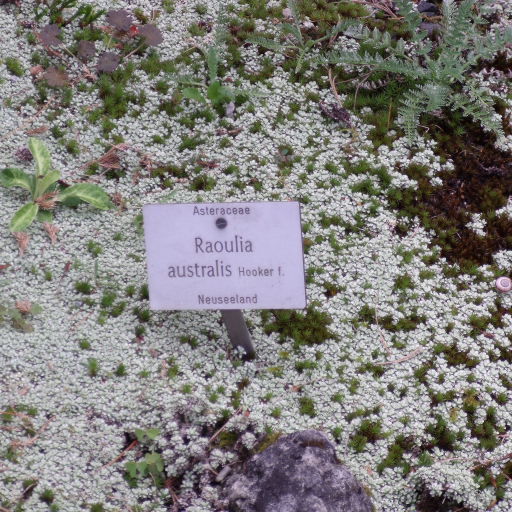
Plant Overview
Often called the Scab Weed or Golden Scab Weed, Raoulia australis is a botanical marvel from the rugged mountains of New Zealand. Despite its somewhat unglamorous nickname, this plant forms stunning, luminous silver mats that look more like spilled mercury or a soft lichen than a typical garden plant. In the wild, it acts as a pioneer species, colonizing harsh, rocky riverbeds where few other things dare to grow.
🔍 How to Identify
- 🌿 The Foliage: Tiny, scale-like leaves that are densely packed together, creating a succulent-like texture that feels firm to the touch.
- 🥈 The Color: A striking silvery-grey or pale seafoam green, caused by microscopic hairs that protect the plant from intense alpine sunlight.
- 🌼 The Blooms: In early summer, the silver mat is dotted with minute, button-like yellow flowers that sit flush against the leaves.
- 📏 Growth Habit: It stays incredibly low to the ground, rarely exceeding an inch in height, but spreading outward to form a seamless, living carpet.
🏡 In Your Garden
- 🪨 The Perfect Environment: This plant is an alpine specialist. It thrives in rock gardens, troughs, or between paving stones where drainage is perfect; it will quickly rot if left in heavy, damp soil.
- ☀️ Sun Seeker: To maintain that brilliant silver sheen, it needs full sun. In the shade, the plant may lose its compact form and turn a duller green as it "stretches" for light.
- 💧 Watering Nuance: While it looks tough, it prefers "cool roots and dry leaves." Watering the soil around it rather than soaking the mat itself helps prevent fungal issues in humid climates.
⚠️ Safety & Toxicity
- ✅ Status: Generally considered non-toxic.
- 🐾 Details: There are no known records of Raoulia australis being poisonous to cats, dogs, or humans. Its dense, slightly scratchy texture usually discourages curious pets from trying to eat it anyway.
✨ Fun Fact
The genus Raoulia is famously related to the "Vegetable Sheep" of New Zealand. From a distance, large colonies of these plants on misty hillsides were frequently mistaken by early settlers for stray sheep huddling among the rocks!

Detailed Care Instructions
To grow Raoulia Australis, also known as New Zealand Edelweiss or Alpine Daisy, follow these steps:
- Climate and Location: Raoulia Australis is a native alpine plant from New Zealand, so it thrives in cool, mountainous regions with well-drained soil. Choose a spot in your garden that receives full sun or partial shade throughout the day.
- Soil Preparation: Raoulia Australis prefers sandy or gravelly soil with good drainage. Amend heavy clay soil with sand or gravel to improve drainage. If your soil's pH is too acidic or alkaline, it's best to adjust it to a slightly acidic pH level.
- Planting: Start by purchasing young Raoulia Australis plants from a reputable nursery or propagate them from cuttings. Dig a hole in the prepared soil that is slightly larger than the plant's root ball. Gently place the plant into the hole, ensuring that the top part of the root ball is level with or just slightly below the soil surface. Fill the hole with soil, firm it gently, and water well.
- Watering: Raoulia Australis is drought-tolerant once established, so water sparingly. allow the soil to mostly dry out between waterings. Overwatering can lead to root rot, so be sure not to let the plant sit in soggy soil.
- Mulching: Apply a layer of lightweight organic mulch, such as straw or pine needles, around the base of the plant to conserve moisture and keep the soil cool.
- Pruning: Raoulia Australis doesn't require much pruning. However, you can pinch back the tips of the plant to encourage bushier growth if desired. Trim any dead or diseased foliage to maintain the plant's health and overall appearance.
- Winter care: In colder climates, provide protection during harsh winters. Mulch around the base of the plant to insulate the roots and prevent frost damage. If needed, cover the plant with a frost blanket or move container-grown plants to a sheltered area.
- Propagation: Raoulia Australis can be propagated from cuttings. Take stem cuttings in the early spring, dip the bottom end in rooting hormone, and place them in a moist rooting medium. Keep the cuttings in a warm, bright area until they develop roots.
By following these steps, you can successfully grow Raoulia Australis and enjoy the unique beauty of this alpine plant in your garden.

Place in a bright room that is sun drenched almost all day. Or directly in a south-facing window.

1. Soil type and composition:
Raoulia Australis should be planted in well-draining soil that is composed of sand, gravel, and peat moss. The soil should allow for good water penetration but also dry out between waterings to prevent root rot.
2. Watering frequency:
It is important to water Raoulia Australis regularly but sparingly. Over-watering can cause the plant to become waterlogged and can lead to root rot. The plant should be watered once a week in the summer and less frequently in the winter, depending on the humidity and temperature.
3. Water quantity:
When watering Raoulia Australis, use a watering can or sprayer to water the soil around the base of the plant. Water until the soil is moist, but not soaking wet. Avoid getting water on the foliage as this can promote fungal growth.
4. Water quality:
Raoulia Australis prefers slightly acidic to neutral water. Tap water may contain minerals and chemicals that can harm the plant, so it is recommended to use rainwater or distilled water.
5. Drought tolerance:
Raoulia Australis is a drought-tolerant plant and can survive periods of water scarcity. However, it is important not to let the plant dry out completely, as this can cause it to go dormant or even die.
6. Seasonal differences:
Watering needs may vary depending on the season. In the summer, the plant may require more frequent watering than in the winter, when the plant is dormant. It is important to monitor the soil moisture level and adjust watering accordingly.
To fertilize this plant, use a slow-release granular fertilizer specifically formulated for alpine or low-nutrient plants. Apply the fertilizer in early spring before new growth begins. Use just enough to lightly cover the soil surface, being careful not to over-fertilize as this can harm the plant. Water the plant after fertilizing to promote nutrient uptake. Repeat fertilization every 6-8 weeks during the growing season if necessary.
When planting Raoulia Australis, it's important to use a well-draining soil that is light and sandy in texture. The soil should be slightly acidic, with a pH level between 5.5-6.5. Additionally, it's recommended to mix in some organic matter, such as compost or leaf litter, to improve soil structure and fertility. Avoid using heavy or clay soils, as they can retain too much moisture and cause root rot. In general, the soil should be relatively infertile, as these plants are adapted to growing in nutrient-poor environments. Finally, ensure that the planting site receives adequate sunlight and is protected from strong winds, as Raoulia Australis is a sun-loving, low-growing plant that can be easily damaged by harsh weather conditions.
To propagate this plant, you will need to collect cuttings that are approximately 2-3 inches long. Once you have cut the stem, remove the lower leaves so that the cutting has a clean stem. Dip the cut end of the stem in rooting hormone powder and then plant it in a small pot with a well-draining soil mixture.
Make sure that the soil is moist but not waterlogged and keep the pot in indirect sunlight. After a few weeks, the cutting should start to develop new roots and begin to grow new leaves.
Once the plant has established itself in the new pot, you can transplant it to a larger container with more soil. Make sure to water the plant regularly and keep it in a bright, indirect light to ensure healthy growth.








